


APACS Z-Ziggler Pro LHI 68 Badminton String Review
When you get to the front corner late, can you lift high enough to get back to base? Try that shot with the 0.68 mm Pro LHI 68 before you decide how it feels.
Who should try APACS Z-Ziggler Pro LHI 68?
APACS Z-Ziggler Pro LHI 68 is a 0.68 mm badminton string in a 10 m set. APACS lists it as made in Japan. Use a familiar tension and compare the height and depth of a lift from a late forecourt lunge with the Pro LHI 66 and Virtuoso Pro 68.
- Model
- Z-Ziggler Pro LHI 68
- Gauge
- 0.68 mm
- Retail set
- 10 m
- Origin
- Japan
- Colours in the APACS Malaysia catalogue
- White, yellow and orange
Prepared by ERR Badminton Restring · APACS Malaysia Z-Ziggler Pro LHI 68 · APACS Malaysia Z-Ziggler Pro LHI 66 · APACS Malaysia Japan-made range · Yonex BG65 specifications

Start with the silver package marking
Both Pro LHI packs are dark and use a blue fibre illustration, so look at the number first. The 68 version shows silver model lettering and a separate 0.68 mm line above the name. That is a useful detail when several similar packs are hanging together in the shop.
The APACS Malaysia listing shows a choice of three colours for the 68. Neither the display photo nor an older pack can tell you what your local stringer currently has. When a colour matters, ask about the marked model and the set colour in the same enquiry.
Bring me APACS Z-Ziggler Pro LHI 68 if you are considering it because your old setup gets tired during long doubles sessions. I will ask you for the lift you use after the opponent has played a tight net shot. Start with a straight lift from low contact. Then ask your partner to step toward that lane and see whether you can send one across without giving them a shoulder-high interception. Both shots start close to the net.
Use natural feather shuttles with similar speed. Have a partner send six tight feeds to your forehand. Put a straight target beyond the rear doubles service line. Start from the same position and count the lifts that reach that area. Ask the feeder to say how many could have been intercepted before they gained height. Add another group from the backhand side when you have found a feed that can be repeated.
Take a picture of a few middle crossings when the string goes on. Take another close picture of any edge hole that has already caused a break. After your first few normal sessions, use a similar angle and record actual hours. Look for the first grooves or places where the mains start getting hard to move. Show me whether the wear is close to your usual contact area.

Make your first lift from a realistic lunge
Ask a partner to play a low forecourt feed while you begin from your normal base. Step in and lift to the rear third with enough height that the shuttle passes a front player. Count how many lifts reach that target without making you stay in the lunge too long.
Use a cone or a court line to keep the feed in the same area. When you get there a little later, notice where the shuttle is relative to your knee and how quickly you get back to base. The useful lift is the one you can repeat when the footwork is imperfect.
The first touch may feel firm and you can still cut down the swing to buy some height on the lift. I look at how much time the trajectory gives you to move. One high lift that lands at the back is a good example. Do another group when you have taken a longer lunge. That will tell you how often you still get time to recover.
Then move the target diagonally and keep the net feed close to the same spot. If possible, ask a second person to stand at the front and watch which lifts pass out of reach. Mark how many gave you time to push away from the lunge and come back toward centre. Start each comparison without stepping forward before the feed. It is easy to overestimate what the setup gives you if you arrive early every time.
Keep a record if you swap rackets in the middle of each night. If you replace the line before an event, mark that it was a scheduled replacement. If you still play comfortably at the end of the weeks you planned to test, tell me how the lift remained at the later session. A comparison at roughly the same hours is easier to use when you are choosing another set.

Judge the reset before judging the sound
Add a return from your partner after you lift. If the first shuttle travels deep enough, you should have time to prepare for a controlled drive or a second defensive block. If it stays short, record that before changing pace. The second ball makes the quality of the lift easier to see.
A string may feel solid when you arrive early and have time to swing. The tougher question is what happens when you have only a compact squeeze from below net height. Ask the feeder to watch the path and the landing so you can focus on the next step out of the corner.
The APACS Malaysia listing calls the string Z-Ziggler Pro LHI 68. On the dark front with silver type you can read Pro LHI 68, 0.68 mm and 10 m. The site places it under Japan Made. It lists white, yellow and orange as string colours. The images of the front do not show which coil is inside. Use an actual back photo or colour label when you need to match an installation. Official packet photo
APACS Virtuoso Pro 68 is a second APACS string at 0.68 mm, with a different packet and model. Start with the same straight target and practice lunge. Note which lifts need you to extend the forearm farther and which let you come out of the lunge sooner. If you switch rackets midway, let the feeder know you want the same pace and height for the next ball.
If you take a DT or frequency reading, use the same device, racket position and delay after the stringing job. Note when you took the reading and the hours played. This review has no controlled DT or lifespan record for Pro LHI 68. Keep your own readings alongside lift depth, height and your response to the next feed.

Use each comparison to answer a different question
Try Pro LHI 66 if you want to compare gauges within the family, and Virtuoso Pro 68 if you want to stay at 0.68 mm. Use identical frames if you can and record when each was restrung. The goal is to see which setup produces a usable lift with the movement you already have.
BG65 is another choice if you know how a 0.70 mm braided outer plays in your frame. Hit the same short sequence first, without adding power to compensate for a different feel. Write down the landing zone before comparing the size of the swing you used with each racket.
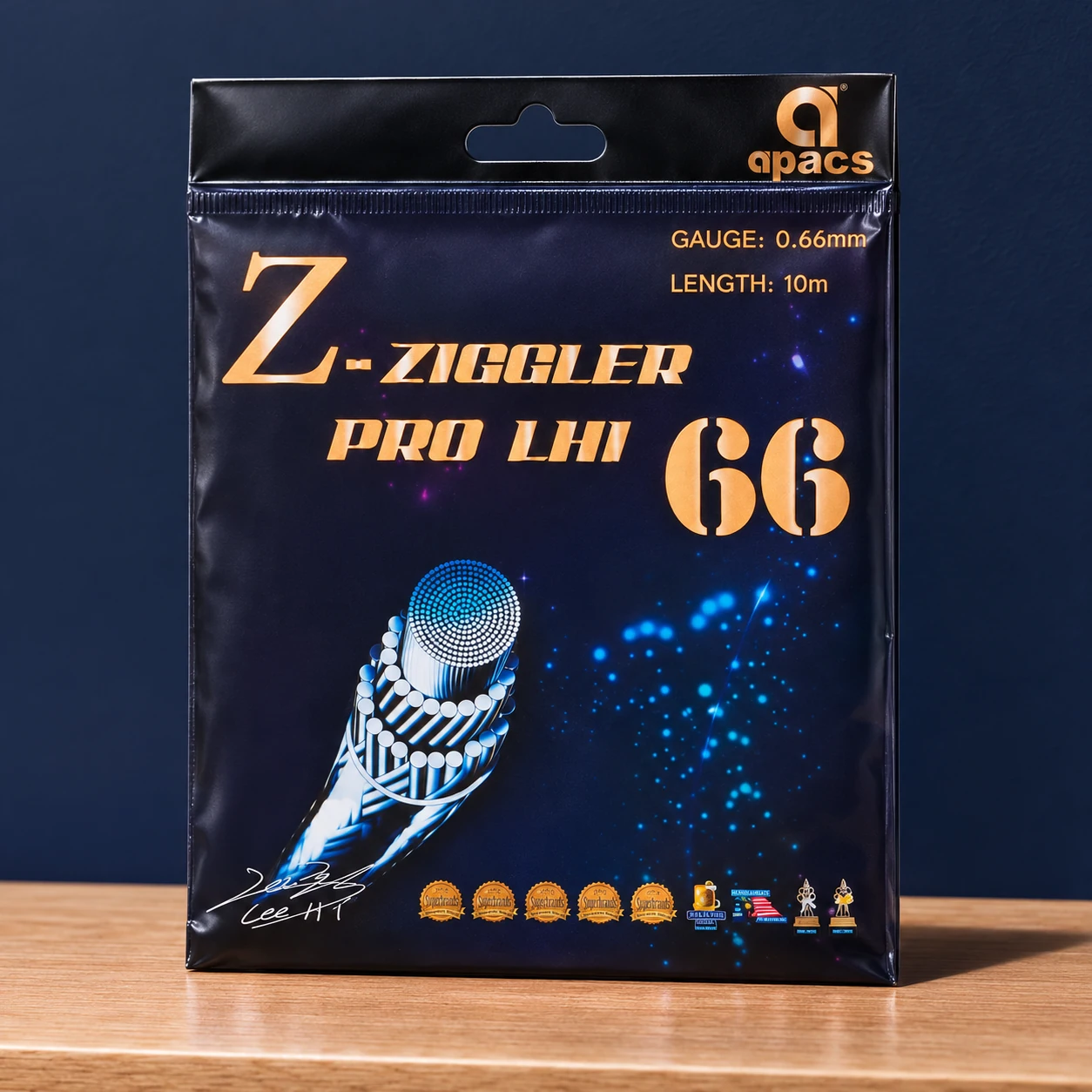
The gold-lettered Pro LHI 66 packet is a separate string. Keep the full model name, gauge, length and version when ordering or photographing the stock. The back of the manufacturer packaging has its own diagrams and performance descriptions. Save the origin and size as packet and product information, then record your lift depth, recovery and wear separately during the sessions you play.
Toalson ION 68 is another nominal 0.68 mm choice if you've used that setup in a real game. Compare after similar playing hours and record the type of installation. Reuse the same targets for each. You might give more weight to the lift that stays deep when you are late, or to the crosscourt option that gets past the net player. Pick the result that matters in your doubles games.
If the string bed changes before the shot itself does, do the drill again at your usual interval. If you start having to lift with a larger arm movement, check the location and speed of the feed. Write down what happened with the same starting position afterwards and compare it with the first record.

Check the same corners after normal games
If you mainly notice wear when defending from the front, look at the centre and the area where you actually contact the shuttle while stretched. Take pictures in good light from the same angle. Mark a repeating side break for the stringer, who can see whether the grommets need attention.
A consistent DT reading can accompany the images. Set the racket in the same orientation and log the hours between the first reading and the next. A number paired with a repeatable lift is more useful to the stringing discussion than a number remembered without any notes.
Bring the racket with the grip you usually play with near the net. I will look at the frame and grommets, and ask what happened when you first wanted to replace the old string. If it broke near the edge, share a photo of the spot. If each lift gradually started landing short, tell me how long the set played before you noticed. Those details give us a place to start.
After the lift, have the feeder send another one into the middle at a useful drive height. Stay with your normal step out of the lunge. How many times can you set the racket before the reply and send it to the open space? If the first lift is flat, the realistic thing to record may be that you would have had very little time for a second shot.
When you come to ERR, bring the racket, actual label and main and cross tensions. Show me a straight lift and a crosscourt lift you could repeat in a normal game. If a break caused you to change, show where it happened.

Bring a clear request to your next restring
Tell the stringer what you want from the front corner. For example, a higher lift would help if you are still moving back when the next shot arrives. Share that goal, your current tension and how often the short lift shows up during a normal game.
If you think the Pro LHI 68 is a good fit, bring the package photo or include the full name in your enquiry. Mention whether you want to keep your reference tension. That gives you a meaningful starting point for comparing the 68 after the next restring.
Use your familiar main and cross tensions as a first reference when they meet the frame maker's limits. If comparing two rackets, check the setups are close and keep a note of when both were installed. With one racket, record a group of straight and diagonal lifts before replacing the old set. Keep the same shuttle speed and feeder when you try the new set.
Alternate sides once you have a repeatable sequence. Keep both records so you can see whether your usual strong side is doing most of the work. A late diagonal lift might give you a different recovery problem from a straight lift. When both setups make similar depth, look at whether you still have time to get the next racket face into place.
I would keep the first job within the racket's limits. When you want to adjust, change one condition and check the two targets again. Bring notes on how many times you got back for the next ball and how much play each setup saw.
APACS Z-Ziggler Pro LHI 68 Knowledge Check
How well do you know this string?
0 / 8 answeredYour result
Review each answer, then try again when you are ready.
| Nominal gauge | 0.68 mm |
|---|---|
| Pack model | Z-Ziggler Pro LHI 68 |
| Retail length | 10 m |
| Country of origin | Japan |
See the response profile
Response and feel
Move forward from base and take a low forecourt feed. Aim a high lift into the rear third, then get ready to defend again.
Contact, deflection and rebound
Keep the same feather shuttle speed and lunge distance. Ask a partner to watch both the height over the front player and the landing zone.
The numbers behind the feel
Use the published nominal gauge and printed code to identify the set. There is no comparable five-characteristic rating scale in the cited product data.
| Specification | Published value |
|---|---|
| Nominal gauge | 0.68 mm |
| Pack model | Z-Ziggler Pro LHI 68 |
| Retail length | 10 m |
| Country of origin | Japan |
APACS Z-Ziggler Pro LHI 68 · DT record
ERR measurements are pending. Record DT after stringing, at 24 hours and at 72 hours. Also record how much you played between readings.
- After stringing
- Pending
- 24 hours
- Pending
- 72 hours
- Pending
APACS Z-Ziggler Pro LHI 68 and three alternatives
Use fresh fittings and comparable frames. Keep the gauge and the shot you want to check in the notes.
| String | Gauge | Construction or feel | What to check on court |
|---|---|---|---|
| APACS Z-Ziggler Pro LHI 68 | 0.68 mm | Silver lettering, Japan-made listing | Lift from a low lunge and see how long you have to recover. |
| APACS Z-Ziggler Pro LHI 66 | 0.66 mm | Thinner option in the Pro LHI family | Compare height and depth from the same contact. |
| APACS Virtuoso Pro 68 | 0.68 mm | A separate 0.68 mm APACS model | Use the same forecourt feed to compare your recovery. |
| Yonex BG65 | 0.70 mm | Braided nylon outer with a larger nominal gauge | Use as a familiar baseline for a high, deep lift. |
Move forward from base and take a low forecourt feed. Aim a high lift into the rear third, then get ready to defend again.
What would you like to feel differently?
Keep the same feather shuttle speed and lunge distance. Ask a partner to watch both the height over the front player and the landing zone.
Track the change, not just the sound
Record the installation date and playing hours. If you measure DT, repeat the reading with the same meter and method.
Bring this question to ERR →Separate contact from setup
Repeat the sequence during ordinary games and record where the lift lands as the stringbed ages.
Bring this question to ERR →The break location matters
Check whether the last break was at a centre crossing, beside a grommet or after a clash. Bring a photo of the location.
Bring this question to ERR →Describe what your hand notices
Keep the same feather shuttle speed and lunge distance. Ask a partner to watch both the height over the front player and the landing zone.
Bring this question to ERR →Inspect before installation
Have the frame and grommets inspected before you agree on the next string or tension.
Bring this question to ERR →Explain the change clearly
Compare the frame, grip and string job with your earlier ticket. Change one condition before repeating the same shot.
Bring this question to ERR →What matters on court?
Choose what you want from your next restring.
Try the first return at familiar effort
Move forward from base and take a low forecourt feed. Aim a high lift into the rear third, then get ready to defend again.
Ask your stringer. Can we compare the first reply at the same tension?
Record wear and playing time
Compare the location of a mark with the earlier job and keep the time on court beside it.
Ask your stringer. Is the wear near a crossing or a grommet?
Keep comfortable depth
Repeat the sequence during ordinary games and record where the lift lands as the stringbed ages.
Ask your stringer. Which setting lets me retain ordinary length with this string?
Keep control of the second contact
Keep the same feather shuttle speed and lunge distance. Ask a partner to watch both the height over the front player and the landing zone.
Ask your stringer. What should I record when changing from a drive to a soft reply?
Different equipment. Different questions.
Different rackets
The same requested pounds can feel different across frame shapes and stringbed dimensions. Record the racket, not just the number.
Try APACS Z-Ziggler Pro LHI 68 on the same racket first. Record the full racket model and the agreed tension before trying another frame.
Different strings
Gauge, construction and surface feel change the comparison. Do not treat every thin string as the same product.
Compare APACS Z-Ziggler Pro LHI 68 with APACS Z-Ziggler Pro LHI 66 using the same racket and familiar shots. Use the table above to check gauge and construction before changing the setup.
Different installation
Machine calibration, support, clamps, pattern and technique can affect consistency. Ask about the process as well as qualifications.
If APACS Z-Ziggler Pro LHI 68 repeatedly breaks near the same hole, show your stringer a close-up of that spot and ask them to inspect the grommet.
Different sessions
Shuttle speed, hall conditions, fatigue and timing influence feedback. Compare familiar drills before drawing a conclusion.
Use the same shuttle speed and repeat a few clears, drives and net shots. Record playing hours alongside any change in how APACS Z-Ziggler Pro LHI 68 feels.
Prepare, play and review with purpose.
Bring your racket history
Note your racket model, previous string, requested tension and the change you want. A photo of recurring breakage helps.
Make the plan specific
Review the frame and grommets. Confirm string, colour availability, tension within the racket limit and price before work starts.
Keep a useful record
Keep the string model, requested tension and date together. Ask about the pattern and checks relevant to your racket.
Repeat familiar shots
Try clears, drives, blocks and net shots under comparable conditions. Record comfort, length and placement, not only sound.
Change one thing at a time
Bring your observations back. Keep the setup if it works; otherwise agree on one practical change for the next restring.
APACS Z-Ziggler Pro LHI 68 frequently asked questions
How can I identify APACS Z-Ziggler Pro LHI 68?
Look for the silver 68 and the 0.68 mm line near the top. The Pro LHI 66 has gold model lettering on the APACS product photo.
What is the JP-made Pro LHI 68 set length?
The front of the pictured Pro LHI 68 pack is marked 10 m. Share the complete, unopened set with your stringer so they can verify the length they need.
Which colours are listed for APACS Pro LHI 68?
APACS Malaysia lists white, yellow and orange. Colour availability varies by seller, so include your preferred colour in your enquiry.
Is APACS Ziggler 68 the same string as Z-Ziggler Pro LHI 68?
APACS lists those as separate products. Check the complete Pro LHI name on the package and on your stringing order.
What court test should I use for Pro LHI 68 first?
Ask for a low feed into the forecourt and play a high lift towards the rear third. Repeat from base to check both the landing zone and the time it gives you to recover.
How much thicker is Pro LHI 68 than Pro LHI 66?
The two packages indicate 0.68 mm and 0.66 mm respectively, a nominal difference of 0.02 mm. Run the same lift in both setups before choosing.
Should I compare Virtuoso Pro 68 with Pro LHI 68?
Virtuoso Pro 68 is a suitable same-gauge comparison from APACS. Match the frame and reference tension to see whether your late lift needs a different amount of effort.
How does Pro LHI 68 compare with regular BG65?
The Pro LHI pack lists 0.68 mm and Yonex lists BG65 at 0.70 mm with a braided nylon outer. Test the same forecourt lift and your recovery using both.
What signs of wear should I note on Pro LHI 68?
Photograph the central intersections to track notches. If you have repeated breaks near a side hole, show the spot to your stringer so they can inspect the grommet.
Does ERR have a completed Pro LHI 68 tension record?
ERR has no completed DT measurement series for this model. Use a consistent meter and keep a record of time played when you compare new readings.
Should I raise tension when switching from Pro LHI 66 to 68?
Use your familiar settings if the stringer confirms they suit the frame. Share any previous damage and test the different gauge at comparable tension before adjusting it.
How do I ask ERR for Pro LHI 68?
Use the stock enquiry and specify the silver-lettered Pro LHI 68, your frame and current tension. Ask about availability and the installed price before booking.
How did APACS Z-Ziggler Pro LHI 68 play for you?
Your experience can help another player choose their next string.
If you have played with this string, tell ERR your racket model, tension and what happened on court.
Contact ERRMore badminton string reviews.
Take a closer look at other strings before choosing your next setup.


Ready to discuss your string setup?
Bring the APACS Z-Ziggler Pro LHI 68 setup you want to try, your racket model and your previous stringing details.
Ask about stock Explore the string listBook stringing.
Bring your racket and questions.
Ask ERR about the APACS Z-Ziggler Pro LHI 68 set, your racket and the shot you want to repeat. Confirm colour, available fitting times and the current price before visiting.
Ask about stockAsk ERR on WhatsApp ↗Prepare a question for your visit
Open WhatsApp with my question ↗You can review your message in WhatsApp before sending.Ask ERR about the APACS Z-Ziggler Pro LHI 68 set, your racket and the shot you want to repeat. Confirm colour, available fitting times and the current price before visiting.
Appointments use the existing ERR Member flow, with WhatsApp available for model-specific questions. Confirm the current listed price, colour and availability before travelling to the Taman Melati Utama location in Setapak, Kuala Lumpur. The map identifies the actual appointment location.
Ask ERR about the APACS Z-Ziggler Pro LHI 68 set, your racket and the shot you want to repeat. Confirm colour, available fitting times and the current price before visiting.
By appointment · Check available slots before travelling.
Find us in Taman Melati Utama
G-3, PV6 Platinum Hill Condo, No. 3 Jalan Melati 3, Taman Melati Utama, 53100 Kuala Lumpur, Malaysia.
Get directions in Google Maps ↗

