


Li-Ning No.1 Review: Feedback, Comparisons & Archived DT
A No.1 review grounded in the AXJJ018 specification, a clearly limited independent impression and the original ERR DT ranges. Compare response and upkeep without mistaking a subjective preference for a universal result.
Review the correct No.1 model
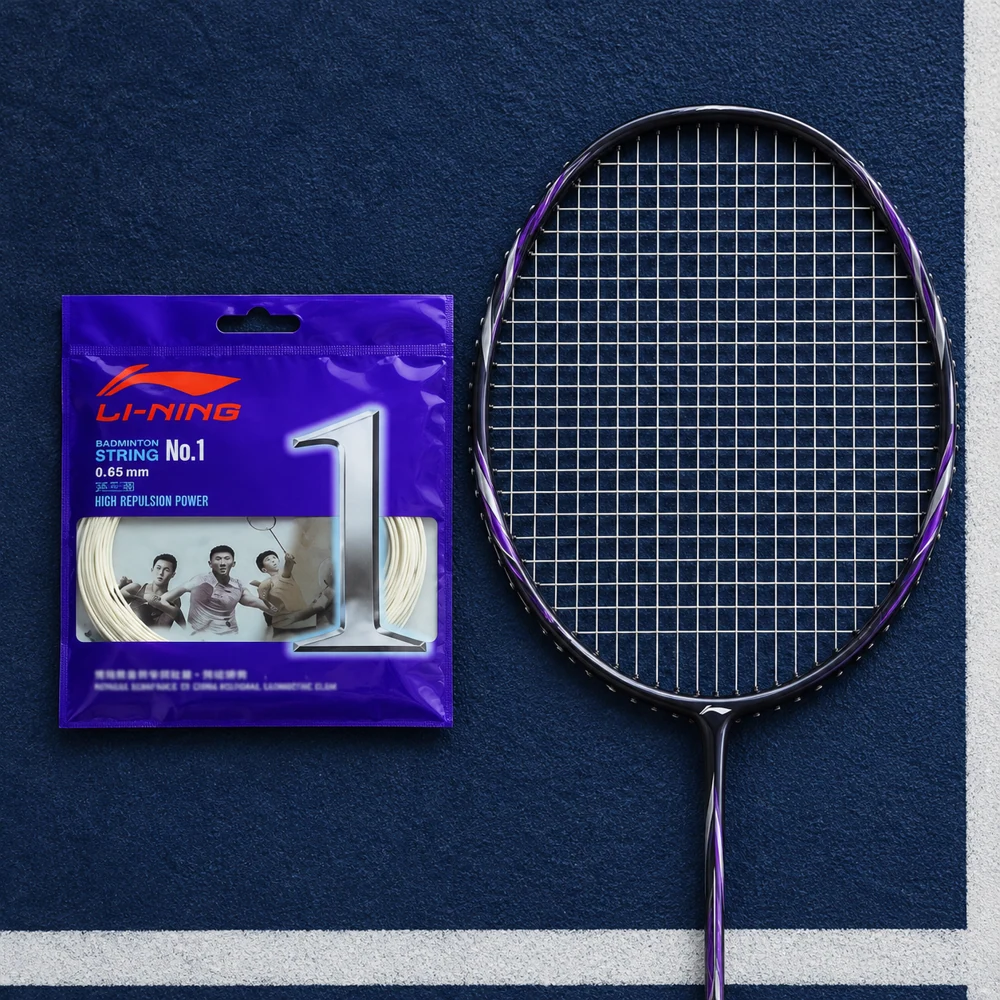
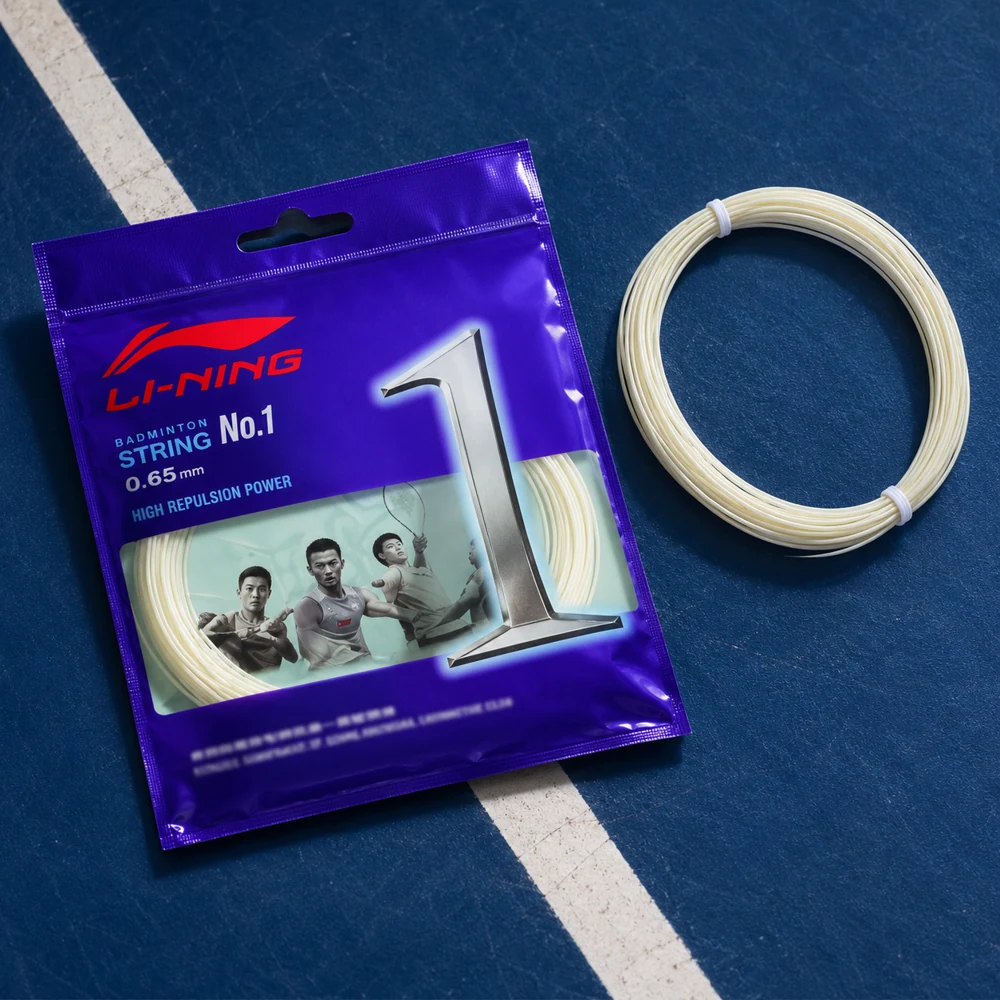
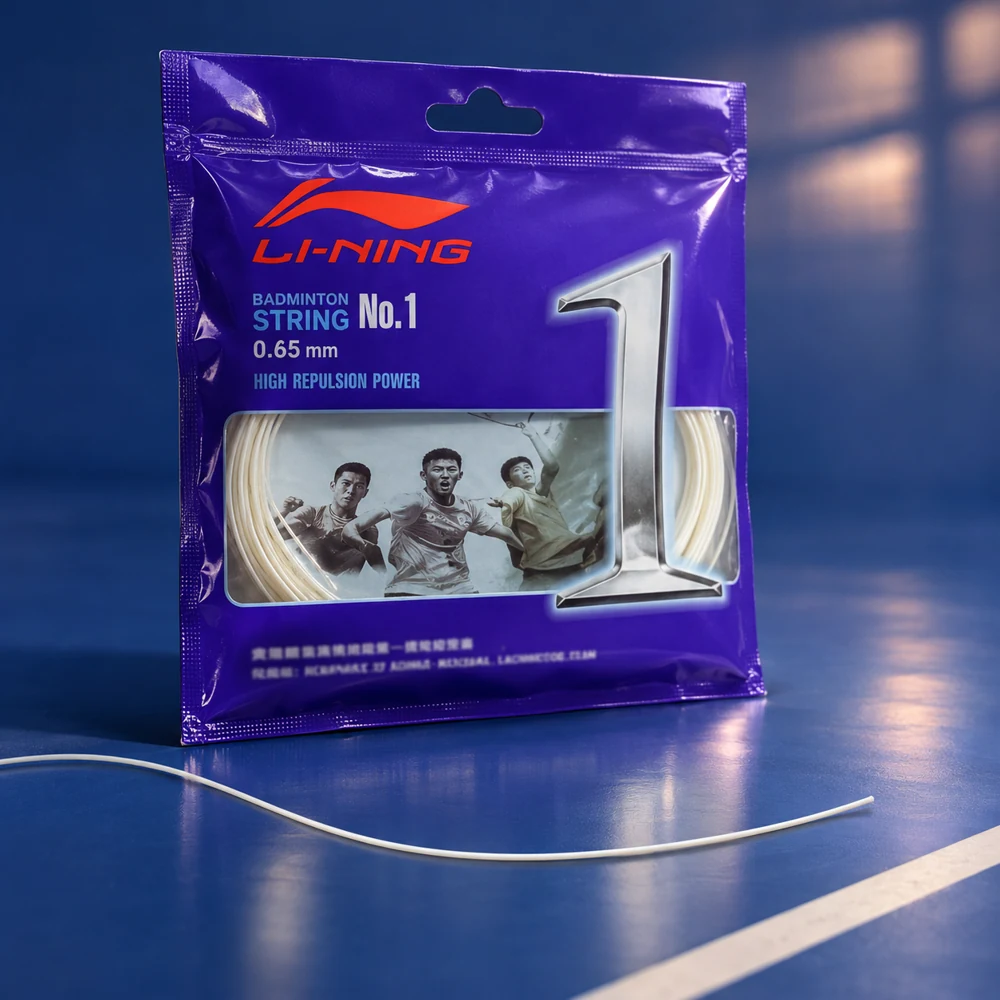
This review concerns the 0.65 mm No.1 set identified as AXJJ018 in Taiwan and AXJJ018-1 in the India listing. It is not No.1 Boost. Keep the full identity when asking to repeat a previous installation or comparing packets from different markets.
The India specification describes heat-resistant, high-intensity nylon in both the multifilament core and the outer. That supports a material description, not an invented coating formula, friction score or microscopic drawing.
The original ERR page included broader playing and customer claims without a supporting record attached. Those are not treated as verified evidence here. The archived DT endpoints remain available below with their missing conditions explained.
Explore the response question
The manufacturer positions No.1 around rebound and crisp sound. Ask how that translates to your familiar clears and drives, then how easily you can reduce pace for a short block or net return. A strong single contact does not establish that a setup is suitable through a whole session.
Record whether response is predictable when contact is centred and when timing becomes less precise. Keep the racket and other relevant variables comparable if you are evaluating another string; changing everything at once makes attribution difficult.
A response-oriented 0.65 mm option can suit a player who values that feedback and accepts monitoring upkeep. It is not automatically the right priority for someone mainly trying to avoid frequent replacement. Consider what you want to change before selecting a packet.

Read independent feedback as an impression
A Singapore stringer review describes No.1 as more direct and slightly firmer feeling than BG66 Ultimax. This is one observer’s comparison. The article does not adequately document racket, installation and measurement conditions, so it cannot establish a universal stiffness ranking.
Its approximate retention time and suggested tension bands are not adopted as measured results or instructions for every player. Incomplete conditions matter: court exposure, contact, equipment and the installation all affect the meaning of the account.
The official ten-point profile is another kind of evidence: brand positioning. It is separate from both that personal review and the ERR DT archive. None should be presented as a shared cross-brand laboratory score.
Keep the installation specific to your racket
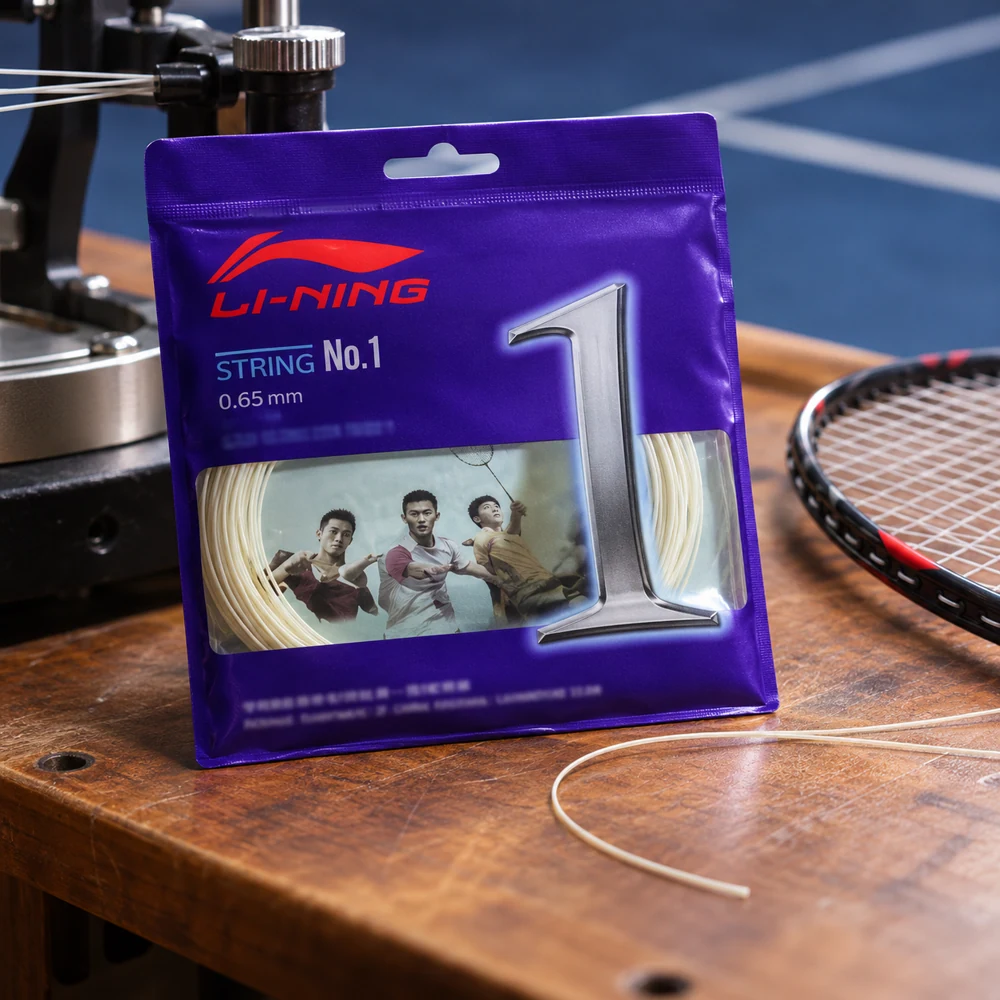
The existing ERR record names a requested 26 lbs setup. That is historical context, not a prescription. Check the exact frame model, official limits, current condition and grommets before discussing a new installation.
Explain what feels difficult with your present string: short clears, overly lively returns, harsh contact or recurring breakage. Raising tension to chase sound can change more than the sensation you wanted, especially when your contact is already inconsistent.
Main-and-cross settings, pre-stretch, pattern and knots require an appropriate procedure for the racket and equipment. Keep a written setup record so a later change can be discussed accurately instead of reconstructing it from memory.
Understand the historical DT ranges
The old No.1 page reports Day 1 55–53, Day 2 49–51 and Day 3 45–48 DT at 26 lbs. The interactive display retains the endpoints and reorders Day 1 to 53–55. Connecting range midpoints is a visual aid, not a claim of continuous measurements.
The instrument, calibration, elapsed hours, environment and playing exposure are not adequately recorded. Consequently, this series cannot prove better retention than N65 or Ultimax, nor predict the rate of change in your racket. DT and machine pounds are different quantities.
For a future record, connect each reading to the method and actual use. Include court hours, response changes and visible wear. Avoid turning three labelled days into a fixed replacement schedule for every player.
Choose a useful comparison
Ultimax shares the nominal 0.65 mm gauge but has a distinct specification. The independent directness impression offers a question to test; it does not prove that either string produces better control for everyone.
N65 is separately identified as AXJR014 in the checked Taiwan set catalogue despite some overlapping regional reel naming. Confirm the actual supply. N61 is a finer 0.61 mm model, so it represents a different gauge decision rather than another name for No.1.
If fewer replacements dominate your needs, also discuss a durability-oriented alternative. Compare its usable response alongside upkeep rather than ranking choices only by a marketing profile or a packet price.
No.1 Knowledge Check
How well do you know this string?
0 / 8 answeredYour result
Review each answer, then try again when you are ready.
| Nominal gauge | 0.65 mm |
|---|---|
| Product code | AXJJ018 |
| Retail set length | 10 m |
| ERR restring | RM43.00, string and labour |
See the response profile
Five-characteristic spider chart
Contact, deflection and rebound
Press play to follow contact → deflection → rebound.
Slow-motion teaching diagram, not a measured speed or tension test.
The numbers behind the feel
Li-Ning’s India listing supplies the No.1 ten-point profile. These are regional brand-relative values, not ERR measurements, percentages or a common cross-brand standard.
No.1 DT over three days
-
Day 153–55 DT
-
Day 249–51 DT
-
Day 345–48 DT
Recorded range Range midpoint
These readings describe an earlier installation. Use them to understand the recorded change across days.
No.1 and three alternatives
Compare construction and priorities rather than treating a model name as an upgrade ladder. These are different options, not a controlled ranking.
| String | Gauge | Construction or feel | What to check on court |
|---|---|---|---|
| No.1 | 0.65 mm | AXJJ018 nylon multifilament core and high-intensity nylon outer | Separate subjective feel from measured retention |
| BG66 Ultimax | 0.65 mm | BG66UM high-intensity nylon core and braided nylon outer | A personal impression does not prove a universal winner |
| N65 | 0.65 mm | AXJR014 nylon core and braided nylon layer | Confirm the actual packet and market version |
| N61 | 0.61 mm | AXJS006 nylon multifilament and high-strength outer | Weigh touch and upkeep together |
Ultimax provides a same-gauge cross-brand question, N65 requires careful regional identity checking, and N61 changes nominal diameter. No comparison here establishes a universal winner or a fixed retention interval.
What would you like to feel differently?
For No.1, compare usable response, direct feedback and upkeep. Bring the full model identity and your present setup so No.1 is not confused with No.1 Boost.
Track the change, not just the sound
Some settling after stringing is normal. Record when the racket starts to feel different, the hours played and storage conditions. Compare readings using the same method; a phone frequency reading is not the machine setting in pounds. Ask about installation consistency before assuming a different packet will solve it.
Bring this question to ERR →Separate contact from setup
A stiff-feeling bed, late contact, shuttle speed and technique can all make length difficult. Start with relaxed clears and describe where the shuttle lands. Review your current tension within the racket limit rather than increasing it automatically.
Bring this question to ERR →The break location matters
A break near the same grommet deserves a frame and grommet check. Breakage after off-centre contact differs from gradual notching in the centre. Bring the racket and a photo of the break; do not assume every early break means the string is defective.
Bring this question to ERR →Describe what your hand notices
Tell the stringer which shots feel unforgiving and when the sensation began. Compare contact consistency, string choice and tension. Stringing advice is not a treatment for persistent pain; stop playing through pain and seek appropriate assessment.
Bring this question to ERR →Inspect before installation
Photograph existing chips and discuss cracks, worn grommets and frame shape before work begins. Correct support, the appropriate pattern and staying within the racket limit matter. A chipped finish alone does not establish who caused damage.
Bring this question to ERR →Explain the change clearly
Grip size, balance, racket weight, stringbed response and timing are different things. A restring does not turn a head-heavy racket into a head-light one. Tell the stringer what changed and compare with your previous setup instead of asking only for more power.
Bring this question to ERR →What matters on court?
Choose what you want from your next restring.
Check short action at regular pace
Start with your standard drive and compare the same feed using a smaller action. Note the actual landing point.
Ask your stringerCan I retain quick response on the shorter swing I use in defence?
Record wear before changing models
Note time played and which intersection or edge hole shows wear. Let the stringer check the racket if the same spot keeps breaking.
Ask your stringerWould another diameter address the wear I am seeing?
Test a relaxed clear and late lift
Use a familiar grip and frame. Describe which return needs more effort before you change the requested pounds.
Ask your stringerWhich starting point makes the No. 1 trial useful for my racket?
Compare No. 1 and No. 1 Boost by touch
Try a soft reply immediately after an ordinary drive. Outline what you want to retain when you bring the comparisons to ERR.
Ask your stringerWhich setting should remain familiar if I try Boost next?
Different equipment. Different questions.
Different rackets
The same requested pounds can feel different across frame shapes and stringbed dimensions. Record the racket, not just the number.
Try No.1 on the same racket first. Record the full racket model and the agreed tension before trying another frame.
Different strings
Gauge, construction and surface feel change the comparison. Do not treat every thin string as the same product.
Compare No.1 with BG66 Ultimax using the same racket and familiar shots. Use the table above to check gauge and construction before changing the setup.
Different installation
Machine calibration, support, clamps, pattern and technique can affect consistency. Ask about the process as well as qualifications.
If No.1 repeatedly breaks near the same hole, show your stringer a close-up of that spot and ask them to inspect the grommet.
Different sessions
Shuttle speed, hall conditions, fatigue and timing influence feedback. Compare familiar drills before drawing a conclusion.
Use the same shuttle speed and repeat a few clears, drives and net shots. Record playing hours alongside any change in how No.1 feels.
Prepare, play and review with purpose.
Bring your racket history
Note your racket model, previous string, requested tension and the change you want. A photo of recurring breakage helps.
Make the plan specific
Review the frame and grommets. Confirm string, colour availability, tension within the racket limit and price before work starts.
Keep a useful record
Keep the string model, requested tension and date together. Ask about the pattern and checks relevant to your racket.
Repeat familiar shots
Try clears, drives, blocks and net shots under comparable conditions. Record comfort, length and placement, not only sound.
Change one thing at a time
Bring your observations back. Keep the setup if it works; otherwise agree on one practical change for the next restring.
No.1 questions, clearly answered.
What are the verified No.1 gauge and code?
The checked Taiwan set is 0.65 mm AXJJ018; the India listing uses AXJJ018-1.
What materials are specified for No.1?
The India source describes a heat-resistant, high-intensity nylon multifilament core and heat-resistant, high-intensity nylon outer.
Is No.1 the same as No.1 Boost?
No. Keep the full model name; the ERR catalogue treats them as separate products.
Does No.1 always feel firmer than Ultimax?
No. One independent account describes that impression, but its incomplete setup details do not establish a universal stiffness comparison.
Do the ten-point values measure ERR performance?
No. They are the regional brand’s relative profile values, not ERR laboratory measurements or a cross-brand standard.
Does crisp sound prove more power?
No. Sound is feedback; it does not directly measure your shuttle speed or placement.
What does the ERR No.1 DT archive show?
At a recorded 26 lbs, the old page lists Day 1 55–53, Day 2 49–51 and Day 3 45–48 DT. The graph displays Day 1 as 53–55 using the same endpoints.
Can this DT record predict my retention?
No. Instrument, calibration, exposure and timing were not adequately documented, so it is not a controlled forecast.
Should every No.1 player request 26 lbs?
No. That is the archived installation setting. Your racket limits, condition, current setup and feedback must guide the decision.
Can one review establish a fixed No.1 lifespan?
No. Playing exposure, contact, equipment condition and installation need to be considered; no fixed lifespan is claimed.
What is the checked ERR No.1 price?
The catalogue lists RM43 including string and labour. Confirm current price, colour and availability before visiting.
What should I provide before booking No.1?
Send the full model, racket model, existing string, previous tension, playing frequency, desired feel and any recurring wear concerns.
How did Li-Ning No.1 play for you?
Your experience can help another player choose their next string.
What players say
Your first-hand experience matters.
Be the first to review Li-Ning No.1. Share what you liked and what could be better.
More badminton string reviews.
Take a closer look at other strings before choosing your next setup.


Ready to discuss your string setup?
Bring your No.1 questions, racket model and previous setup. Discuss the contact feel you want before choosing the next restring.
Book stringing Explore the string listBook stringing.
Bring your racket and questions.
Discuss your No.1 setup with ERR before visiting. Tell us your racket model, previous tension and the shot or feel you want to review.
Book through ERR MemberAsk ERR on WhatsApp ↗Prepare a question for your visit
Open WhatsApp with my question ↗You can review your message in WhatsApp before sending.The checked local catalogue lists No.1 at RM43 including string and labour. Confirm the current price, colour and availability before travelling. Overseas listings and a catalogue price do not reserve stock at ERR.
Send the racket model, current string, previous tension, playing frequency and desired change through the No.1 enquiry or existing member appointment flow. Mention explicitly if you are considering No.1 Boost, so the discussion starts with the correct model.
ERR is in Taman Melati Utama, Setapak, Kuala Lumpur. Book before visiting and keep notes after familiar sessions. Specific feedback about length, placement and wear is more useful for the next decision than a claim that any string is best for everyone.
By appointment · Check available slots before travelling.
Find us in Taman Melati Utama
G-3, PV6 Platinum Hill Condo, No. 3 Jalan Melati 3, Taman Melati Utama, 53100 Kuala Lumpur, Malaysia.
Get directions in Google Maps ↗
