


Li-Ning LN62 Instinct Review: Fine-Gauge Feel & Archived DT
An LN62 Instinct review based on the verified 0.62 mm AXJN026 identity, clearly qualified coating descriptions and the old ERR DT record. Explore response and upkeep without turning incomplete observations into guarantees.
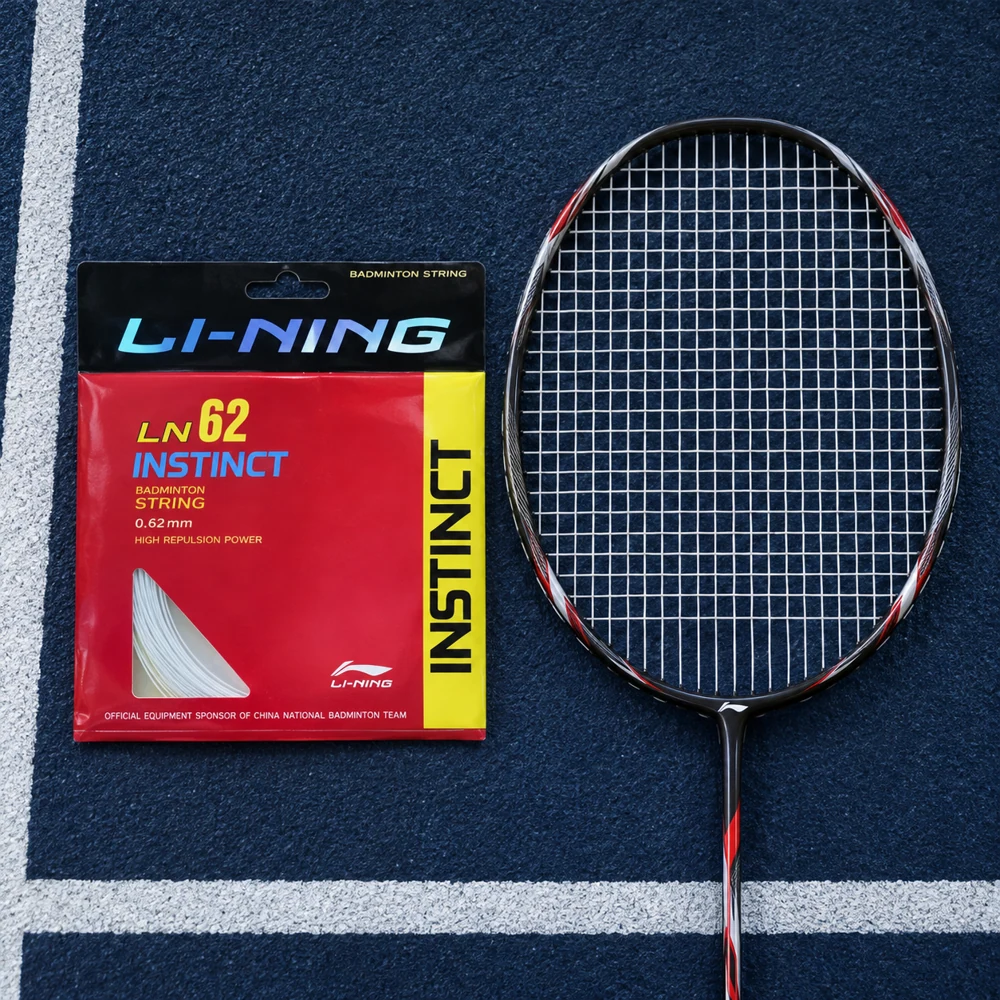
Review the correct Instinct model
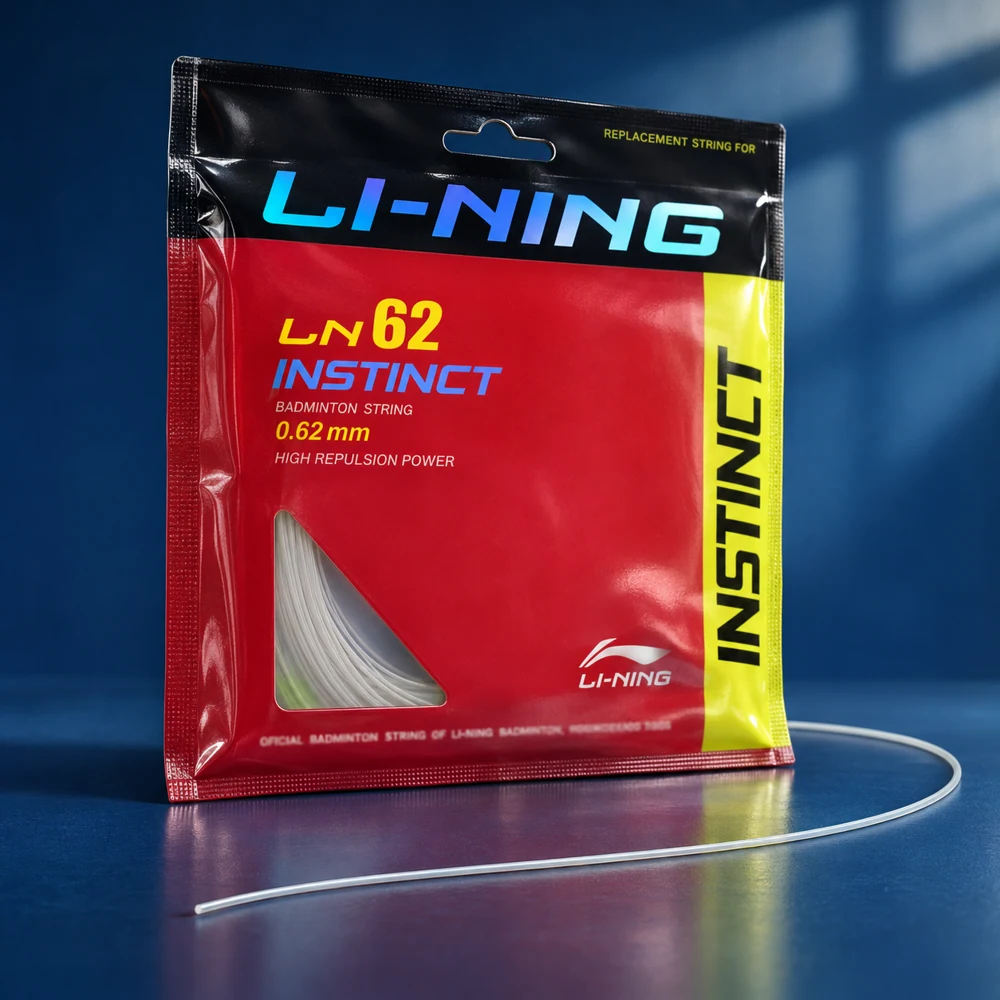
LN62 Instinct is a 0.62 mm string identified as AXJN026-2 in the checked regional listing. It is distinct from the 0.64 mm LN64 Instinct. Similar naming and packaging make complete identity particularly important when comparing older reviews or repeating an installation.
The official specification describes a heat-resistant, high-intensity nano-braided multifilament core and nylon outer. It names 3D KNIT technology, but the checked material does not provide a controlled performance percentage for an individual player.
The previous ERR page included playing impressions and broader claims that are not treated as fresh test evidence here. Its original DT endpoints are retained with their incomplete conditions, while current technical identity comes from the official material.

Keep coating claims precise
The official India webpage uses compound nylon coating wording. Its linked rear packet says Nano Boost Nylon Resin. This review preserves that distinction instead of claiming an exact chemical formulation or importing the elastic resin description from No.1 Boost.
The discrepancy does not justify inventing separate microscopic layers, a friction coefficient or a surface-grip score. A coated nylon outer is the useful description supported by the checked material; detailed sensation still needs to be evaluated in the actual setup.
Manufacturer statements about crisp impact and durability relative to the same diameter are positioning. No adequate independent controlled study was verified that would turn those claims into a universal retention or service-life advantage.
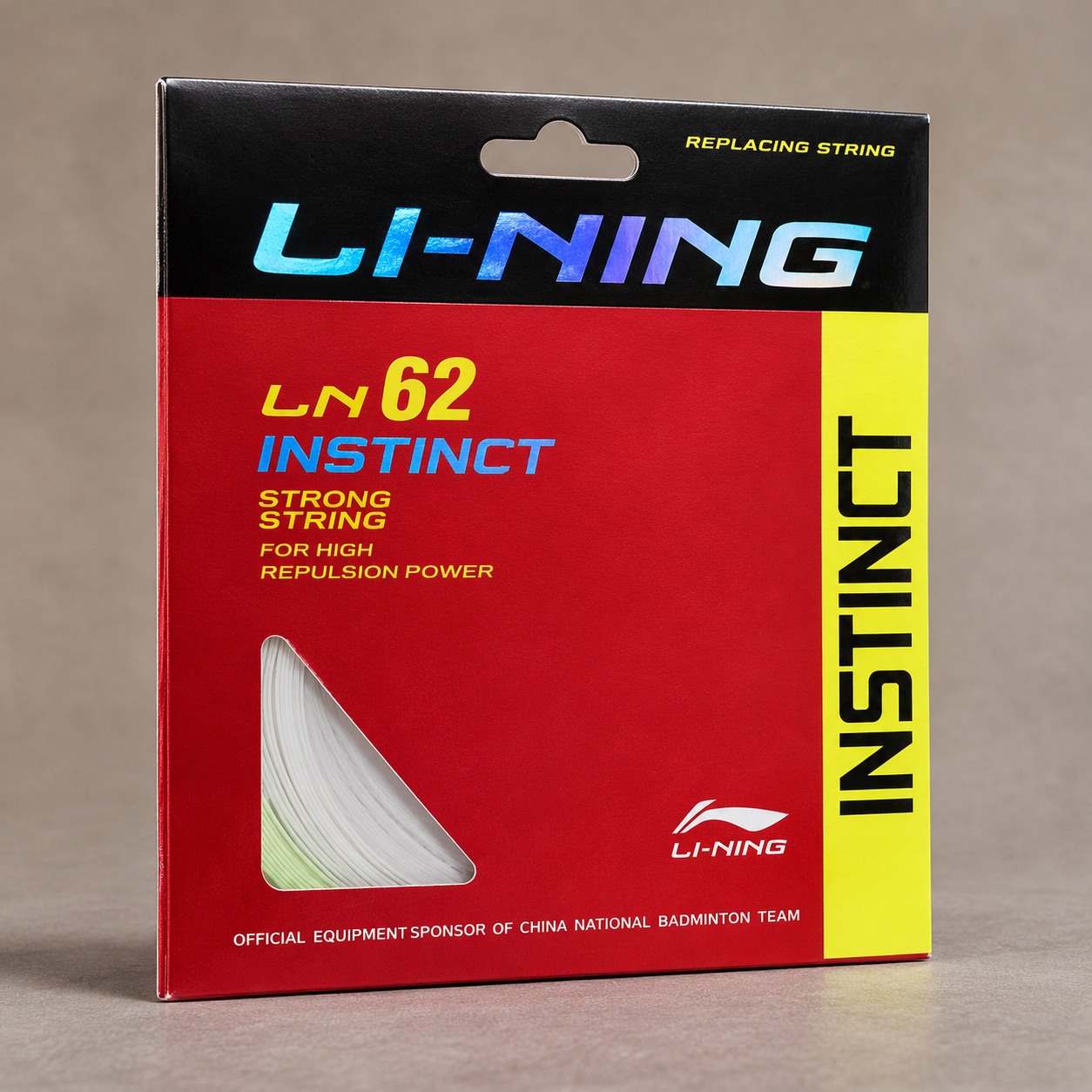
Explore crisp response and pace control
For someone considering a fine response-oriented string, useful questions include how easily familiar clears travel and how much effort is needed for a short block. Evaluate both. One loud central impact does not reveal how manageable the string feels through a normal session.
Repeat familiar shots and record where the shuttle lands, how centred contact is and what feels different from the previous setup. If the string feels lively during drives but difficult to soften at the net, that mixed result is more informative than a single superlative.
The original page’s stiff-feel comment at its recorded setup remains an old subjective impression, not a universal property of every LN62 installation. Frame, tension, contact and preference all affect the meaning of feel.
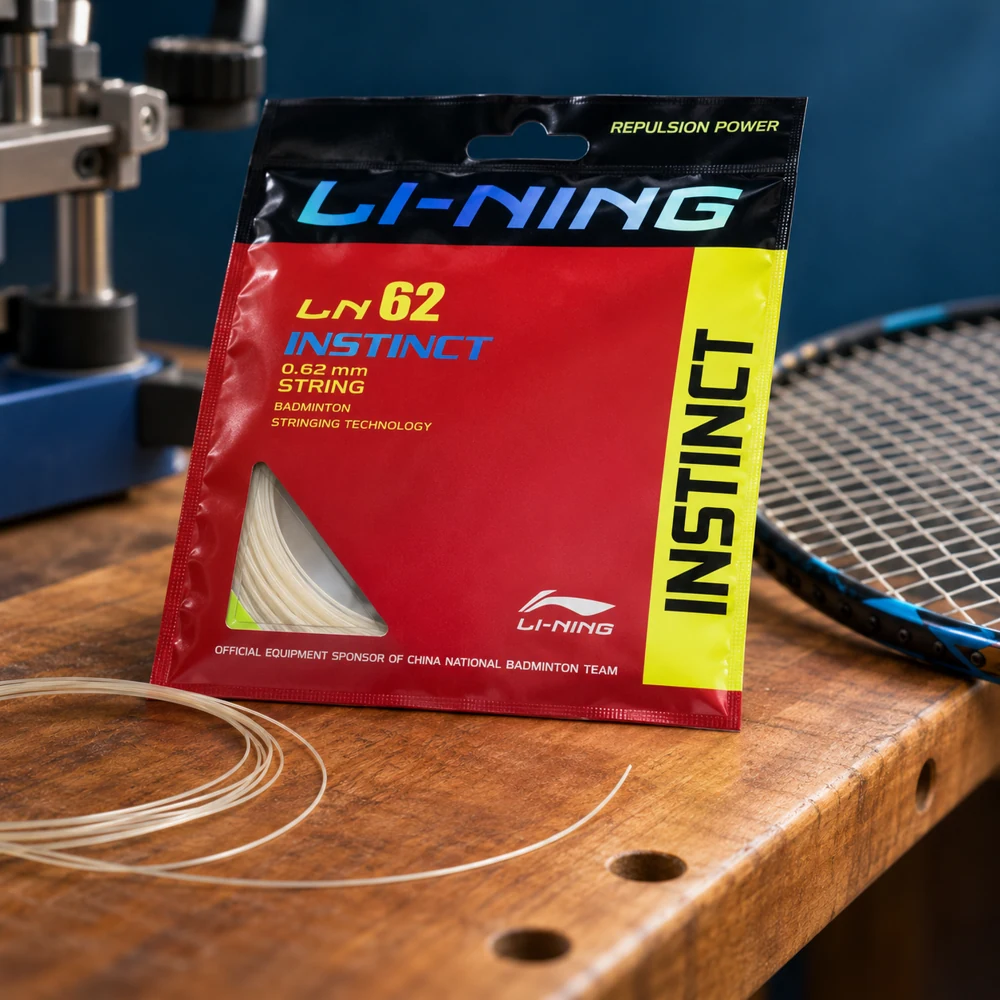
Treat 25 lbs as historical context
The archived ERR installation was requested at 25 lbs. Copying that number without checking your frame and playing context is not a sound selection method. Start with the exact racket, its official limits, condition and grommets.
Describe your current string, setting and the shots you want to change. If you struggle with length or harsh contact, explain that before increasing tension to chase sound. Changing the racket, grip, string and pounds together also obscures which factor mattered.
Pattern, knots, pre-stretch and main-and-cross settings require a suitable procedure for the racket and machine. General manufacturer care guidance supports inspection and staying within the frame’s suggested range, not one standard LN62 prescription.
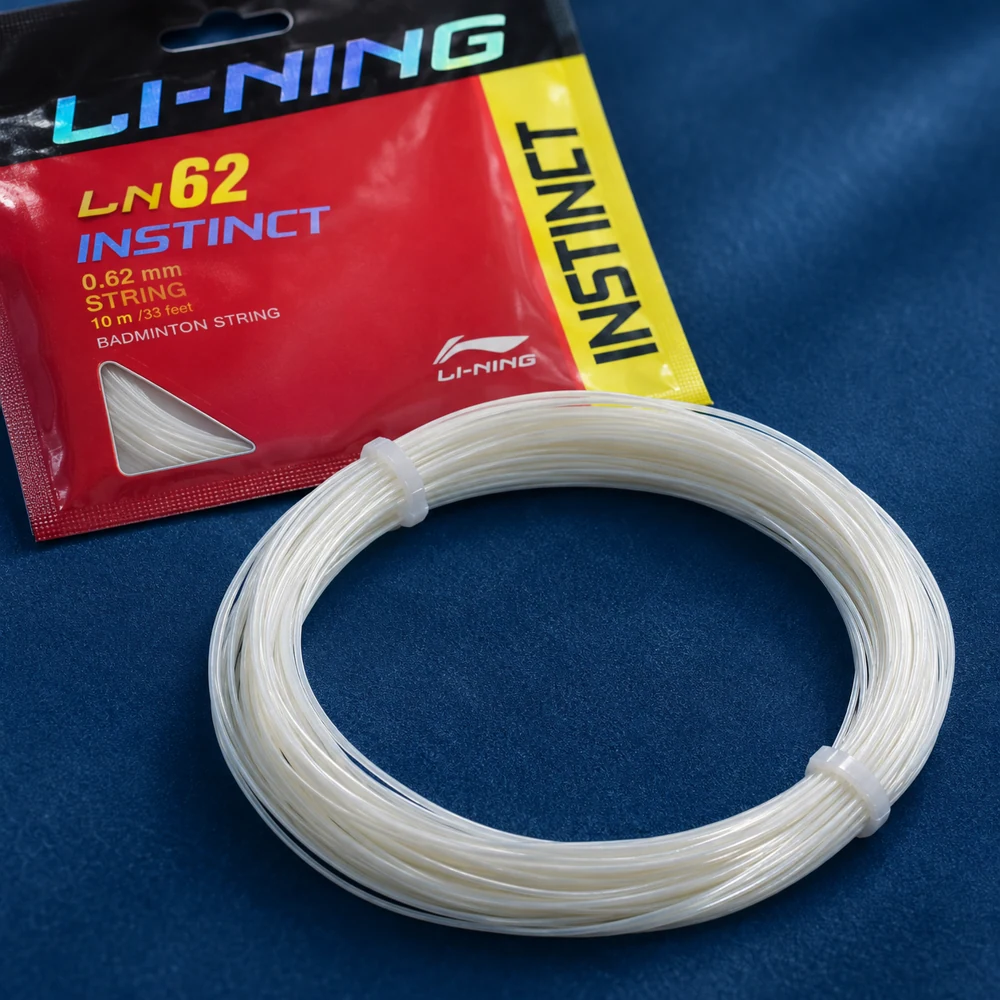
Read what the DT record can show
The old page reports Day 1 54–56, Day 2 51–53 and Day 3 50–53 DT. The interactive chart retains those ranges and labels the requested 25 lbs context. Its curve connects range midpoints for readability rather than claiming continuous measurement.
Instrument, calibration, elapsed time, playing exposure and environment are inadequately documented. Consequently, this series cannot establish superior retention over LN64 or predict your own rate of change. DT and stringing-machine pounds are separate quantities.
Future monitoring is more useful when each reading records the method and actual use. Add court hours, storage, visible wear and changes in response. Avoid turning a three-day archive or a generic maintenance interval into a fixed replacement deadline.
Compare nearby choices deliberately
LN64 Instinct changes the nominal gauge to 0.64 mm and uses its own AXJN024 identity. The shared family name does not establish identical feel or a proven durability gap. Compare the response you can use and the upkeep you are willing to monitor.
Original No.3 is a separate 0.63 mm nylon model, not No.3 Boost. BG66 Ultimax is a 0.65 mm option from another brand with a different construction description. These alternatives provide practical questions rather than a ladder of automatic upgrades.
The regional ten-point profile is not a cross-brand laboratory score. Keep useful conditions comparable where possible and assess full shots, gentle placement and wear together. If minimising replacement is the main priority, include a durability-focused option too.
LN62 Instinct Knowledge Check
How well do you know this string?
0 / 8 answeredYour result
Review each answer, then try again when you are ready.
| Nominal gauge | 0.62 mm |
|---|---|
| Product code | AXJN026 |
| Retail set length | Confirm the length on your packet |
| ERR restring | RM50.00, string and labour |
See the response profile
Five-characteristic spider chart
Contact, deflection and rebound
Press play to follow contact → deflection → rebound.
Slow-motion teaching diagram, not a measured speed or tension test.
The numbers behind the feel
Li-Ning’s official India listing supplies this LN62 Instinct ten-point profile. These values describe brand positioning, not ERR measurements or a common cross-brand test.
LN62 Instinct DT over three days
-
Day 154–56 DT
-
Day 251–53 DT
-
Day 350–53 DT
Recorded range Range midpoint
These readings describe an earlier installation. Use them to understand the recorded change across days.
LN62 Instinct and three alternatives
Compare construction and priorities rather than treating a model name as an upgrade ladder. These are different options, not a controlled ranking.
| String | Gauge | Construction or feel | What to check on court |
|---|---|---|---|
| LN62 Instinct | 0.62 mm | AXJN026 nano-braided core and coated nylon outer | Published coating wording differs between page and packet |
| LN64 Instinct | 0.64 mm | AXJN024 nano-braided core and Nano Boost nylon coating | Separate model; no fixed retention advantage established |
| No.3 | 0.63 mm | AXJK012 nylon core and ultra-fine nylon outer | Do not confuse with No.3 Boost |
| BG66 Ultimax | 0.65 mm | BG66UM high-intensity nylon core and nylon braid | Judge response and upkeep without comparing brand scores directly |
LN64, No.3 and Ultimax provide distinct gauge and construction comparisons. None is a guaranteed upgrade, and unmatched profile values or archived DT ranges cannot establish a retention ranking.
If LN62 Instinct is your first change to a fine gauge, keep your normal racket and ask for a frame check. Compare a few low-pressure warm-up clears and quick blocking returns before committing a second racket to the same setup.
What would you like to feel differently?
For LN62 Instinct, consider fine-gauge upkeep, crisp feedback and how easily you regulate gentle contact. Confirm the full AXJN026 identity rather than substituting LN64 or another fine string.
Track the change, not just the sound
Some settling after stringing is normal. Record when the racket starts to feel different, the hours played and storage conditions. Compare readings using the same method; a phone frequency reading is not the machine setting in pounds. Ask about installation consistency before assuming a different packet will solve it.
Bring this question to ERR →Separate contact from setup
A stiff-feeling bed, late contact, shuttle speed and technique can all make length difficult. Start with relaxed clears and describe where the shuttle lands. Review your current tension within the racket limit rather than increasing it automatically.
Bring this question to ERR →The break location matters
A break near the same grommet deserves a frame and grommet check. Breakage after off-centre contact differs from gradual notching in the centre. Bring the racket and a photo of the break; do not assume every early break means the string is defective.
Bring this question to ERR →Describe what your hand notices
Tell the stringer which shots feel unforgiving and when the sensation began. Compare contact consistency, string choice and tension. Stringing advice is not a treatment for persistent pain; stop playing through pain and seek appropriate assessment.
Bring this question to ERR →Inspect before installation
Photograph existing chips and discuss cracks, worn grommets and frame shape before work begins. Correct support, the appropriate pattern and staying within the racket limit matter. A chipped finish alone does not establish who caused damage.
Bring this question to ERR →Explain the change clearly
Grip size, balance, racket weight, stringbed response and timing are different things. A restring does not turn a head-heavy racket into a head-light one. Tell the stringer what changed and compare with your previous setup instead of asking only for more power.
Bring this question to ERR →What matters on court?
Choose what you want from your next restring.
Check short response in a drive drill
Use a predictable feed and your usual grip. Compare the result with a quieter follow-up from the same side.
Ask your stringerCan I keep this compact response and still shorten the return?
Record where the fine bed first wears
Note how long you play and check centre and edge independently. Compare LN64 only once any grommet issue is checked.
Ask your stringerWould LN64 help me compare upkeep in this frame?
Use your ordinary clear at a known setting
Tell ERR your previous requested pounds and check the racket limits before changing the setup. Try a late lift too.
Ask your stringerWhich setting gives the Instinct trial a fair starting point?
Try one slower return each rally
Watch where the shuttle lands after you soften the grip. Keep the pace change similar when comparing both Instinct gauges.
Ask your stringerWhich model suits the grip effort I use on short contact?
Different equipment. Different questions.
Different rackets
The same requested pounds can feel different across frame shapes and stringbed dimensions. Record the racket, not just the number.
Try LN62 Instinct on the same racket first. Record the full racket model and the agreed tension before trying another frame.
Different strings
Gauge, construction and surface feel change the comparison. Do not treat every thin string as the same product.
Compare LN62 Instinct with LN64 Instinct using the same racket and familiar shots. Use the table above to check gauge and construction before changing the setup.
Different installation
Machine calibration, support, clamps, pattern and technique can affect consistency. Ask about the process as well as qualifications.
If LN62 Instinct repeatedly breaks near the same hole, show your stringer a close-up of that spot and ask them to inspect the grommet.
Different sessions
Shuttle speed, hall conditions, fatigue and timing influence feedback. Compare familiar drills before drawing a conclusion.
Use the same shuttle speed and repeat a few clears, drives and net shots. Record playing hours alongside any change in how LN62 Instinct feels.
Prepare, play and review with purpose.
Bring your racket history
Note your racket model, previous string, requested tension and the change you want. A photo of recurring breakage helps.
Make the plan specific
Review the frame and grommets. Confirm string, colour availability, tension within the racket limit and price before work starts.
Keep a useful record
Keep the string model, requested tension and date together. Ask about the pattern and checks relevant to your racket.
Repeat familiar shots
Try clears, drives, blocks and net shots under comparable conditions. Record comfort, length and placement, not only sound.
Change one thing at a time
Bring your observations back. Keep the setup if it works; otherwise agree on one practical change for the next restring.
LN62 Instinct questions, clearly answered.
What is the LN62 Instinct gauge and code?
The checked official listing specifies 0.62 mm and AXJN026-2, with AXJN026 as the model identity.
Is LN62 the same as LN64 Instinct?
No. LN64 is a separate 0.64 mm AXJN024 model. Keep the full name when booking.
What construction is officially described?
A heat-resistant, high-intensity nano-braided multifilament core and nylon outer, with 3D KNIT branding.
Why is the coating description qualified?
The official webpage says compound nylon coating, while its linked rear packet says Nano Boost Nylon Resin. No exact chemical formula is inferred from these different wordings.
Does the 10-point profile compare all brands?
No. It is Li-Ning regional positioning, not a common laboratory standard.
Will a thinner string automatically improve my clears?
No. Contact, timing, racket and the complete installation affect the result. Try familiar shots and compare effort and length.
What does the old LN62 DT record show?
At the recorded 25 lbs setting, the old page lists 54–56, 51–53 and 50–53 DT across three labelled days. Important conditions are missing.
Should I copy the archived 25 lbs setting?
Not automatically. Check the actual frame limits and condition and discuss your current setup and desired change.
Does the archive prove LN62 retains better than LN64?
No. It is not a matched controlled comparison and cannot forecast your own retention.
What should I monitor with a fine string?
Notice wear, breakage location, grommet condition and changes in response. Record actual playing exposure rather than assuming a fixed lifespan.
What is the listed ERR LN62 price?
The checked catalogue lists RM50 including string and labour. Confirm current price and availability before travelling.
What information helps an LN62 booking?
Provide the full model, racket, current string, previous tension, playing frequency, preferred feel and any recurring wear concern.
How did Li-Ning LN62 Instinct play for you?
Your experience can help another player choose their next string.
What players say
Your first-hand experience matters.
Be the first to review Li-Ning LN62 Instinct. Share what you liked and what could be better.
More badminton string reviews.
Take a closer look at other strings before choosing your next setup.


Ready to discuss your string setup?
Bring your LN62 Instinct questions, racket model and previous setup. Discuss the contact feel you want before choosing the next restring.
Book stringing Explore the string listBook stringing.
Bring your racket and questions.
Discuss your LN62 Instinct setup with ERR before visiting. Tell us your racket model, previous tension and the shot or feel you want to review.
Book through ERR MemberAsk ERR on WhatsApp ↗Prepare a question for your visit
Open WhatsApp with my question ↗You can review your message in WhatsApp before sending.The checked ERR catalogue lists LN62 Instinct at RM50 including string and labour. Confirm price, colour and current availability before travelling. Overseas catalogue status does not establish what is currently held at ERR.
Send the complete LN62 name, racket model, present string, previous tension, playing frequency and desired change. Mention recurring breakage location or bring a photo of wear so the discussion can address the actual concern.
ERR is based in Taman Melati Utama, Setapak, Kuala Lumpur. Book before visiting and retain the installation details. Clear observations from familiar sessions support a better next decision than assuming every fine string should feel the same.
By appointment · Check available slots before travelling.
Find us in Taman Melati Utama
G-3, PV6 Platinum Hill Condo, No. 3 Jalan Melati 3, Taman Melati Utama, 53100 Kuala Lumpur, Malaysia.
Get directions in Google Maps ↗
