


Victor VBS-63 Review: Response, Upkeep & Original DT Context
Review the verified VBS-63 identity, medium-feel positioning and fine-string trade-offs. Read the old ERR DT ranges with their limitations before choosing a setup for your own racket.
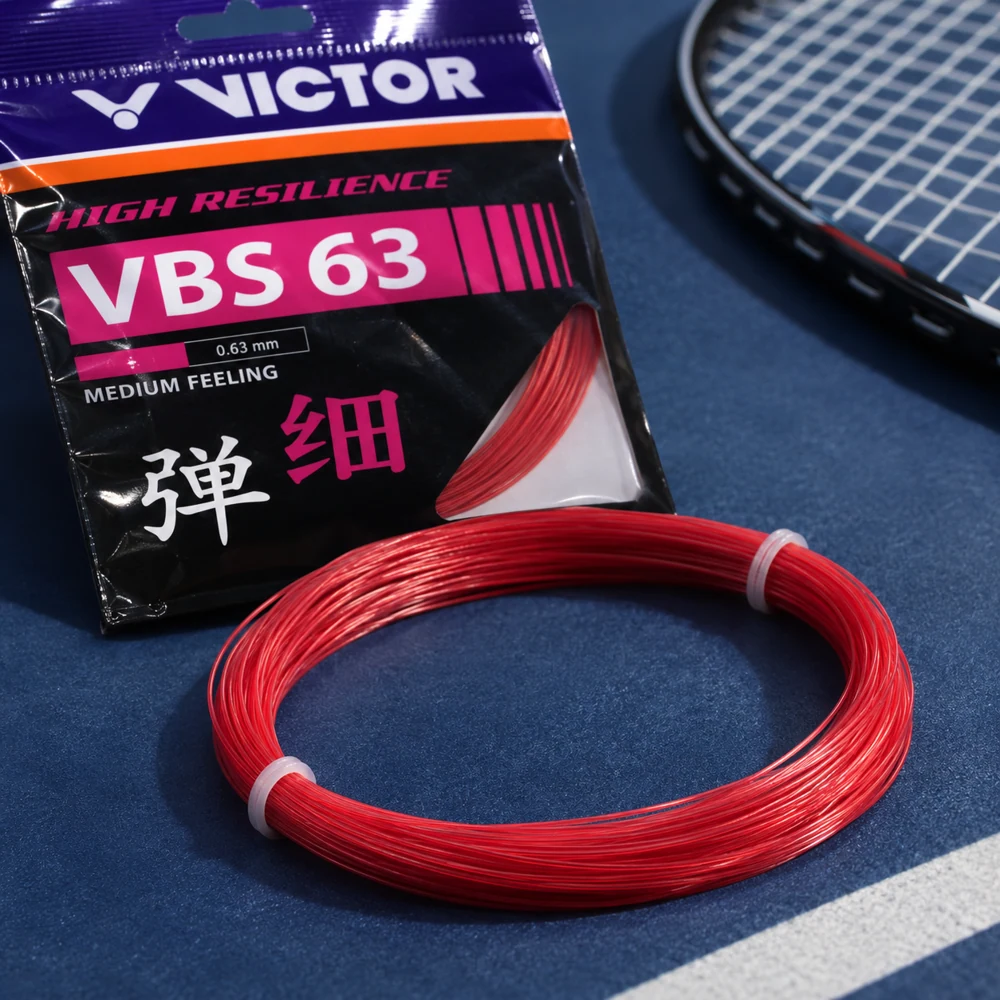
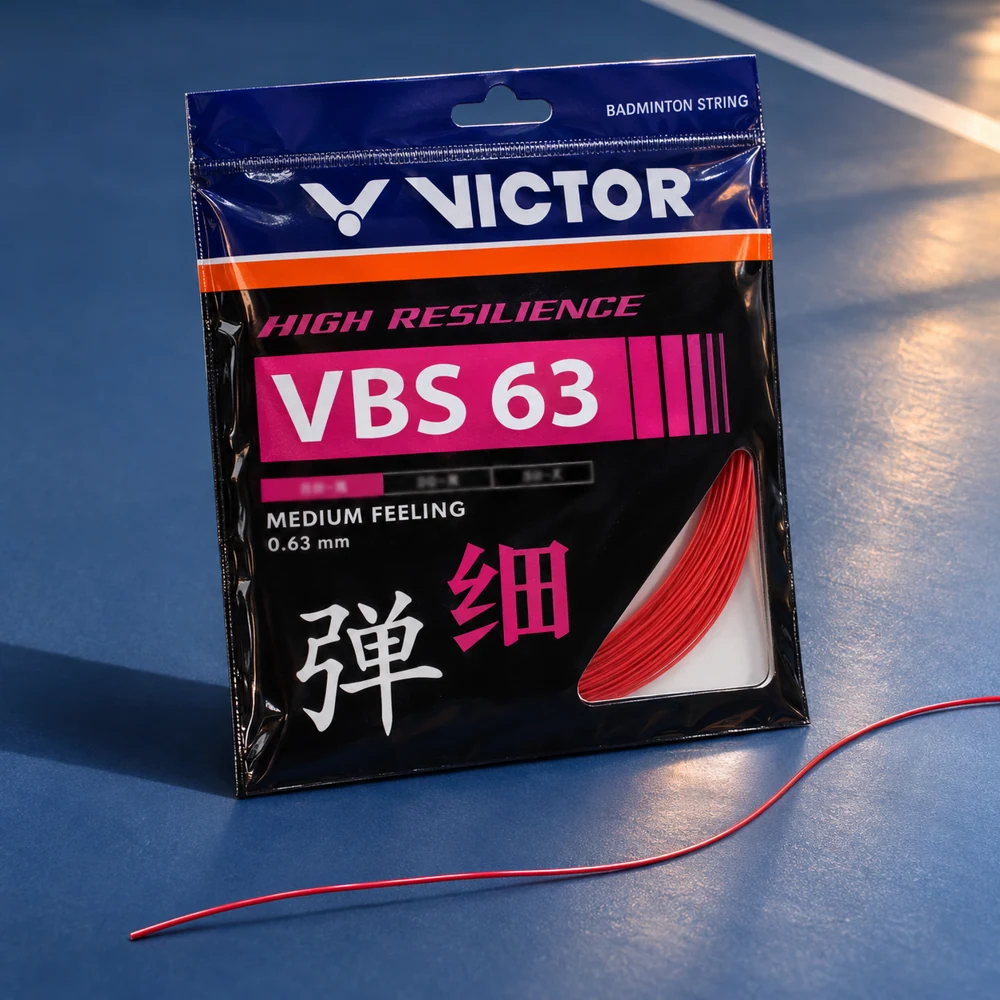
Identify the original VBS-63
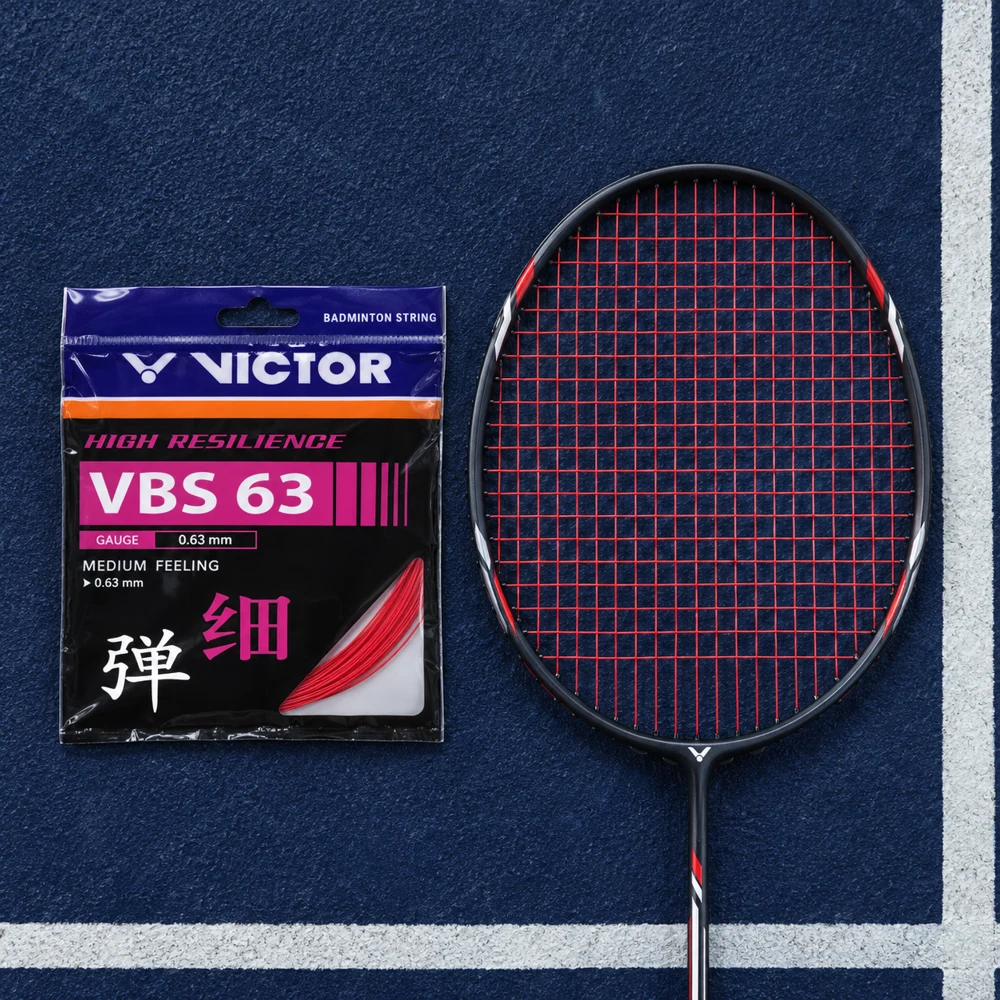
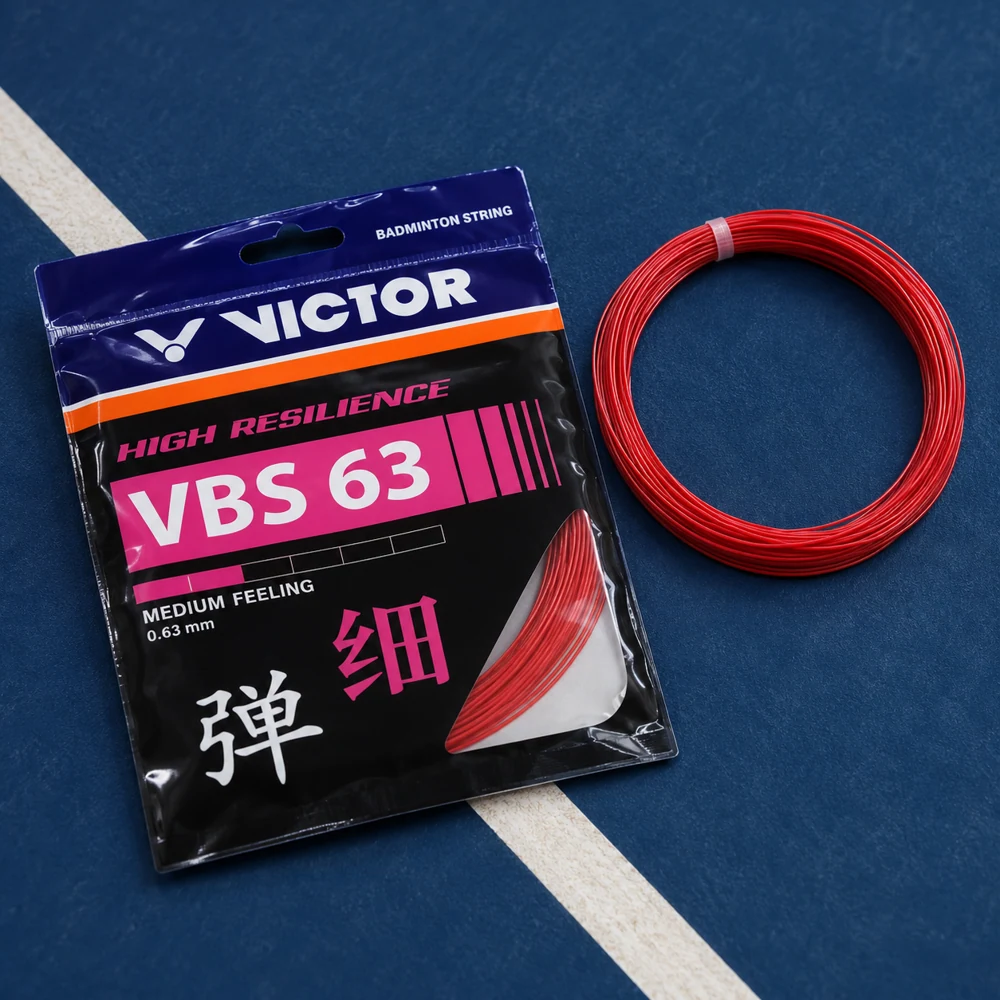
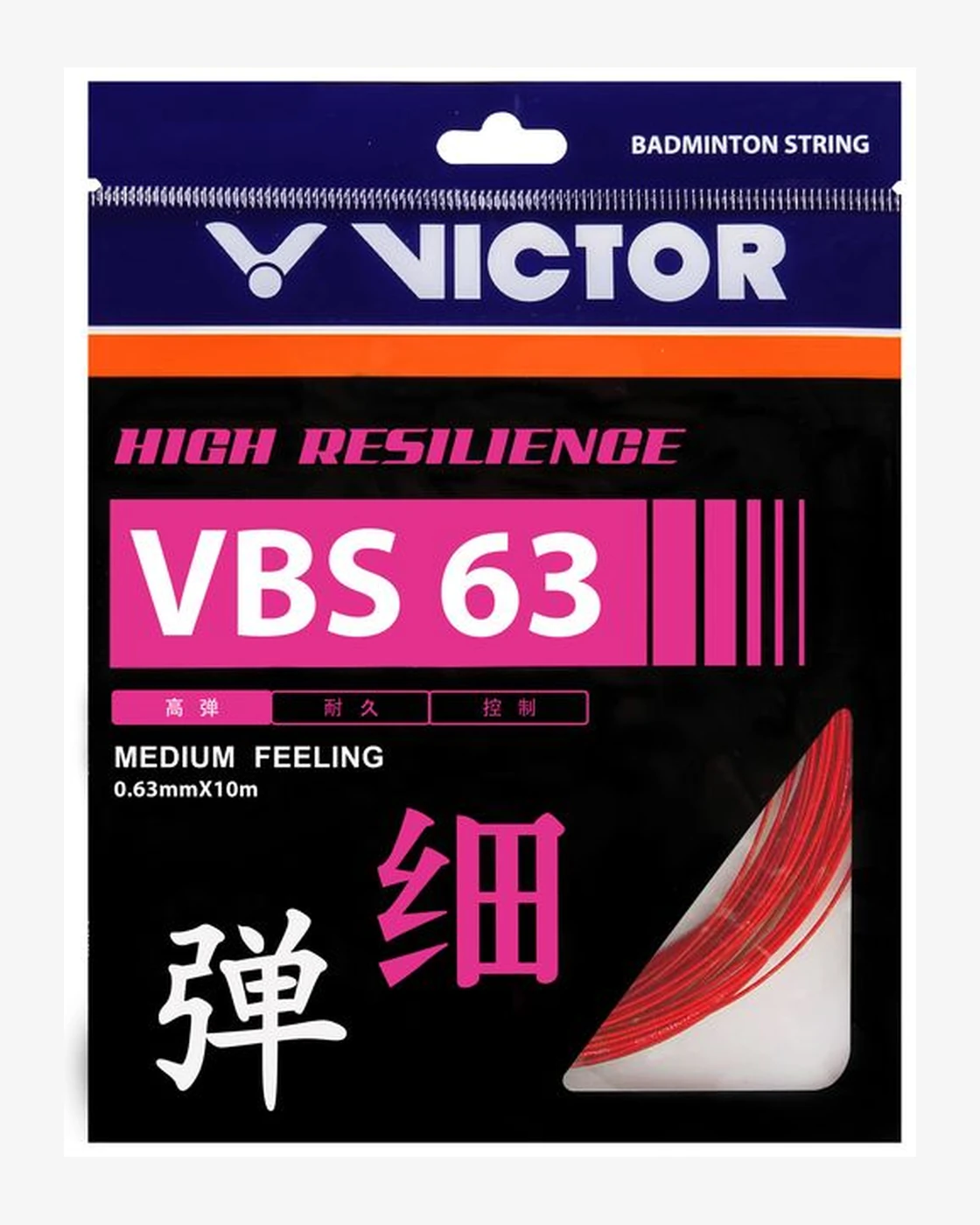
Victor’s current product page identifies a 0.63 mm, 10 m string with Medium feel and High Resilience labels. The 2021 manufacturer catalogue describes high-strength nylon fibres wrapped with stable multifilament. These are the verified starting points for this review.
The catalogue lists Japanese manufacture and regional set and reel references. Check the supplied packet for the market version. Historical catalogue references do not establish today’s stock or a current player endorsement.
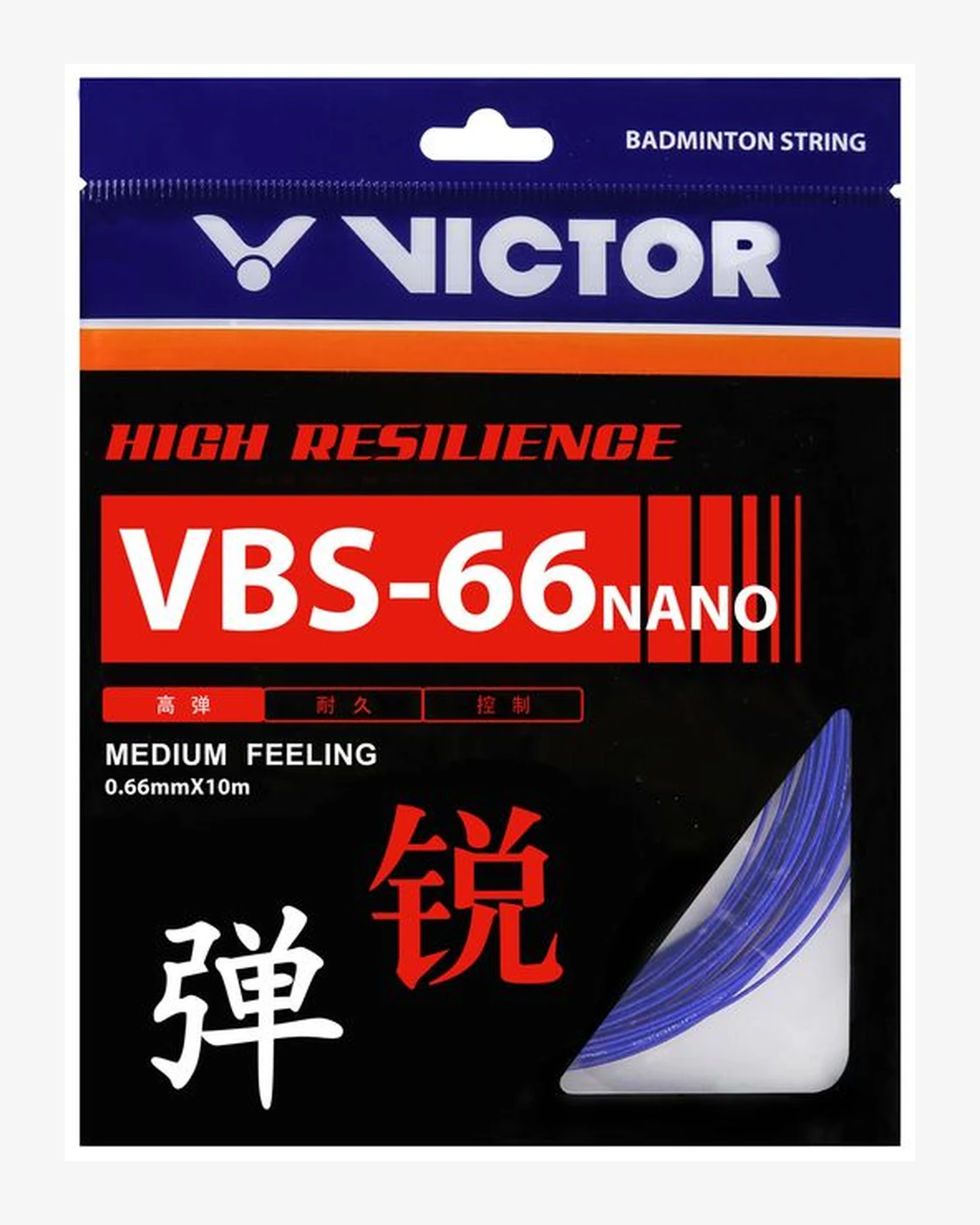
Keep VBS-63 separate from VBS-66N. The nano-core wording in the checked catalogue belongs to the latter. A stringer’s online account cannot transfer that technology to VBS-63 simply because the strings belong to the same family.
Interpret the response descriptions carefully
Medium feel is a manufacturer label rather than a measured stiffness value. High-resilience positioning suggests a response-focused trial question, but it does not guarantee effortless clears or improved shuttle speed.
A separate personal stringer account describes responsive feedback and bright sound. It lacks a matched protocol identifying all racket, setting and exposure conditions. Its hour estimate is not a retention promise, and its universal tension statement is not an installation recommendation.
The manufacturer catalogue’s qualitative bars do not establish a numerical denominator for a five-axis chart. This page uses descriptive evidence instead. Cross-brand scores would require a common method before they could support a meaningful ranking.
BADLAB’s 2019 five-player trial used Auraspeed 90 S rackets, with each tester retaining either 10 or 12 kg across the strings over several weeks. VBS-63 drew favourable short-game impressions. These were subjective ratings, not measured retention or a universal recommendation. Read the trial method
Check the shots you actually repeat
A fine response-oriented string may be worth discussing if you want to explore a different impact sensation. Test familiar clears and compact drives alongside blocks, net returns and other gentle placements. Loud sound alone cannot establish useful control.
Record contact quality and effort. A different frame or installation may change your experience even when the packet name stays the same. The 0.63 mm diameter is an identity fact, not a complete account of playing behaviour.
If replacement frequency is the main concern, include a relevant thicker alternative in the discussion. Inspect central wear, grommets and recurring edge failures. The aim is a manageable combination of response and upkeep rather than declaring one gauge best for everyone.
Put 24 lbs in its original context
The old ERR review records a requested 24 lbs setting. It does not establish the correct setting for your racket. Confirm the exact frame’s permitted range, present condition and grommets before considering any change.
Explain your current string, previous pounds and the specific difference you want. Difficult length, harsh-feeling impact and unpredictable gentle returns are different observations. Player level alone does not determine a unique number.
Use the appropriate pattern, knot procedure and main-and-cross settings for the frame and equipment. Pre-stretch is not an automatic requirement for every string. Retain the agreed installation details so later feedback has a useful baseline.
Read the overlapping archived ranges
The original record gives 43–49 DT on Day 1, 45–47 on Day 2 and 40–43 on Day 3. The first two midpoints are both 46. The chart preserves those ranges instead of inventing a steady measured decline.
Instrument, calibration, exact measurement timing, playing exposure and environment are incomplete. These entries cannot predict your retention, establish a percentage loss for the model or prove that another string is better or worse.
DT is not requested machine pounds. Future monitoring should retain a consistent method and record court hours, storage and wear, alongside changes in repeatable shots. The conditions are essential to interpreting a reading.
Compare construction before choosing a name
VBS-66N offers a thicker 0.66 mm Victor comparison and carries its own nylon-multifilament and nano-core description. Its specifications must not be used to fill gaps in VBS-63 information.
EXBOLT 63 has the same nominal 0.63 mm diameter with a separate Yonex Forged Fiber construction. BG66 Ultimax is a nearby 0.65 mm high-intensity nylon and braided-outer option. Diameter alone cannot establish equal sensation, retention or replacement life.
Choose a practical comparison question: usable length, gentle placement, impact sensation or upkeep. Where possible, keep the racket and trial routine comparable. Unmatched archives and brand-relative descriptions are not a controlled leaderboard.
VBS-63 Knowledge Check
How well do you know this string?
0 / 8 answeredYour result
Review each answer, then try again when you are ready.
| Nominal gauge | 0.63 mm |
|---|---|
| Product code | VBS-63 |
| Retail set length | 10 m |
| ERR restring | RM47.00, string and labour |
Connect verified descriptions to your court trial
What Victor specifies
- Gauge
- 0.63 mm
- Construction
- High-strength nylon with stable multifilament wrapping
- Feel label
- Medium
- Positioning
- High resilience
What to assess on court
Compare familiar clears and drives with gentler returns. Record repeatability and effort alongside wear and playing exposure.
The verified catalogue uses qualitative bars without a stated numerical denominator. No numerical five-axis performance score is invented.
Medium feel is a product label, not a fixed stiffness measurement or a substitute for checking the frame limits.
The numbers behind the feel
Victor provides qualitative positioning; no verified numerical denominator is assigned here.
What Victor specifies
- Gauge
- 0.63 mm
- Construction
- High-strength nylon with stable multifilament wrapping
- Feel label
- Medium
- Positioning
- High resilience
VBS-63 DT over three days
-
Day 143–49 DT
-
Day 245–47 DT
-
Day 340–43 DT
Recorded range Range midpoint
These readings describe an earlier installation. Use them to understand the recorded change across days.
VBS-63 and three alternatives
Compare construction and priorities rather than treating a model name as an upgrade ladder. These are different options, not a controlled ranking.
| String | Gauge | Construction or feel | What to check on court |
|---|---|---|---|
| VBS-63 | 0.63 mm | High-strength nylon with multifilament wrapping | Assess usable response and upkeep |
| VBS-66 Nano | 0.66 mm | VBS-66N nylon multifilament and nano-core description | Separate construction; do not transfer its technology to VBS-63 |
| EXBOLT 63 | 0.63 mm | Separate Yonex Forged Fiber construction | Same diameter does not establish the same feel |
| BG66 Ultimax | 0.65 mm | High-intensity nylon core and braided nylon outer | Compare soft-shot regulation and maintenance |
VBS-66N, EXBOLT 63 and BG66 Ultimax explore different construction and response priorities. A similar gauge does not establish identical feel, durability or retention.
During a short doubles exercise, pick the same return for VBS-63 and for another 0.63 mm string. Use two landing targets, one near the tape and one behind the service line. Record the kind of contact that helps you send the shuttle to each one while you keep the drive height low.
What would you like to feel differently?
For VBS-63, assess usable response alongside upkeep. Medium feel and high-resilience positioning are useful starting questions, not a guarantee for every racket or player.
Track the change, not just the sound
Some settling after stringing is normal. Record when the racket starts to feel different, the hours played and storage conditions. Compare readings using the same method; a phone frequency reading is not the machine setting in pounds. Ask about installation consistency before assuming a different packet will solve it.
Bring this question to ERR →Separate contact from setup
A stiff-feeling bed, late contact, shuttle speed and technique can all make length difficult. Start with relaxed clears and describe where the shuttle lands. Review your current tension within the racket limit rather than increasing it automatically.
Bring this question to ERR →The break location matters
A break near the same grommet deserves a frame and grommet check. Breakage after off-centre contact differs from gradual notching in the centre. Bring the racket and a photo of the break; do not assume every early break means the string is defective.
Bring this question to ERR →Describe what your hand notices
Tell the stringer which shots feel unforgiving and when the sensation began. Compare contact consistency, string choice and tension. Stringing advice is not a treatment for persistent pain; stop playing through pain and seek appropriate assessment.
Bring this question to ERR →Inspect before installation
Photograph existing chips and discuss cracks, worn grommets and frame shape before work begins. Correct support, the appropriate pattern and staying within the racket limit matter. A chipped finish alone does not establish who caused damage.
Bring this question to ERR →Explain the change clearly
Grip size, balance, racket weight, stringbed response and timing are different things. A restring does not turn a head-heavy racket into a head-light one. Tell the stringer what changed and compare with your previous setup instead of asking only for more power.
Bring this question to ERR →What matters on court?
Choose what you want from your next restring.
Try a compact midcourt return
Use a familiar feed and normal grip. Check whether you can reproduce the length of a short drive.
Ask your stringerCan I keep quick length with the smaller swing I use in a rally?
Use regular wear to guide the next trial
Record centre wear and playing hours. Ask for a frame check if failure repeats at one edge.
Ask your stringerWould VBS-66 Nano be useful for comparing upkeep?
Check an easy clear first
Bring the last requested tension and discuss frame limits. Use the same grip for a slightly late clear.
Ask your stringerWhich setting keeps a familiar reference for my VBS-63 trial?
Test two different return lengths
Try a quiet block just after a normal drive and note where each lands. Keep the feed similar.
Ask your stringerWhich Victor string helps me control shorter placement?
Different equipment. Different questions.
Different rackets
The same requested pounds can feel different across frame shapes and stringbed dimensions. Record the racket, not just the number.
Try VBS-63 on the same racket first. Record the full racket model and the agreed tension before trying another frame.
Different strings
Gauge, construction and surface feel change the comparison. Do not treat every thin string as the same product.
Compare VBS-63 with VBS-66 Nano using the same racket and familiar shots. Use the table above to check gauge and construction before changing the setup.
Different installation
Machine calibration, support, clamps, pattern and technique can affect consistency. Ask about the process as well as qualifications.
If VBS-63 repeatedly breaks near the same hole, show your stringer a close-up of that spot and ask them to inspect the grommet.
Different sessions
Shuttle speed, hall conditions, fatigue and timing influence feedback. Compare familiar drills before drawing a conclusion.
Use the same shuttle speed and repeat a few clears, drives and net shots. Record playing hours alongside any change in how VBS-63 feels.
Prepare, play and review with purpose.
Bring your racket history
Note your racket model, previous string, requested tension and the change you want. A photo of recurring breakage helps.
Make the plan specific
Review the frame and grommets. Confirm string, colour availability, tension within the racket limit and price before work starts.
Keep a useful record
Keep the string model, requested tension and date together. Ask about the pattern and checks relevant to your racket.
Repeat familiar shots
Try clears, drives, blocks and net shots under comparable conditions. Record comfort, length and placement, not only sound.
Change one thing at a time
Bring your observations back. Keep the setup if it works; otherwise agree on one practical change for the next restring.
VBS-63 questions, clearly answered.
What are VBS-63’s official gauge and feel labels?
The current official page lists 0.63 mm x 10 m, Medium feel and High Resilience.
What construction does the manufacturer catalogue describe?
The 2021 catalogue describes high-strength nylon fibres with stable multifilament wrapping.
Is VBS-63 made in Japan?
The checked 2021 manufacturer catalogue lists VBS-63 as made in Japan; confirm the actual packet for the supplied market version.
Does VBS-63 have the same nano-core description as VBS-66N?
That wording is attached to VBS-66N in the checked catalogue and is not transferred to VBS-63.
Why is there no numerical spider score here?
The verified material provides qualitative labels and bars without a stated numeric denominator. No five-axis score is invented.
Does medium feel guarantee comfort in every setup?
No. The frame, installation and contact affect the actual sensation and usable response.
Should every VBS-63 user select 24 lbs?
No. It is the archived setting; check the exact frame limits, condition and your current setup.
Why do the first two DT ranges overlap?
The old record states 43–49 and 45–47. Those endpoints are preserved rather than changed to create a neat declining series.
Can the archive or a personal hour estimate predict retention?
No. Measurement conditions and exposure are insufficient for a personal forecast or controlled comparison.
What should I assess when trying this fine string?
Familiar clears, drives and gentle returns, alongside centred contact, effort, wear and playing exposure.
What is the listed ERR VBS-63 price?
The checked catalogue lists RM47 including string and labour. Confirm current price, colour and availability.
What should I provide before a VBS-63 booking?
Racket, current string, previous pounds, playing frequency and preferred feel, plus any recurring wear concern.
How did Victor VBS-63 play for you?
Your experience can help another player choose their next string.
What players say
Your first-hand experience matters.
Be the first to review Victor VBS-63. Share what you liked and what could be better.
More badminton string reviews.
Take a closer look at other strings before choosing your next setup.


Ready to discuss your string setup?
Bring your VBS-63 questions, racket model and previous setup. Discuss the contact feel you want before choosing the next restring.
Book stringing Explore the string listBook stringing.
Bring your racket and questions.
Discuss your VBS-63 setup with ERR before visiting. Tell us your racket model, previous tension and the shot or feel you want to review.
Book through ERR MemberAsk ERR on WhatsApp ↗Prepare a question for your visit
Open WhatsApp with my question ↗You can review your message in WhatsApp before sending.The checked ERR catalogue lists RM47 including string and labour. Confirm the current price, colour and availability before travelling. A catalogue entry is not a stock reservation or a confirmed appointment.
Use the existing enquiry or member booking route with VBS-63 selected. Provide the racket model, current string, previous tension, playing frequency and preferred feel, plus any recurring wear location or difficult shot.
ERR’s location is Taman Melati Utama, Setapak, Kuala Lumpur. Players travelling from nearby Gombak or elsewhere in KL can arrange their visit first and bring the racket history. Feedback from ordinary sessions can then guide a deliberate adjustment.
By appointment · Check available slots before travelling.
Find us in Taman Melati Utama
G-3, PV6 Platinum Hill Condo, No. 3 Jalan Melati 3, Taman Melati Utama, 53100 Kuala Lumpur, Malaysia.
Get directions in Google Maps ↗
