


Li-Ning LN64 Instinct Review: Feedback & Archived DT Ranges
Review LN64 Instinct through its verified 0.64 mm AXJN024 construction and the original ERR DT endpoints. Compare crisp-response positioning and upkeep without treating incomplete historical observations as controlled results.
Establish the LN64 identity
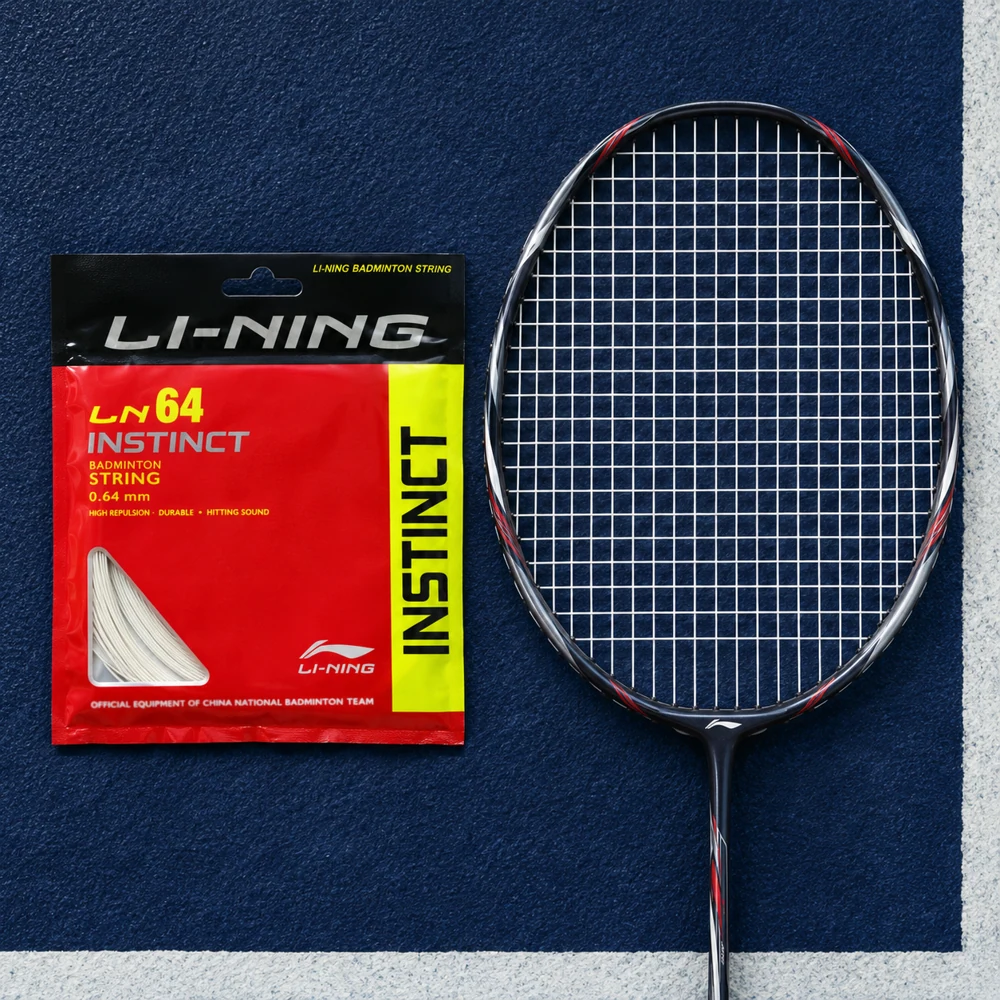
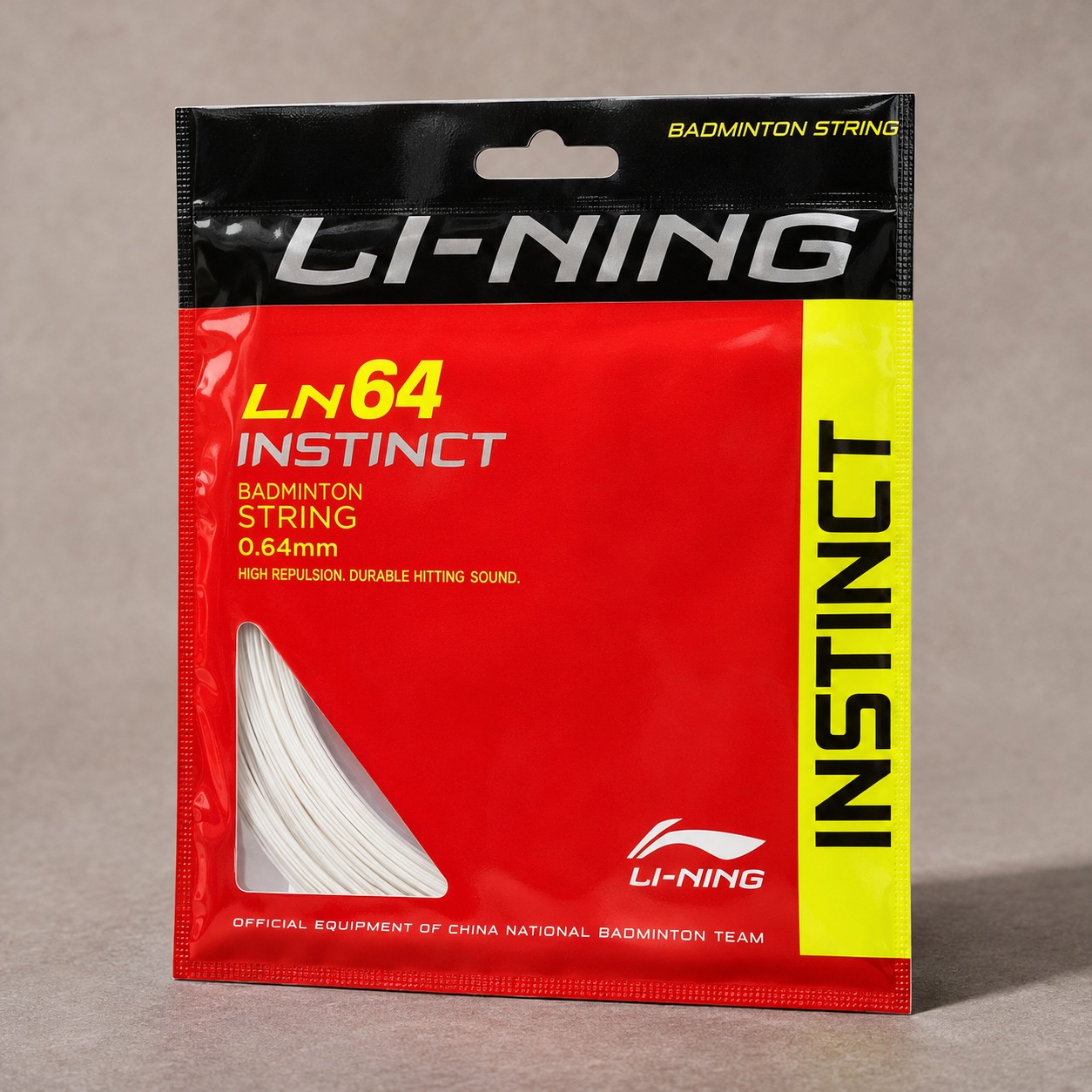
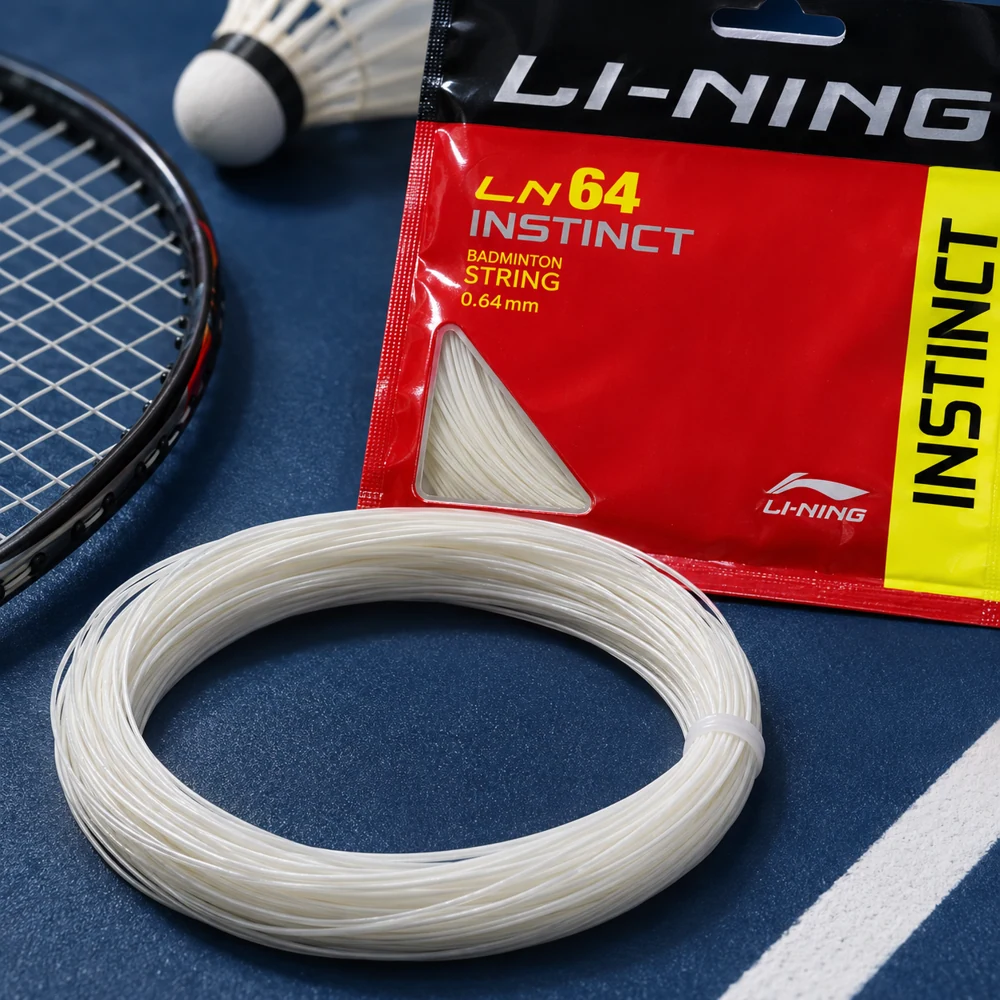
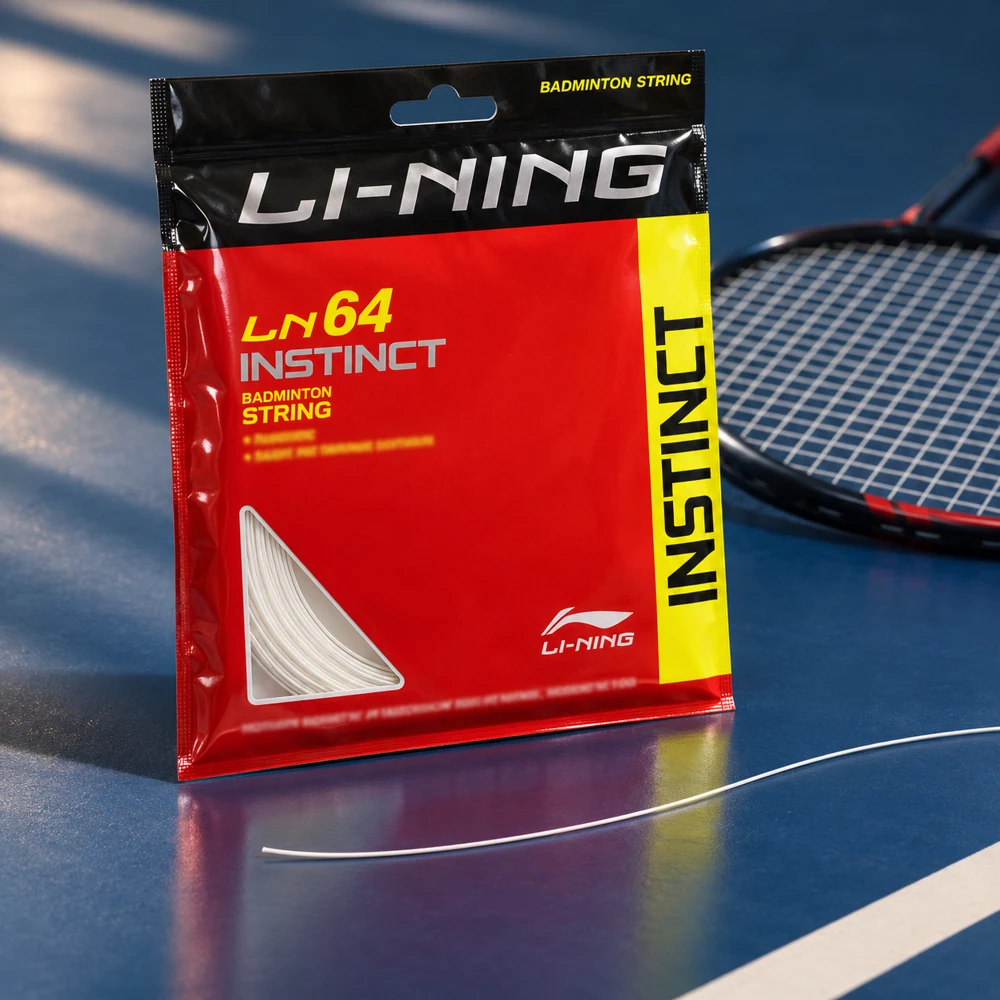
The checked official listing identifies LN64 Instinct as AXJN024-1 with a 0.64 mm gauge. LN62 Instinct is a separate AXJN026 model at 0.62 mm. Similar naming does not make their packets or playing accounts interchangeable.
The published core is heat-resistant, high-intensity nano-braided multifilament and the outer is nylon. The webpage says Nano Boost Nylon Coating; the linked rear packet uses Nano Boost Nylon Resin wording. This supports the stated nylon/resin description, not an invented exact formulation.
Li-Ning also names 3D KNIT. Its presence identifies the manufacturer’s technology description, but does not quantify what changes in an individual player’s racket. The genuine product packet and conceptual educational images serve different purposes on this page.
Read crisp-feedback claims accurately
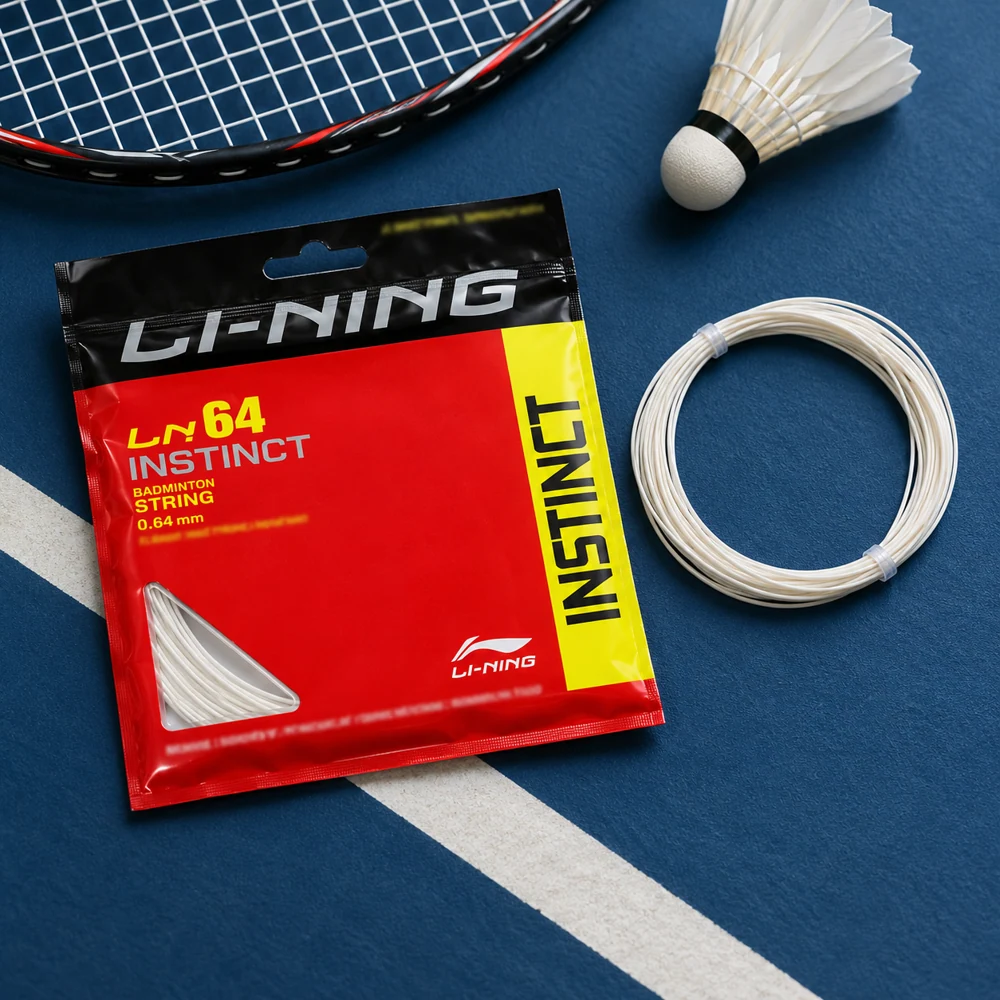
The manufacturer associates LN64 with repulsion, clear sound and crisp hitting feedback. It also claims durability relative to the same diameter. Those are brand statements; no controlled personal speed or lifespan improvement is established here.
The regional profile uses a ten-point scale. It helps describe positioning but cannot be compared directly with other brands as a universal test. A high sound value does not measure shot placement, and a durability value does not specify a session count.
No adequate independent controlled data was verified for a universal hardness, friction or retention ranking. Evaluate what the complete setup feels like on familiar shots instead of making a precise sensory prediction from the coating name.
Evaluate usable response in context
For a player considering a fine coated string, a useful trial asks how easily ordinary clears travel and whether softer returns stay manageable. Include both rather than selecting on one impressive hard hit.
Record timing, contact location and the effort used. If the response helps drives but needs adjustment at the net, keep both observations. The result should describe your repeatable experience, not a claim that every player will feel the same.
If avoiding frequent replacement is the main aim, also discuss a durability-focused choice. LN64’s diameter and positioning do not make it the automatic middle-ground solution for every preference. Decide what trade-off matters most to your routine.
Keep the installation specific
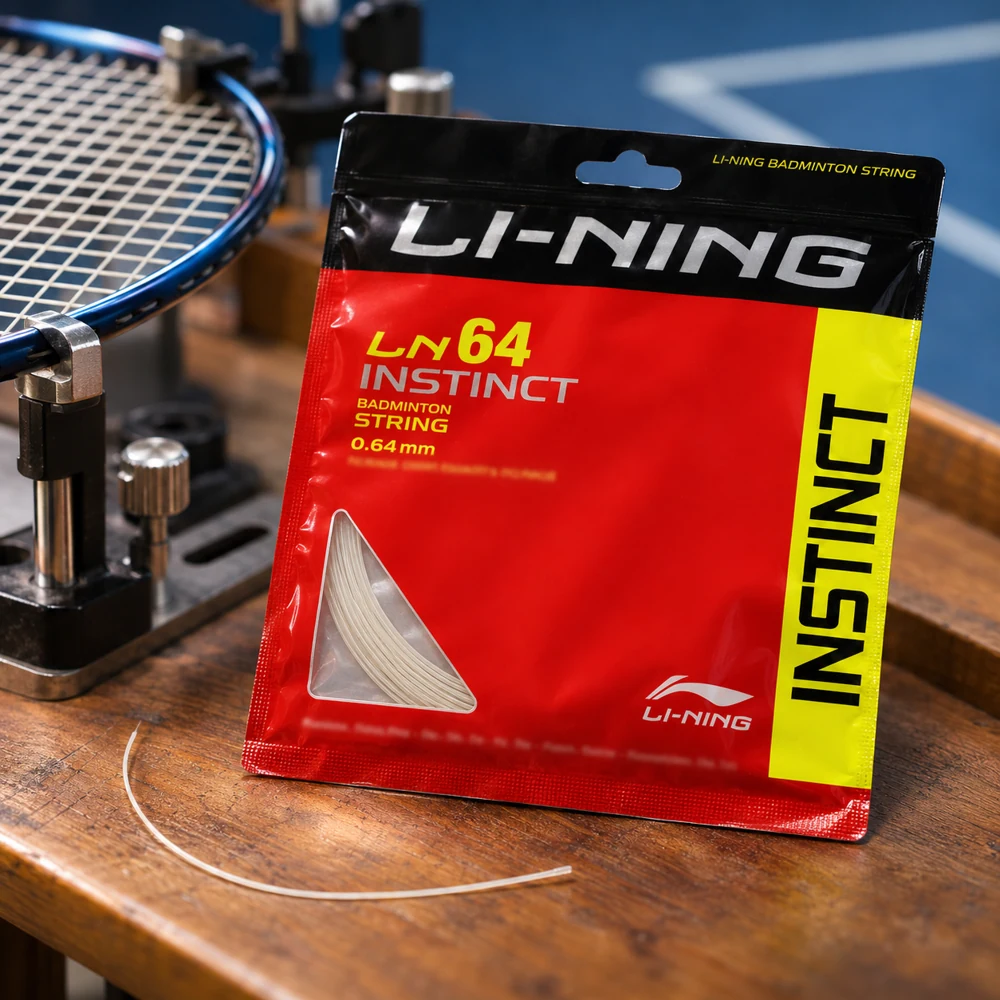
The old ERR record refers to a requested 26 lbs setup. It is historical context, not a recommended setting for all LN64 users. Check the exact racket, official limits, frame condition and grommets before deciding a new installation.
Explain your present string and pounds, playing frequency and the shots that feel difficult. Raising tension for a sharper sound alone can change more than the sensation you intended. Several simultaneous changes also make later feedback harder to interpret.
Pattern, main-and-cross settings, knots and pre-stretch require an appropriate procedure for the frame and equipment. Keep the agreed details so a later restring can repeat or deliberately change the setup rather than guess it.
Preserve the actual archived DT endpoints
The original text gives Day 1 58–57, Day 2 56–55 and Day 3 54–56 DT at 26 lbs. The display orders the first two ranges as 57–58 and 55–56 without changing the endpoints. This presentation change is disclosed rather than silently editing the record.
Instrument, calibration, precise timing, court exposure and environment are incomplete. Consequently, the older suggestion of slower tension loss than other strings is not retained as a proven result. The series cannot predict retention in your racket.
The curve connects range midpoints only as a visual aid. A future record should include the method, elapsed time and real playing exposure with observations of wear and response. DT is not interchangeable with machine pounds or a phone frequency reading.
Choose an informative comparison
LN62 Instinct changes the nominal gauge to 0.62 mm and has a separate model identity. The shared family name does not prove identical coating chemistry or a predictable feel difference.
No.3 Boost offers a 0.63 mm coated-string comparison under AXJP044, while original No.1 is a separate 0.65 mm nylon response model. These alternatives help distinguish a gauge question from a construction or maintenance question.
Keep relevant conditions comparable when trialling alternatives. Neither unmatched profile values nor incomplete historic DT series establish a winner. Compare stronger shots, gentle placement and upkeep together.
LN64 Instinct Knowledge Check
How well do you know this string?
0 / 8 answeredYour result
Review each answer, then try again when you are ready.
| Nominal gauge | 0.64 mm |
|---|---|
| Product code | AXJN024 |
| Retail set length | Confirm the length on your packet |
| ERR restring | RM50.00, string and labour |
See the response profile
Five-characteristic spider chart
Contact, deflection and rebound
Press play to follow contact → deflection → rebound.
Slow-motion teaching diagram, not a measured speed or tension test.
The numbers behind the feel
Li-Ning’s official regional listing supplies this LN64 Instinct ten-point profile. These are brand-relative positioning values, not ERR measurements or a shared cross-brand testing scale.
LN64 Instinct DT over three days
-
Day 157–58 DT
-
Day 255–56 DT
-
Day 354–56 DT
Recorded range Range midpoint
These readings describe an earlier installation. Use them to understand the recorded change across days.
LN64 Instinct and three alternatives
Compare construction and priorities rather than treating a model name as an upgrade ladder. These are different options, not a controlled ranking.
| String | Gauge | Construction or feel | What to check on court |
|---|---|---|---|
| LN64 Instinct | 0.64 mm | AXJN024 nano-braided core and Nano Boost nylon coating | No controlled retention advantage established |
| LN62 Instinct | 0.62 mm | AXJN026 nano-braided core and coated nylon outer | Separate identity; coating wording differs across sources |
| No.3 Boost | 0.63 mm | AXJP044 nano-braided core and compound resin coating | Assess usable touch rather than assuming identical feel |
| No.1 | 0.65 mm | AXJJ018 nylon multifilament core and nylon outer | Compare feedback and maintenance priorities |
LN62, No.3 Boost and No.1 change gauge and construction in different ways. Use a practical trial question rather than treating brand values or incomplete DT archives as a universal ranking.
After a drive drill, use the LN64 Instinct for a run of gentler straight returns that fall close to the net. These are useful checks when comparing with a thicker coated string. Note the grip pressure and where the shuttle lands, then repeat at a similar pace later in the session.
What would you like to feel differently?
For LN64 Instinct, compare crisp feedback with soft-shot regulation and upkeep. Confirm the AXJN024 identity and keep incomplete historical DT ranges separate from a prediction about your racket.
Track the change, not just the sound
Some settling after stringing is normal. Record when the racket starts to feel different, the hours played and storage conditions. Compare readings using the same method; a phone frequency reading is not the machine setting in pounds. Ask about installation consistency before assuming a different packet will solve it.
Bring this question to ERR →Separate contact from setup
A stiff-feeling bed, late contact, shuttle speed and technique can all make length difficult. Start with relaxed clears and describe where the shuttle lands. Review your current tension within the racket limit rather than increasing it automatically.
Bring this question to ERR →The break location matters
A break near the same grommet deserves a frame and grommet check. Breakage after off-centre contact differs from gradual notching in the centre. Bring the racket and a photo of the break; do not assume every early break means the string is defective.
Bring this question to ERR →Describe what your hand notices
Tell the stringer which shots feel unforgiving and when the sensation began. Compare contact consistency, string choice and tension. Stringing advice is not a treatment for persistent pain; stop playing through pain and seek appropriate assessment.
Bring this question to ERR →Inspect before installation
Photograph existing chips and discuss cracks, worn grommets and frame shape before work begins. Correct support, the appropriate pattern and staying within the racket limit matter. A chipped finish alone does not establish who caused damage.
Bring this question to ERR →Explain the change clearly
Grip size, balance, racket weight, stringbed response and timing are different things. A restring does not turn a head-heavy racket into a head-light one. Tell the stringer what changed and compare with your previous setup instead of asking only for more power.
Bring this question to ERR →What matters on court?
Choose what you want from your next restring.
Check crisp contact on a drive and block
Use the same feed for both lengths. Compare how easily you can shorten the return without changing grip pressure.
Ask your stringerCan I keep the drive feedback and reduce pace cleanly?
Take notes before replacing the bed
Track hours, centre wear and any recurring edge breaks. Ask the stringer to look at the frame if the same hole fails.
Ask your stringerIs my wear pattern more useful than a brand durability rating?
Keep the comfortable clear in view
Bring your previous requested tension and frame model. Check the usual clear before you try a new setting.
Ask your stringerWhat starting point lets me compare LN64 Instinct with my current setup?
Try a fine-gauge comparison with LN62
Use a soft push after a normal drive on each. Note whether the diameter change affects your short control.
Ask your stringerWhich Instinct option is easier for me to use at reduced pace?
Different equipment. Different questions.
Different rackets
The same requested pounds can feel different across frame shapes and stringbed dimensions. Record the racket, not just the number.
Try LN64 Instinct on the same racket first. Record the full racket model and the agreed tension before trying another frame.
Different strings
Gauge, construction and surface feel change the comparison. Do not treat every thin string as the same product.
Compare LN64 Instinct with LN62 Instinct using the same racket and familiar shots. Use the table above to check gauge and construction before changing the setup.
Different installation
Machine calibration, support, clamps, pattern and technique can affect consistency. Ask about the process as well as qualifications.
If LN64 Instinct repeatedly breaks near the same hole, show your stringer a close-up of that spot and ask them to inspect the grommet.
Different sessions
Shuttle speed, hall conditions, fatigue and timing influence feedback. Compare familiar drills before drawing a conclusion.
Use the same shuttle speed and repeat a few clears, drives and net shots. Record playing hours alongside any change in how LN64 Instinct feels.
Prepare, play and review with purpose.
Bring your racket history
Note your racket model, previous string, requested tension and the change you want. A photo of recurring breakage helps.
Make the plan specific
Review the frame and grommets. Confirm string, colour availability, tension within the racket limit and price before work starts.
Keep a useful record
Keep the string model, requested tension and date together. Ask about the pattern and checks relevant to your racket.
Repeat familiar shots
Try clears, drives, blocks and net shots under comparable conditions. Record comfort, length and placement, not only sound.
Change one thing at a time
Bring your observations back. Keep the setup if it works; otherwise agree on one practical change for the next restring.
LN64 Instinct questions, clearly answered.
What gauge and code identify LN64 Instinct?
The checked official listing specifies 0.64 mm and AXJN024-1, with AXJN024 as the model identity.
Is LN64 just another name for LN62?
No. LN62 is a separate 0.62 mm AXJN026 model. Keep the full identity when choosing or booking.
What is the published coating description?
The webpage says Nano Boost Nylon Coating and the linked rear packet says Nano Boost Nylon Resin. No exact formula is inferred.
Does 3D KNIT prove longer life in my racket?
No. It is a named construction technology and durability positioning, not a guaranteed personal lifespan.
Can the profile compare all brands directly?
No. It is a regional brand-relative ten-point profile, not a shared laboratory testing scale.
Does crisp sound mean better control?
No. Sound is an impression; repeatable placement depends on the whole setup and your contact.
Why were the first two DT ranges reordered?
The old page wrote 58–57 and 56–55. They are displayed as 57–58 and 55–56 without changing endpoints.
Does the archive prove LN64 drops more slowly than other strings?
No. Instrument, timing, exposure and other conditions are incomplete, so a controlled comparison is not supported.
Should I copy 26 lbs from the old record?
Not automatically. Check the actual frame limits and condition and discuss your present setup and desired change.
What should future monitoring include?
Record the method, racket, setting, timing, court exposure, storage, visible wear and changes in response. Keep DT separate from machine pounds.
What is the listed ERR LN64 price?
The checked catalogue lists RM50 including string and labour. Confirm current price, colour and availability.
What helps an LN64 enquiry?
Give the full model, racket, current string, previous tension, playing frequency and preferred feel, with any recurring wear concern.
How did Li-Ning LN64 Instinct play for you?
Your experience can help another player choose their next string.
What players say
Your first-hand experience matters.
Be the first to review Li-Ning LN64 Instinct. Share what you liked and what could be better.
More badminton string reviews.
Take a closer look at other strings before choosing your next setup.


Ready to discuss your string setup?
Bring your LN64 Instinct questions, racket model and previous setup. Discuss the contact feel you want before choosing the next restring.
Book stringing Explore the string listBook stringing.
Bring your racket and questions.
Discuss your LN64 Instinct setup with ERR before visiting. Tell us your racket model, previous tension and the shot or feel you want to review.
Book through ERR MemberAsk ERR on WhatsApp ↗Prepare a question for your visit
Open WhatsApp with my question ↗You can review your message in WhatsApp before sending.The checked local catalogue lists LN64 Instinct at RM50 including string and labour. Confirm current price, colour and availability before travelling. A catalogue listing does not reserve stock or establish local availability from an overseas store.
Use the existing enquiry or member appointment flow with the complete LN64 name, racket model, current string, previous tension, court frequency and preferred feel. Include recurring breakage or wear details if upkeep is the reason for changing.
ERR is based in Taman Melati Utama, Setapak, Kuala Lumpur. Book before visiting and keep the installation record. Specific observations from familiar sessions provide a better basis for the next adjustment than a universal best-string claim.
By appointment · Check available slots before travelling.
Find us in Taman Melati Utama
G-3, PV6 Platinum Hill Condo, No. 3 Jalan Melati 3, Taman Melati Utama, 53100 Kuala Lumpur, Malaysia.
Get directions in Google Maps ↗
