


Felet Ultra Sonic 63: String Guide & Stringing in Setapak KL
Felet Ultra Sonic 63 is a 0.63 mm multifilament badminton string marketed for repulsion and a pronounced hitting sound. Consider its response on gentle shots, thin-string maintenance and your racket limits before arranging a restring in Setapak, Kuala Lumpur.

Identify the exact Ultra Sonic 63
Felet’s official store identifies Ultra Sonic 63 as a 0.63 mm multifilament string supplied in a 10 m set. Its listing describes Japanese manufacture, repulsion and a prominent hitting sound. The product should not be confused with Felet Ultramax Turbo Nano 66 or another model simply because both packets use Nano branding.
The official-store description refers to a soft impact sensation. Treat that as the brand’s intended feel, not a calibrated stiffness measurement of your finished racket. Frame, installed setup and contact all influence what a player experiences.
The detailed manufacturer website and archived catalogue were not accessible during this research. A precise material recipe and a separate manufacturer order code therefore remain unconfirmed here. Ultra Sonic 63 is the verified model designation; a retailer stock reference is not silently substituted as a manufacturer code.
Ultra Sonic 63 identifies this Felet packet. If you bring in a loose coil, pair it with a clear photo of the pack or order label. Match the whole name because the 0.63 mm diameter also appears on strings with different constructions and feel.
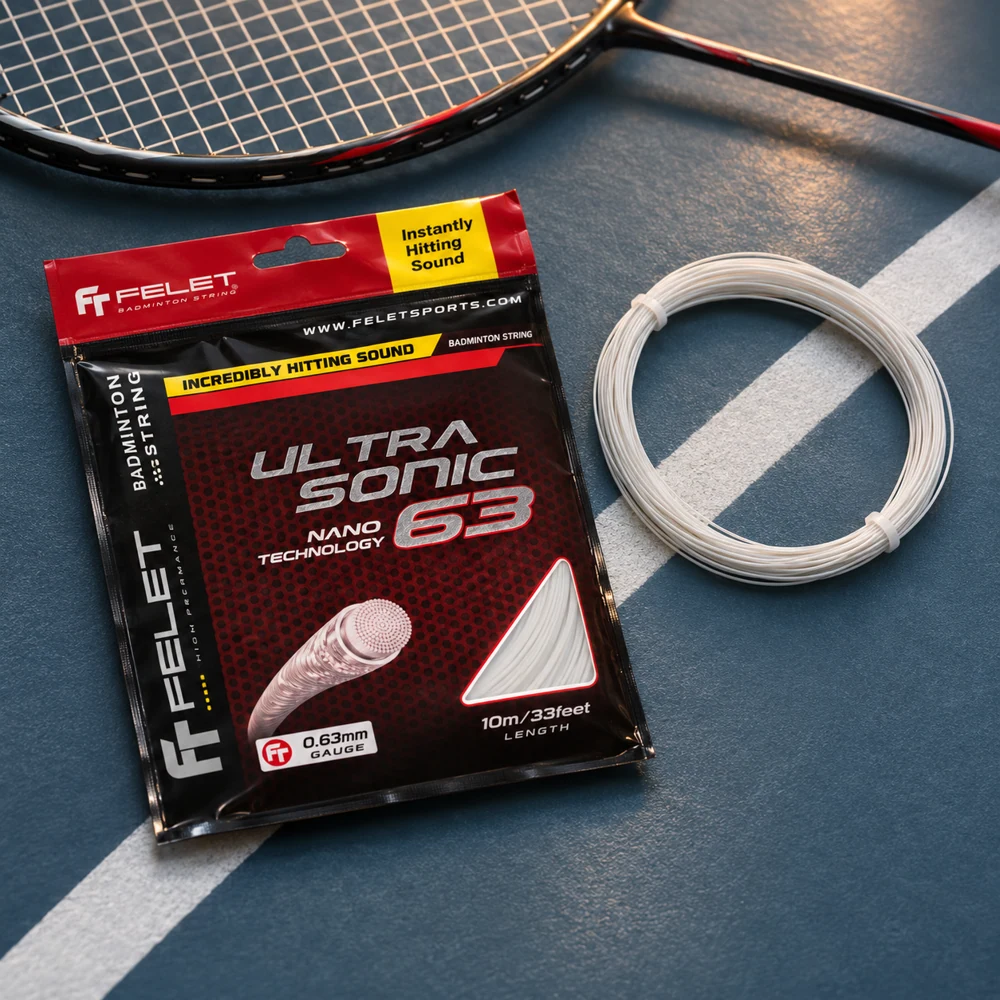
Listen for feedback, then check where the shuttle goes
Sound is a central part of this model’s positioning. A satisfying impact can be enjoyable feedback, but loudness alone does not establish shuttle speed, useful depth or control. Compare ordinary clears and drives with the shots you already know well.
Then reduce the pace. Try blocks and short net returns to see whether the response remains manageable when you are not swinging hard. If a string feels lively on a full shot but sends gentle returns too far, that trade-off matters more than an impressive sound.
No controlled acoustic or shuttle-speed test was verified for this model. Descriptions such as high repulsion and strong hitting sound are brand positioning rather than measured gains over BG66 Ultimax or Exbolt 63. The educational images illustrate trial questions, not laboratory findings.
Use a sequence of firm drives, followed immediately by low-paced blocks off the same type of feed. Listen to the contact and watch where the block lands. The higher pitch is a useful observation to record beside repeatable length, especially when you are choosing a training string.

Consider thin-string response and replacement priorities
Ultra Sonic 63 is a relevant discussion when you want to explore a thin string with a sound-focused identity and a softer-described impact. It is less persuasive to choose it only because an advertisement gives a large durability number.
At 0.63 mm it is thinner in nominal diameter than BG66 Ultimax and BG65. Diameter is a useful specification, but it cannot by itself predict service life across different materials and installations. Frequent off-centre contact, damaged grommets and existing wear deserve attention alongside the model.
A player primarily seeking fewer replacements may want to include BG65 in the comparison. Someone already comfortable with another 0.63 mm string should still assess placement and feedback before assuming this will feel identical. The best question is which compromise helps your normal game.

Agree the setup around the actual racket
Start with the racket model and its manufacturer’s permitted setup, then inspect the frame and grommets. A string packet or another player’s pounds does not override the frame’s condition and instructions.
Explain your current string, previous tension and the change you want. If clears feel difficult, describe when that happens rather than automatically requesting more pounds for a sharper sound. If blocks feel too lively, include that observation in the discussion.
No model-specific manufacturer tension range or universal pre-stretch value was verified here. Main-and-cross differences, pattern and knots should follow the applicable racket procedure and equipment context. Change deliberately and compare familiar shots before changing several variables again.
The first trial is easiest to judge when the frame, grip and shuttle are familiar. If your previous string is thicker, expect a change in contact and ask your stringer which setup details can sensibly stay the same. Let your next few sessions determine whether you want to adjust anything.
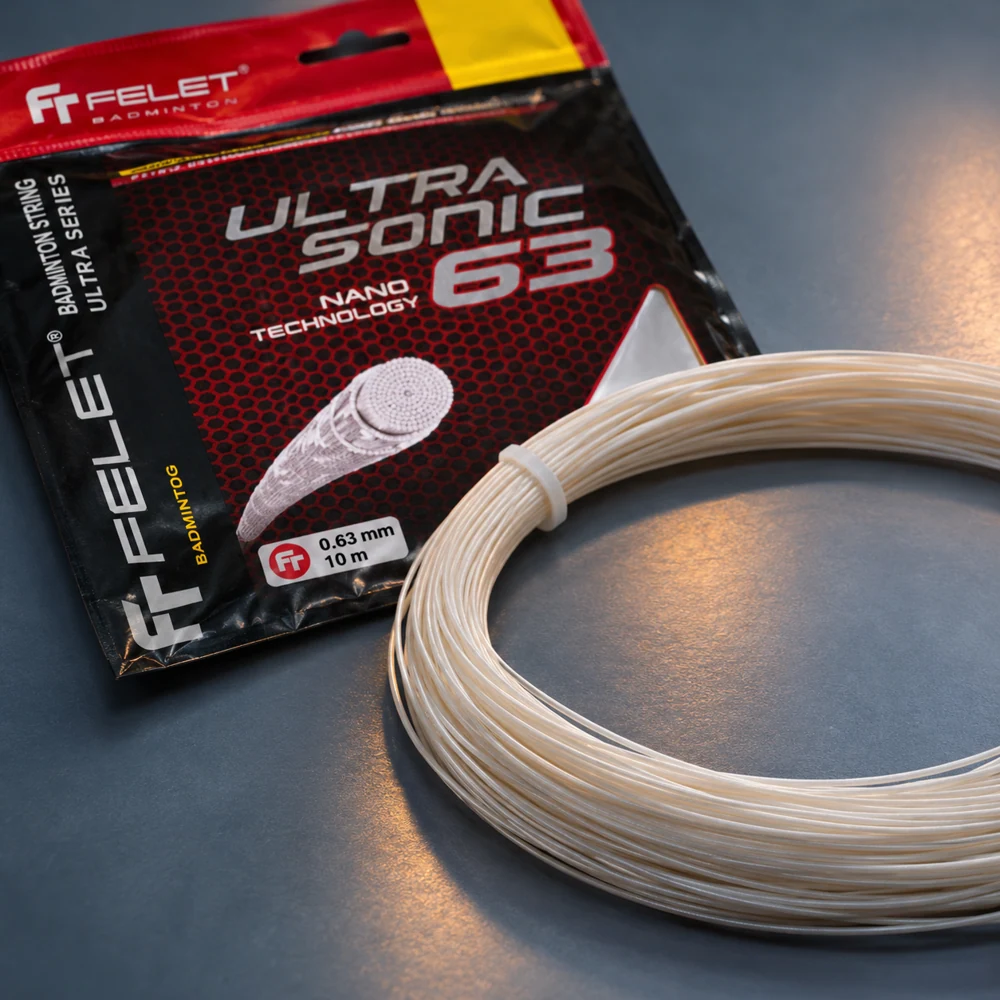
Track response without inventing a DT curve
No verified ERR Ultra Sonic 63 time series is available for the interactive DT section. It therefore does not display another model’s measurements or a simulated retention curve as if this string had been tested.
A useful future record would identify the racket, exact string, installation setting, measurement device and calibration, elapsed time, court exposure and storage conditions. Repeated readings need the same method to be meaningfully compared.
Keep machine pounds separate from dynamic stringbed readings. Add practical notes on clear depth, block placement and visible wear. Without those conditions, neither an isolated number nor a report that a string has not broken establishes a reliable retention or lifespan comparison.
After a week of training, look along the crossings in your normal contact area. Check for notching and examine the area near any old break. Save when it was strung, the hours played and roughly when you felt a change. That gives the next visit a clearer starting point.
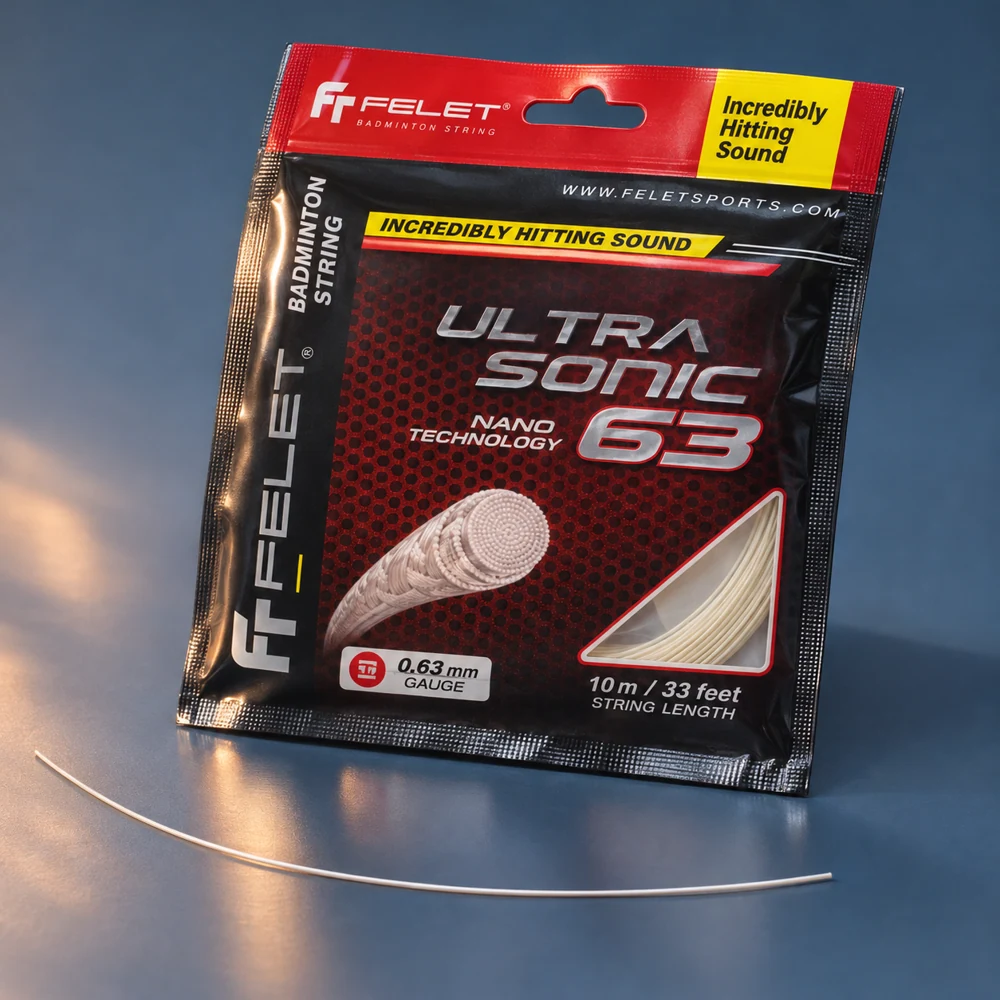
Compare three distinct alternatives
Yonex Exbolt 63 shares the 0.63 mm nominal gauge, but uses its documented Forged Fiber construction. Equal diameter is not evidence of equal touch, sound or durability. Compare the shots you need rather than treating the two as interchangeable.
BG66 Ultimax is a 0.65 mm option with a high-intensity nylon multifilament core and braided nylon outer. Its quick-response positioning makes it a useful reference if that is your current string. There is no verified matched test here proving that Ultra Sonic 63 is faster or longer lasting.
BG65 is a thicker 0.70 mm nylon option positioned around durability. It broadens the decision towards maintenance priorities rather than functioning as an automatic upgrade or downgrade. Each brand’s promotional ratings belong to its own system and are not a shared numerical ranking.
Ultra Sonic 63 Knowledge Check
How well do you know this string?
0 / 8 answeredYour result
Review each answer, then try again when you are ready.
| Nominal gauge | 0.63 mm |
|---|---|
| Product code | Ultra Sonic 63 |
| Retail set length | 10 m |
| ERR restring | RM40.00, string and labour |
Sound-focused response with practical checks
Official-store specification
- Gauge
- 0.63 mm
- Set length
- 10 m
- Construction
- Multifilament; detailed recipe unconfirmed
- Positioning
- Repulsion and pronounced hitting sound
What to assess on court
Compare ordinary depth and drive feedback with gentle block and net placement.
Inspect wear and grommets when thin-string maintenance is a concern.
No controlled speed, acoustic or retention result is presented as an ERR test.
The numbers behind the feel
Documented specifications and intended positioning are separated from measured performance; no invented scores are used.
Official-store specification
- Gauge
- 0.63 mm
- Set length
- 10 m
- Construction
- Multifilament; detailed recipe unconfirmed
- Positioning
- Repulsion and pronounced hitting sound
Ultra Sonic 63 DT and response tracking
No verified ERR Ultra Sonic 63 time series is available in the checked material. A curve would imply measurements we do not have. Use the following record when discussing changes in your setup.
Record the installation
Racket model, string code, requested tension, date and applicable machine procedure.
Use a consistent method
Record instrument, units, measurement method and timing. DT, machine pounds and phone frequency are different quantities.
Track actual exposure
Note elapsed time, playing hours and storage conditions. Calendar days alone do not describe use.
Connect readings to play
Record clear length, soft returns and wear. A reading alone does not decide when every player must restring.
Ultra Sonic 63 and three alternatives
Compare construction and priorities rather than treating a model name as an upgrade ladder. These are different options, not a controlled ranking.
| String | Gauge | Construction or feel | What to check on court |
|---|---|---|---|
| Ultra Sonic 63 | 0.63 mm | Multifilament; detailed recipe unconfirmed | Check gentle-shot control and wear |
| Exbolt 63 | 0.63 mm | Forged Fiber | Same gauge does not mean identical response |
| BG66 Ultimax | 0.65 mm | High-intensity nylon core; braided nylon outer | Useful reference for existing Ultimax users |
| BG65 | 0.70 mm | Nylon multifilament core and braided outer | Compare maintenance and usable touch |
Exbolt 63, BG66 Ultimax and BG65 offer distinct construction and maintenance comparisons. No verified matched test here establishes a universal winner.
Felet Ultra Sonic 63 and Maxbolt MBS 63 give you a way to compare contact while holding nominal diameter steady. Set a target for your short block and use the same type of feed for both strings. Keep a separate note for the higher pitch of a firm drive, since that part of the experience can otherwise sway which setup you prefer.
For players coming from a heavier training string, include a session with the normal weekly volume. Afterward, look at the new bed and note where it wears. Use the experience to decide whether a more responsive match racket or a single setup for all sessions suits you better.
What would you like to feel differently?
For Ultra Sonic 63, connect sound and response with usable placement. Check gentle returns and recurring wear before deciding that a thin, sound-focused model addresses your needs.
Track the change, not just the sound
Some settling after stringing is normal. Record when the racket starts to feel different, the hours played and storage conditions. Compare readings using the same method; a phone frequency reading is not the machine setting in pounds. Ask about installation consistency before assuming a different packet will solve it.
Bring this question to ERR →Separate contact from setup
A stiff-feeling bed, late contact, shuttle speed and technique can all make length difficult. Start with relaxed clears and describe where the shuttle lands. Review your current tension within the racket limit rather than increasing it automatically.
Bring this question to ERR →The break location matters
A break near the same grommet deserves a frame and grommet check. Breakage after off-centre contact differs from gradual notching in the centre. Bring the racket and a photo of the break; do not assume every early break means the string is defective.
Bring this question to ERR →Describe what your hand notices
Tell the stringer which shots feel unforgiving and when the sensation began. Compare contact consistency, string choice and tension. Stringing advice is not a treatment for persistent pain; stop playing through pain and seek appropriate assessment.
Bring this question to ERR →Inspect before installation
Photograph existing chips and discuss cracks, worn grommets and frame shape before work begins. Correct support, the appropriate pattern and staying within the racket limit matter. A chipped finish alone does not establish who caused damage.
Bring this question to ERR →Explain the change clearly
Grip size, balance, racket weight, stringbed response and timing are different things. A restring does not turn a head-heavy racket into a head-light one. Tell the stringer what changed and compare with your previous setup instead of asking only for more power.
Bring this question to ERR →What matters on court?
Choose what you want from your next restring.
Test the quieter shot as well
Alternate a flat drive and a soft return during the same feeds.
Ask your stringerCan I use the higher-pitched feedback while keeping my block short?
Track thin-string wear during regular play
Check the centre intersections and the last break location separately.
Ask your stringerWhen should we inspect the grommets before repeating this setup?
Try the normal clear at warm-up pace
Watch how much effort a relaxed clear needs with your usual shuttle.
Ask your stringerWhat previous setup gives the best basis for trying Ultra Sonic 63?
Compare another 0.63 mm option
Use the same pace and a similar racket on an MBS 63 trial where possible.
Ask your stringerWhich contact stays familiar when I slow my swing?
Different equipment. Different questions.
Different rackets
The same requested pounds can feel different across frame shapes and stringbed dimensions. Record the racket, not just the number.
Try Ultra Sonic 63 on the same racket first. Record the full racket model and the agreed tension before trying another frame.
Different strings
Gauge, construction and surface feel change the comparison. Do not treat every thin string as the same product.
Compare Ultra Sonic 63 with Exbolt 63 using the same racket and familiar shots. Use the table above to check gauge and construction before changing the setup.
Different installation
Machine calibration, support, clamps, pattern and technique can affect consistency. Ask about the process as well as qualifications.
If Ultra Sonic 63 repeatedly breaks near the same hole, show your stringer a close-up of that spot and ask them to inspect the grommet.
Different sessions
Shuttle speed, hall conditions, fatigue and timing influence feedback. Compare familiar drills before drawing a conclusion.
Use the same shuttle speed and repeat a few clears, drives and net shots. Record playing hours alongside any change in how Ultra Sonic 63 feels.
Prepare, play and review with purpose.
Bring your racket history
Note your racket model, previous string, requested tension and the change you want. A photo of recurring breakage helps.
Make the plan specific
Review the frame and grommets. Confirm string, colour availability, tension within the racket limit and price before work starts.
Keep a useful record
Keep the string model, requested tension and date together. Ask about the pattern and checks relevant to your racket.
Repeat familiar shots
Try clears, drives, blocks and net shots under comparable conditions. Record comfort, length and placement, not only sound.
Change one thing at a time
Bring your observations back. Keep the setup if it works; otherwise agree on one practical change for the next restring.
Ultra Sonic 63 questions, clearly answered.
What is Felet Ultra Sonic 63?
A 0.63 mm multifilament badminton string marketed for repulsion and pronounced hitting sound.
What length does the official store list?
A 10 m set. Confirm the exact packet when booking.
Is Ultra Sonic 63 the same as Ultramax Turbo Nano 66?
No. They are different Felet models; do not interchange their specifications.
Does a louder impact prove a faster shuttle?
No. Sound is feedback, not a direct shuttle-speed measurement.
Is the detailed material recipe verified?
Not from the primary material accessible in this research. The official store confirms multifilament construction; detailed chemistry remains unconfirmed.
Does its durability score guarantee a lifespan?
No. Brand promotional numbers do not predict your court hours or establish a cross-brand comparison.
What tension should I choose for Ultra Sonic 63?
Use the exact racket limits, frame condition, current setup and playing needs. No universal pounds recommendation is given.
Does this page show an ERR DT test for this model?
No verified model-specific time series is available; no curve is invented.
What should I check if it breaks near the frame?
Inspect the break location, grommets, frame and contact pattern before assuming the string model is the cause.
Which shots help assess the sound-focused positioning?
Try familiar clears and drives, then gentle blocks and net returns. Include placement rather than sound alone.
What is the listed ERR stringing fee?
The checked catalogue lists RM40 including string and labour. Confirm current price and availability.
What should I send before booking?
Racket model, current string and pounds, playing frequency, desired feel and any repeated wear or breakage location.
How did Felet Ultra Sonic 63 play for you?
Your experience can help another player choose their next string.
What players say
Your first-hand experience matters.
Be the first to review Felet Ultra Sonic 63. Share what you liked and what could be better.
More badminton string reviews.
Take a closer look at other strings before choosing your next setup.


Ready to discuss your string setup?
Bring your Ultra Sonic 63 questions, racket model and previous setup. Discuss the contact feel you want before choosing the next restring.
Book stringing Explore the string listBook stringing.
Bring your racket and questions.
Discuss your Ultra Sonic 63 setup with ERR before visiting. Tell us your racket model, previous tension and the shot or feel you want to review.
Book through ERR MemberAsk ERR on WhatsApp ↗Prepare a question for your visit
Open WhatsApp with my question ↗You can review your message in WhatsApp before sending.ERR’s checked string list shows RM40 for Felet Ultra Sonic 63 including string and labour. Confirm the current fee, exact model and availability when arranging the appointment. The listed amount does not reserve a packet or a time slot.
The enquiry carries Felet Ultra Sonic 63 as the requested model. Include your racket model, current string and pounds, playing frequency and the response you want. Mention whether you are changing for sound, easier depth, touch or a recurring breakage issue.
ERR’s location is Taman Melati Utama in Setapak, Kuala Lumpur. Players travelling from Wangsa Maju use the same Setapak location. Bring the racket and useful setup history so the discussion stays focused on your equipment and playing needs.
By appointment · Check available slots before travelling.
Find us in Taman Melati Utama
G-3, PV6 Platinum Hill Condo, No. 3 Jalan Melati 3, Taman Melati Utama, 53100 Kuala Lumpur, Malaysia.
Get directions in Google Maps ↗
