


Li-Ning LN70 Extreme: String Guide & Stringing in Setapak KL
Li-Ning LN70 Extreme is a 0.70 mm coated nylon badminton string positioned for durability and a softer feel. Compare clear depth and care before restringing in Setapak.
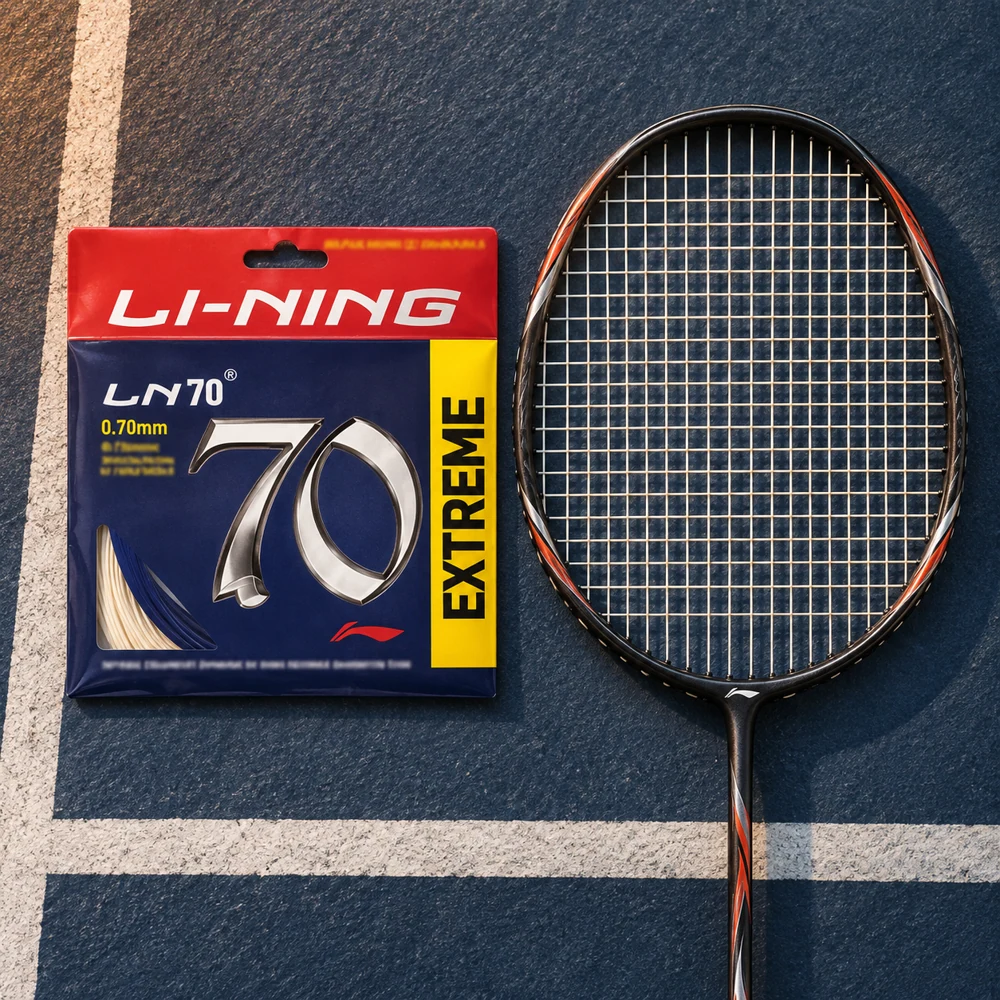
Confirm the LN70 Extreme identity
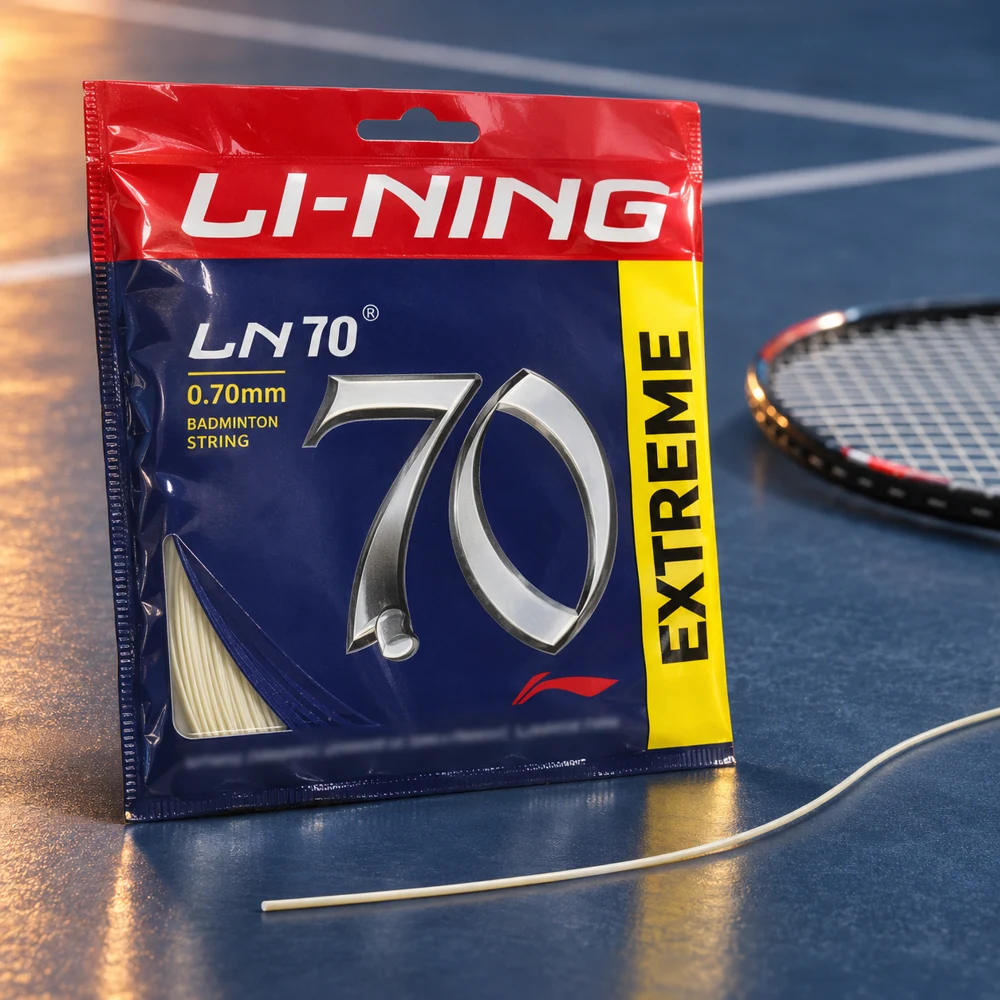
The genuine official packet states 0.70 mm and the checked regional listing gives AXJN028-1. AXJN028 identifies LN70 Extreme. Original No.7 is a separate AXJJ014 model despite sharing the same nominal diameter.
The published core is heat-resistant, high-intensity nylon multifilament. The outer is nylon with a compound nylon coating. This description does not establish an exact formulation or make the string identical to another coated nylon model.
Li-Ning associates LN70 with Deep-Re-Dipping, durability and a soft hitting sensation. These describe the brand’s intended product direction. The Extreme name is not a tension recommendation, a player-level requirement or a guarantee of an individual outcome.
Check the EXTREME label on the packet and the 0.70 mm marking. That detail is useful when sorting it from LN66 Extreme and Li-Ning No. 7. Record the whole name, racket and requested pounds so the next restring can use the exact setup as a reference.

Interpret durability and soft-feel claims
The regional ten-point profile emphasises durability and control alongside the other listed qualities. It is a brand-relative presentation, not a controlled ERR test. A high value cannot be translated into months of use or a measured placement improvement.
The manufacturer connects Deep-Re-Dipping to retention. Its wording does not establish zero tension loss in your racket. No adequate independent controlled LN70 dataset was verified for retention, friction or a universal hardness ranking.
Soft-feel positioning is a useful question to explore, not a comfort promise. The complete frame, installation and contact affect what you feel. Do not assume that a 0.70 mm string must be dull, or that its coating will make every demanding setup easy to use.
Choose a relaxed clear and a gentle defensive return to see how the new contact feels. Test both with the same familiar grip, and pay attention to how much effort you use. If the quieter return lands short, record the feed and whether the contact was late.
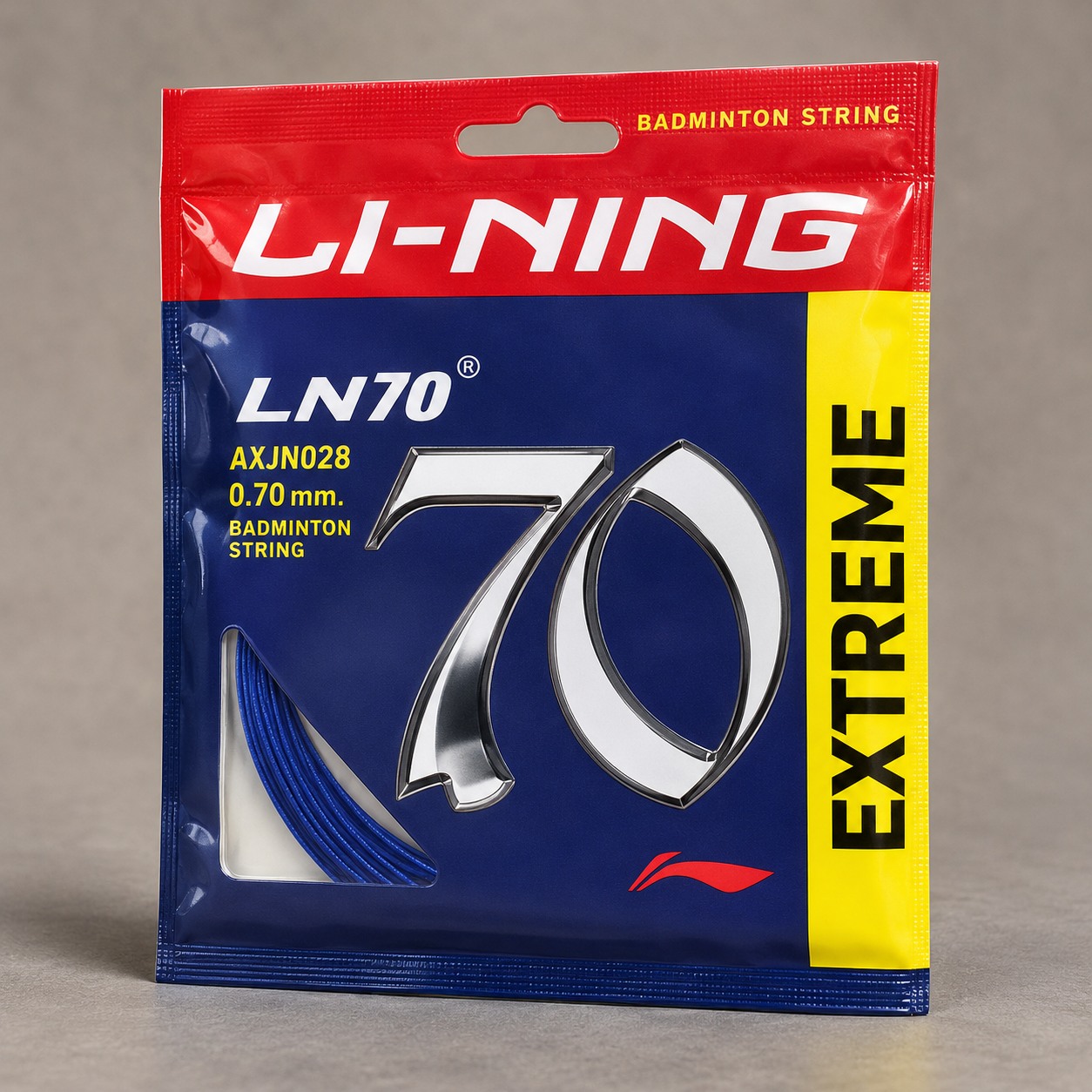
Assess maintenance alongside useful response
LN70 may be worth discussing when frequent replacement matters and you want to explore softer-positioned feedback. Include familiar clears and lifts, compact drives and gentle returns so the trial covers more than durability alone.
Record effort, centred contact and the repeatability of length and placement. An intact string is not automatically a suitable setup if your ordinary shots feel harder to regulate. Equally, a different sound alone does not prove a loss of useful performance.
If your main priority is exploring a finer crisp-response string, LN66 is a relevant comparison. If you prefer a substantial coated impact sensation, No.5 asks a different question. Choose the trade-off you want to investigate rather than assuming LN70 is best for every player.
Compare No. 7 if the nominal diameter should remain familiar. Try LN66 Extreme when you want to see what another gauge in the range gives you. Keep the comparison focused on an ordinary stroke, such as a soft return after a long drive, instead of trying to change the whole setup together.
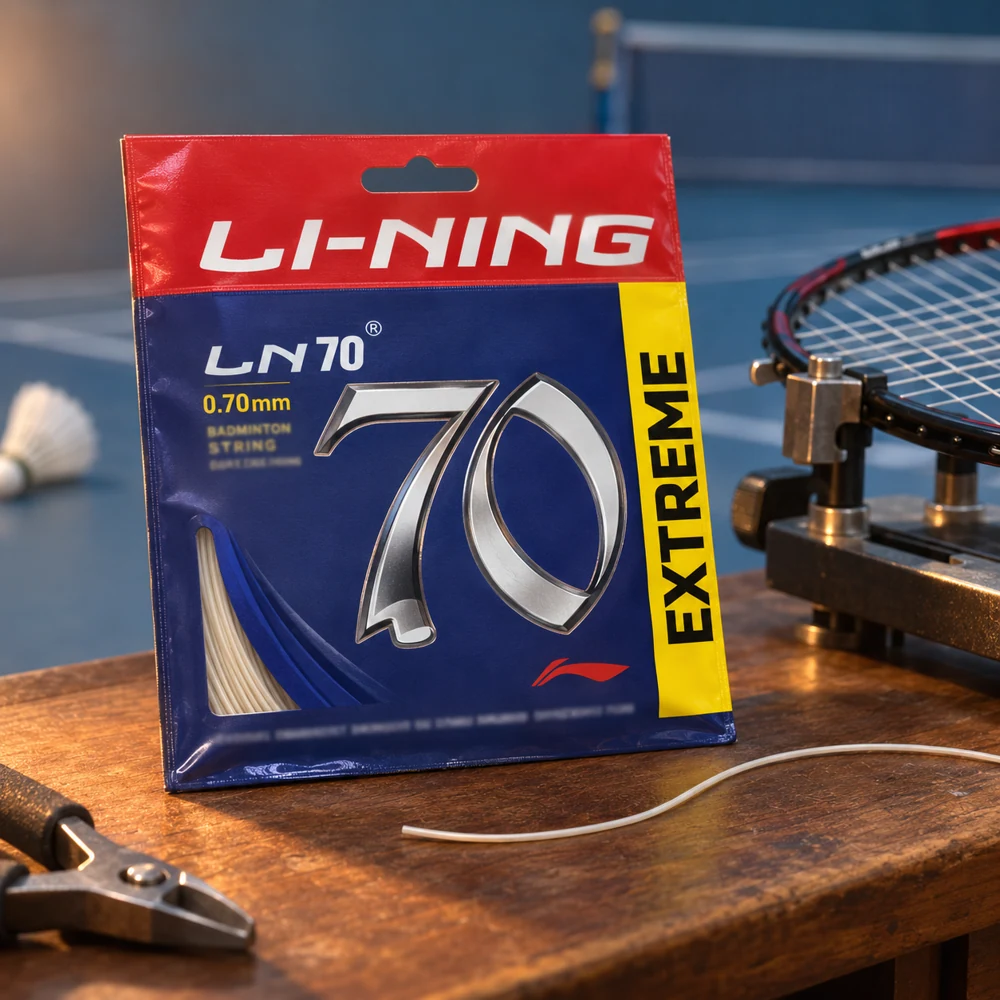
Choose a frame-specific installation
The historical ERR LN70 record used 27 lbs. It is not a universal starting point. Check the exact racket’s official limits, condition and grommets before discussing the current string, pounds and preferred feedback.
Explain the practical problem: difficult length, abrupt returns, frequent central wear or a recurring break near the frame. These observations help identify what should change. Increasing tension solely to create a different sound may not address the relevant issue.
Pre-stretch, knots, pattern and main-and-cross differences depend on the actual frame and equipment. Keep the agreed details together. When evaluating a change, avoid altering several variables at once if you want the feedback to be interpretable.
Keep the first week simple with the same type of shuttle and a few repeated blocks and clears. A thicker string may be appealing if you play frequently, but whether you can still get a relaxed lift comfortably is what makes the setup usable for your sessions.
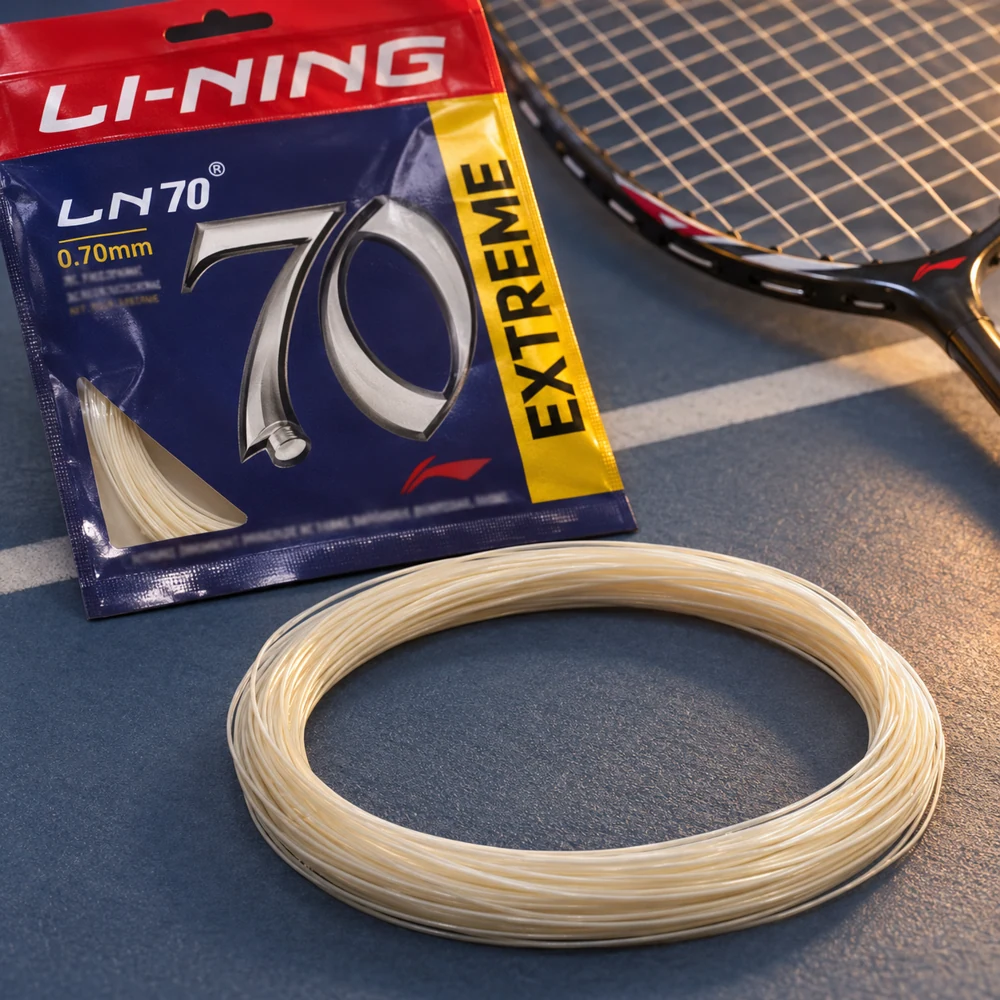
Read the original DT endpoints
The old page wrote Day 1 69–67 DT, Day 2 67–64 and Day 3 65–62 at 27 lbs. This chart shows 67–69, 64–67 and 62–65 in ascending order. Every original endpoint is retained and the presentation change is disclosed.
Instrument, calibration, precise timing, playing exposure and environment are incomplete. The series cannot establish a retention percentage for your racket or prove an advantage over a different model. A curve through range midpoints is not a set of extra measurements.
DT and requested machine pounds are distinct quantities. For future monitoring, use a consistent method and record court hours, storage, visible wear and changes in response. Keep that context with the readings rather than treating a graph alone as a prediction.
Record playing hours before you compare the first visible wear at the crossing points. Take separate notes for a break near a frame hole. That distinction lets your stringer inspect a grommet when appropriate and keeps the model comparison tied to the way you actually use the racket.
Compare same-gauge and finer alternatives
Original No.7 is another 0.70 mm durability-oriented option but has the AXJJ014 identity and a high-polymer nylon core description. Similar marketing terms do not establish identical feel or measured retention. Check the complete model name.
No.5 is a 0.69 mm AXJJ006 nylon string with titanium-compound coating. It provides a substantial-feedback comparison. LN66 Extreme is a finer 0.66 mm AXJN032 option with nano-braided core and Nano Boost nylon coating terminology.
Compare them through a specific trial question about touch, length or upkeep. Brand scores and incomplete historical DT series were not collected under a common controlled protocol. They do not identify a universal winner or an automatic upgrade path.
When you enquire about repeat stock, give the full LN70 Extreme name and mention the colour you previously played. There are other Li-Ning strings with a similar gauge, so save a photo of the packet if you want to keep the same construction.
LN70 Extreme Knowledge Check
How well do you know this string?
0 / 8 answeredYour result
Review each answer, then try again when you are ready.
| Nominal gauge | 0.70 mm |
|---|---|
| Product code | AXJN028 |
| Retail set length | Confirm the length on your packet |
| ERR restring | RM45.00, string and labour |
See the response profile
Five-characteristic spider chart
Contact, deflection and rebound
Press play to follow contact → deflection → rebound.
Slow-motion teaching diagram, not a measured speed or tension test.
The numbers behind the feel
Li-Ning’s official regional LN70 Extreme listing supplies this ten-point profile. These are brand-relative values, not controlled ERR measurements or a common cross-brand testing scale.
LN70 Extreme DT over three days
-
Day 167–69 DT
-
Day 264–67 DT
-
Day 362–65 DT
Recorded range Range midpoint
These readings describe an earlier installation. Use them to understand the recorded change across days.
LN70 Extreme and three alternatives
Compare construction and priorities rather than treating a model name as an upgrade ladder. These are different options, not a controlled ranking.
| String | Gauge | Construction or feel | What to check on court |
|---|---|---|---|
| LN70 Extreme | 0.70 mm | AXJN028 nylon core and compound nylon coating | Assess usable response alongside upkeep |
| No.7 | 0.70 mm | AXJJ014 high-polymer nylon core and nylon outer | Separate model, not identical feel by default |
| No.5 | 0.69 mm | AXJJ006 nylon with titanium-compound coating | Compare impact and gentle returns |
| LN66 Extreme | 0.66 mm | AXJN032 nano-braided core and Nano Boost nylon coating | Consider response and maintenance trade-offs |
Original No.7, No.5 and LN66 provide separate same-gauge, coated-feedback and finer-response comparisons. Unmatched brand scores or old DT archives do not establish a universal winner.
Try LN70 Extreme beside a familiar durability-focused string on one intentionally soft reply and one full clear. If you keep one racket for most sessions, check whether the preferred contact remains predictable as the bed sees regular play.
What would you like to feel differently?
For LN70 Extreme, balance maintenance priorities with useful length and softer-shot touch. Confirm AXJN028 and inspect wear rather than interpreting a retention claim as zero tension loss.
Track the change, not just the sound
Some settling after stringing is normal. Record when the racket starts to feel different, the hours played and storage conditions. Compare readings using the same method; a phone frequency reading is not the machine setting in pounds. Ask about installation consistency before assuming a different packet will solve it.
Bring this question to ERR →Separate contact from setup
A stiff-feeling bed, late contact, shuttle speed and technique can all make length difficult. Start with relaxed clears and describe where the shuttle lands. Review your current tension within the racket limit rather than increasing it automatically.
Bring this question to ERR →The break location matters
A break near the same grommet deserves a frame and grommet check. Breakage after off-centre contact differs from gradual notching in the centre. Bring the racket and a photo of the break; do not assume every early break means the string is defective.
Bring this question to ERR →Describe what your hand notices
Tell the stringer which shots feel unforgiving and when the sensation began. Compare contact consistency, string choice and tension. Stringing advice is not a treatment for persistent pain; stop playing through pain and seek appropriate assessment.
Bring this question to ERR →Inspect before installation
Photograph existing chips and discuss cracks, worn grommets and frame shape before work begins. Correct support, the appropriate pattern and staying within the racket limit matter. A chipped finish alone does not establish who caused damage.
Bring this question to ERR →Explain the change clearly
Grip size, balance, racket weight, stringbed response and timing are different things. A restring does not turn a head-heavy racket into a head-light one. Tell the stringer what changed and compare with your previous setup instead of asking only for more power.
Bring this question to ERR →What matters on court?
Choose what you want from your next restring.
Start with a relaxed drive and clear
Use the same familiar racket and try both strokes at normal effort. Check which depth you can reproduce.
Ask your stringerDoes LN70 give me a response I can use on both strokes?
Track early wear by position
Check centre intersections and recurring edge breaks separately. Record how often you play and share a photo if needed.
Ask your stringerWould another model or a frame check help my wear pattern?
Use the clear you already know
Try a comfortable clear before requesting a change. Discuss your previous pounds and the frame limit with ERR.
Ask your stringerWhat setting preserves familiar length for this LN70 trial?
Compare with No. 7 on a controlled block
Use the same lower-paced feed and normal grip. Check the landing point without changing overall effort.
Ask your stringerWhich 0.70 mm option suits the soft return I need?
Different equipment. Different questions.
Different rackets
The same requested pounds can feel different across frame shapes and stringbed dimensions. Record the racket, not just the number.
Try LN70 Extreme on the same racket first. Record the full racket model and the agreed tension before trying another frame.
Different strings
Gauge, construction and surface feel change the comparison. Do not treat every thin string as the same product.
Compare LN70 Extreme with No.7 using the same racket and familiar shots. Use the table above to check gauge and construction before changing the setup.
Different installation
Machine calibration, support, clamps, pattern and technique can affect consistency. Ask about the process as well as qualifications.
If LN70 Extreme repeatedly breaks near the same hole, show your stringer a close-up of that spot and ask them to inspect the grommet.
Different sessions
Shuttle speed, hall conditions, fatigue and timing influence feedback. Compare familiar drills before drawing a conclusion.
Use the same shuttle speed and repeat a few clears, drives and net shots. Record playing hours alongside any change in how LN70 Extreme feels.
Prepare, play and review with purpose.
Bring your racket history
Note your racket model, previous string, requested tension and the change you want. A photo of recurring breakage helps.
Make the plan specific
Review the frame and grommets. Confirm string, colour availability, tension within the racket limit and price before work starts.
Keep a useful record
Keep the string model, requested tension and date together. Ask about the pattern and checks relevant to your racket.
Repeat familiar shots
Try clears, drives, blocks and net shots under comparable conditions. Record comfort, length and placement, not only sound.
Change one thing at a time
Bring your observations back. Keep the setup if it works; otherwise agree on one practical change for the next restring.
LN70 Extreme questions, clearly answered.
What gauge and code identify LN70 Extreme?
The official packet states 0.70 mm and the checked regional listing gives AXJN028-1.
Is LN70 the same string as original No.7?
No. No.7 has the AXJJ014 identity and a separate published construction description, despite sharing the nominal gauge.
What construction is published for LN70?
A heat-resistant high-intensity nylon multifilament core and nylon outer with compound nylon coating.
Does Deep-Re-Dipping guarantee zero tension loss?
No. Retention wording is manufacturer positioning, not a verified zero-loss outcome for your racket.
Does soft-feel positioning guarantee comfort?
No. Frame, installation and contact also affect feedback; assess the actual setup.
What do the brand profile values mean?
They provide regional ten-point positioning context, not a common cross-brand test or a guaranteed lifespan.
Should I copy the old 27 lbs setting?
Not automatically. Check the exact frame limits, condition and current setup before selecting settings.
Why are the DT endpoints in a different order?
The old page wrote 69–67, 67–64 and 65–62. They are displayed ascending as 67–69, 64–67 and 62–65 without changing endpoints.
Can those ranges predict my retention?
No. Instrument, timing, court exposure and environment are incomplete, so the archive is not a personal forecast.
What should I record during a trial?
The racket, installation, method, court hours, storage, wear and changes in normal shot response.
What is the listed ERR LN70 price?
The checked catalogue lists RM45 including string and labour. Confirm current price, colour and availability.
What makes an LN70 appointment enquiry useful?
Full model name, racket, current string, previous pounds, playing frequency and preferred feel, with any recurring wear concern.
How did Li-Ning LN70 Extreme play for you?
Your experience can help another player choose their next string.
What players say
Your first-hand experience matters.
Be the first to review Li-Ning LN70 Extreme. Share what you liked and what could be better.
More badminton string reviews.
Take a closer look at other strings before choosing your next setup.


Ready to discuss your string setup?
Bring your LN70 Extreme questions, racket model and previous setup. Discuss the contact feel you want before choosing the next restring.
Book stringing Explore the string listBook stringing.
Bring your racket and questions.
Discuss your LN70 Extreme setup with ERR before visiting. Tell us your racket model, previous tension and the shot or feel you want to review.
Book through ERR MemberAsk ERR on WhatsApp ↗Prepare a question for your visit
Open WhatsApp with my question ↗You can review your message in WhatsApp before sending.The checked ERR catalogue lists LN70 Extreme at RM45 including string and labour. Confirm current price, colour and availability before travelling. Catalogue presence does not reserve stock or confirm a booking.
Use the existing member booking or enquiry route with the full LN70 Extreme name, racket model, current string, previous pounds, playing frequency and preferred feel. Include the location of recurring wear and any shot you find difficult to repeat.
ERR is in Taman Melati Utama, Setapak, Kuala Lumpur. Arrange the visit before coming from Sentul or elsewhere in KL and bring the racket’s setup history. Specific court feedback helps support a deliberate follow-up adjustment.
By appointment · Check available slots before travelling.
Find us in Taman Melati Utama
G-3, PV6 Platinum Hill Condo, No. 3 Jalan Melati 3, Taman Melati Utama, 53100 Kuala Lumpur, Malaysia.
Get directions in Google Maps ↗
