


Victor VBS-68 Review: Firm Feedback, Control & Practical Trade-offs
Explore the original VBS-68 through verified construction, independent playing impressions and the archived ERR DT record. Keep it distinct from VBS-68P when planning your Setapak restring.
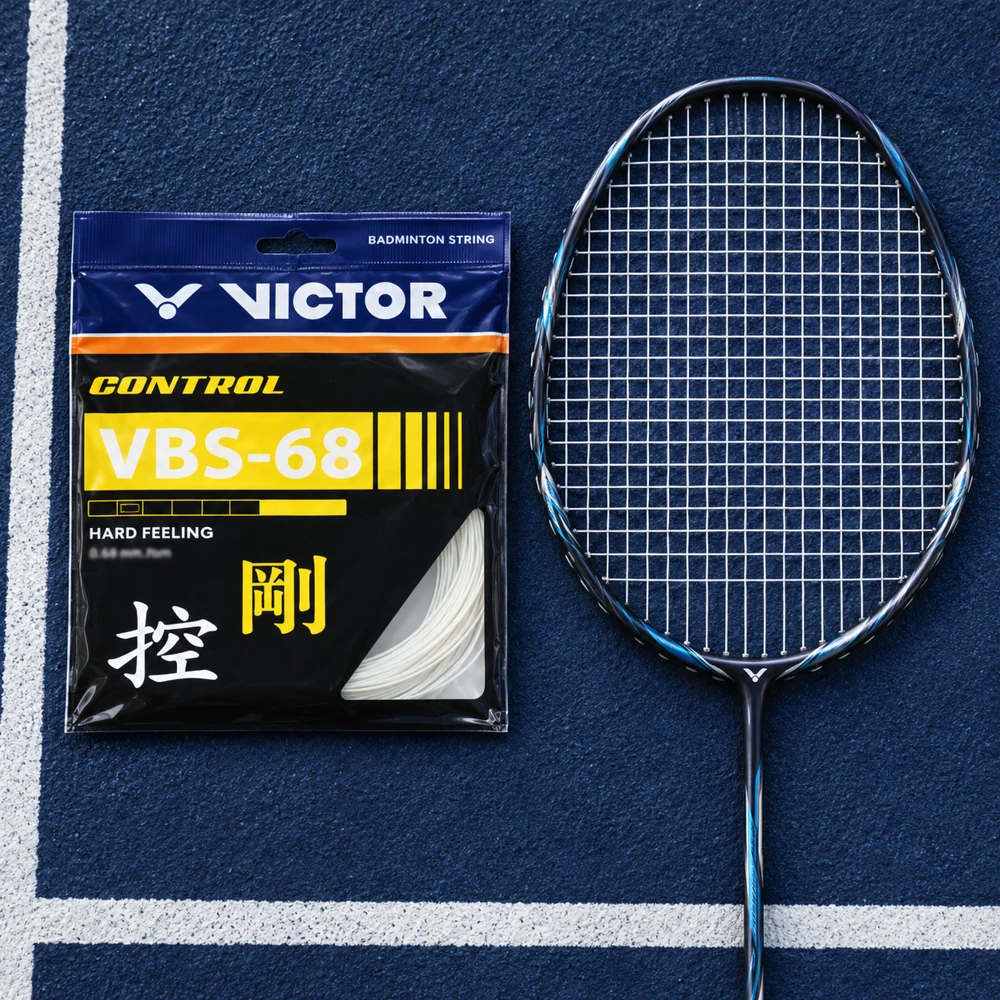
Start with the complete model code
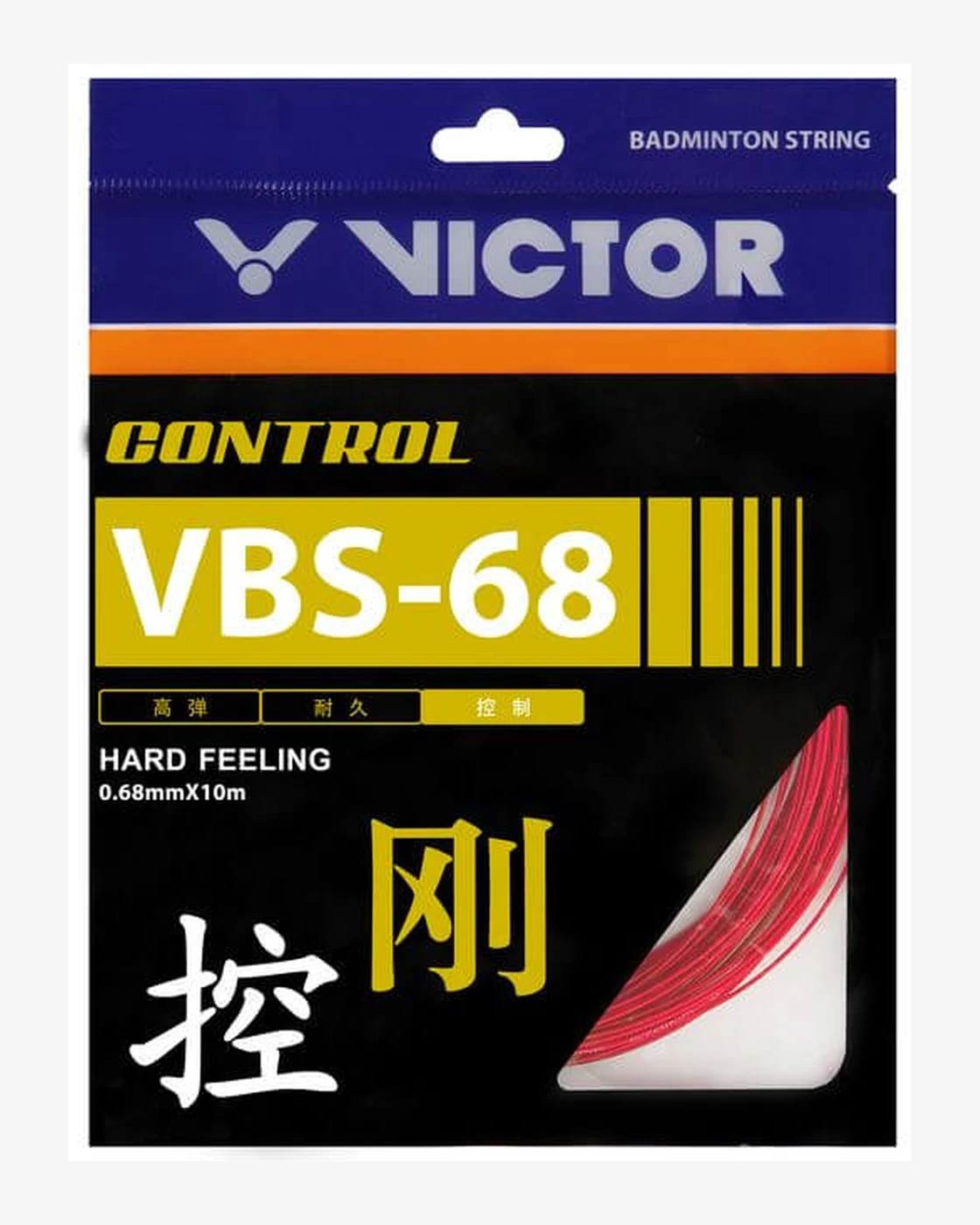
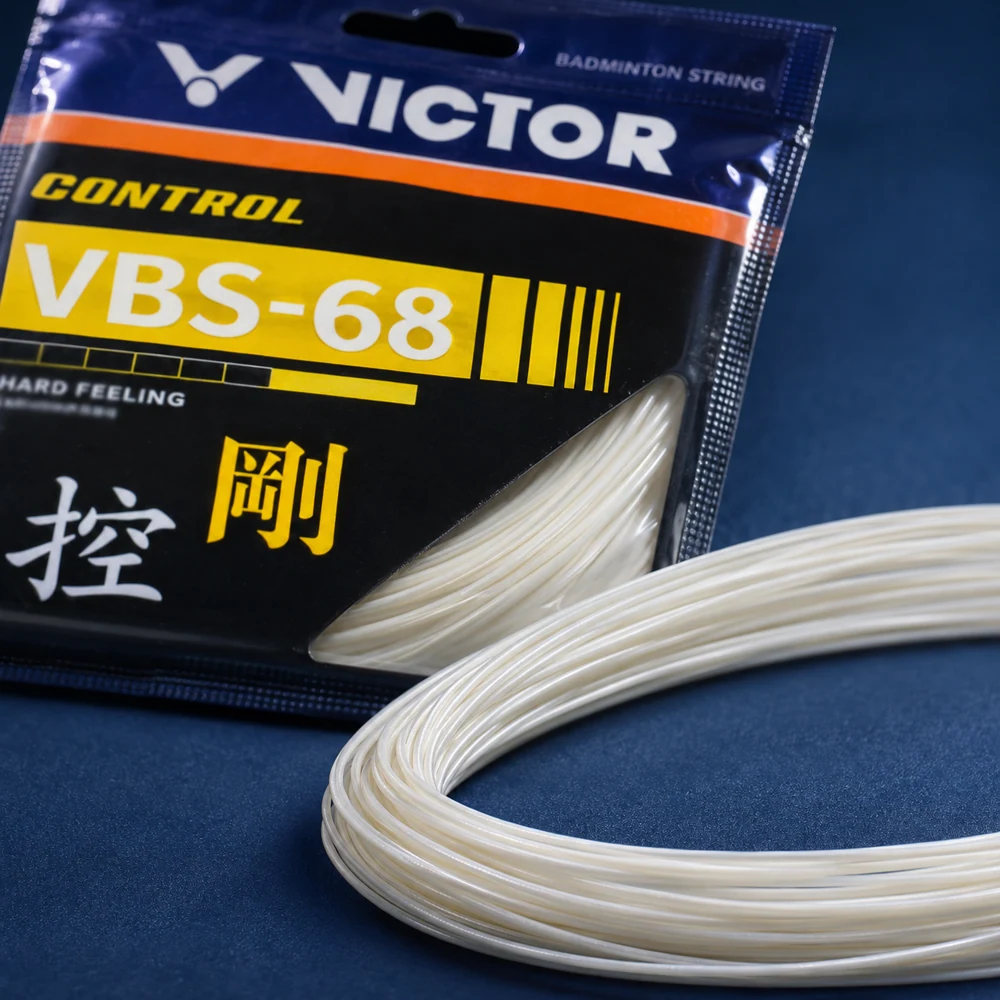
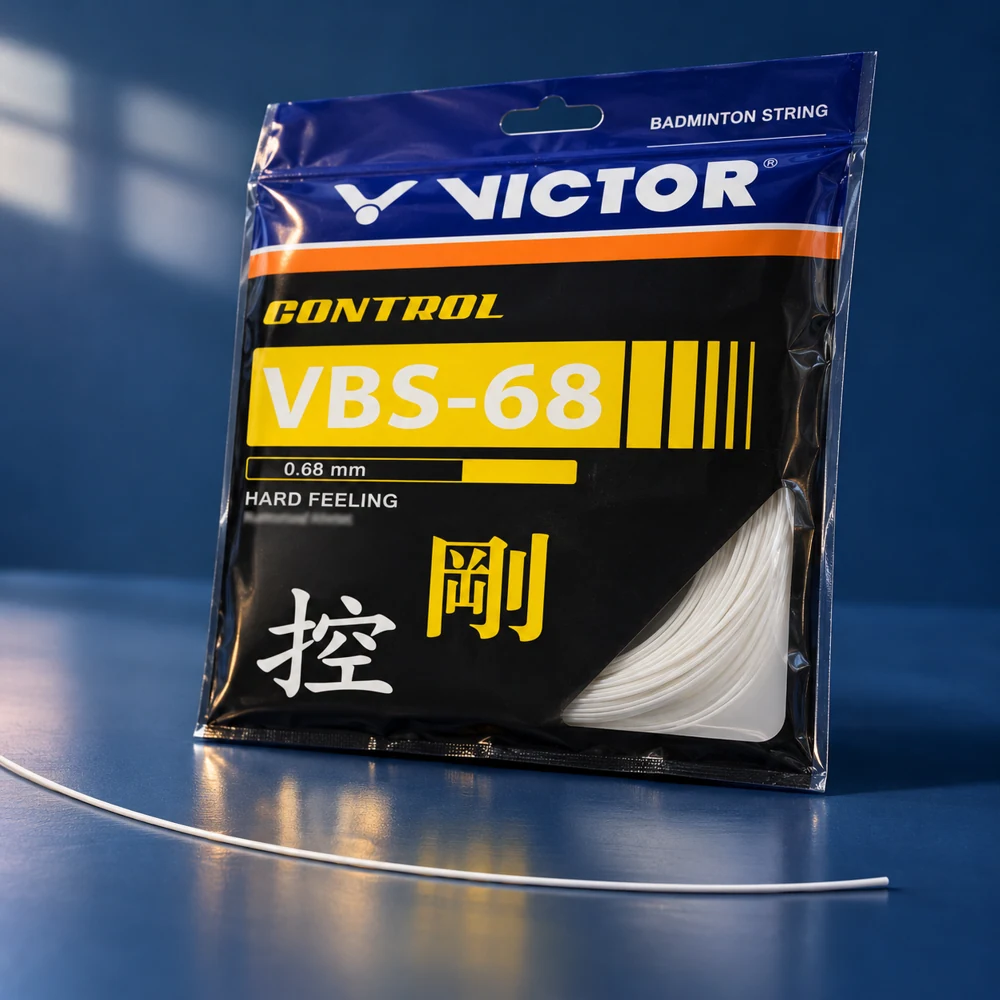
Original Victor VBS-68 is a 0.68 mm string supplied in a 10 m set on the official regional product page. Its Hard feel and Control labels distinguish its intended positioning, but do not specify a universal stiffness for every installation.
The manufacturer catalogue describes Vectran fibre spun with special flat yarn and identifies Japanese manufacture. This is a construction description, not a complete material recipe or measured surface-friction result. It should not be expanded into an invented microscopic diagram.
VBS-68P is a separate product despite sharing the gauge. Its catalogue construction mentions a solid multifilament nylon core interwoven with Vectran. Keep the full code on your setup notes, particularly when comparing older reviews or requesting the next restring.
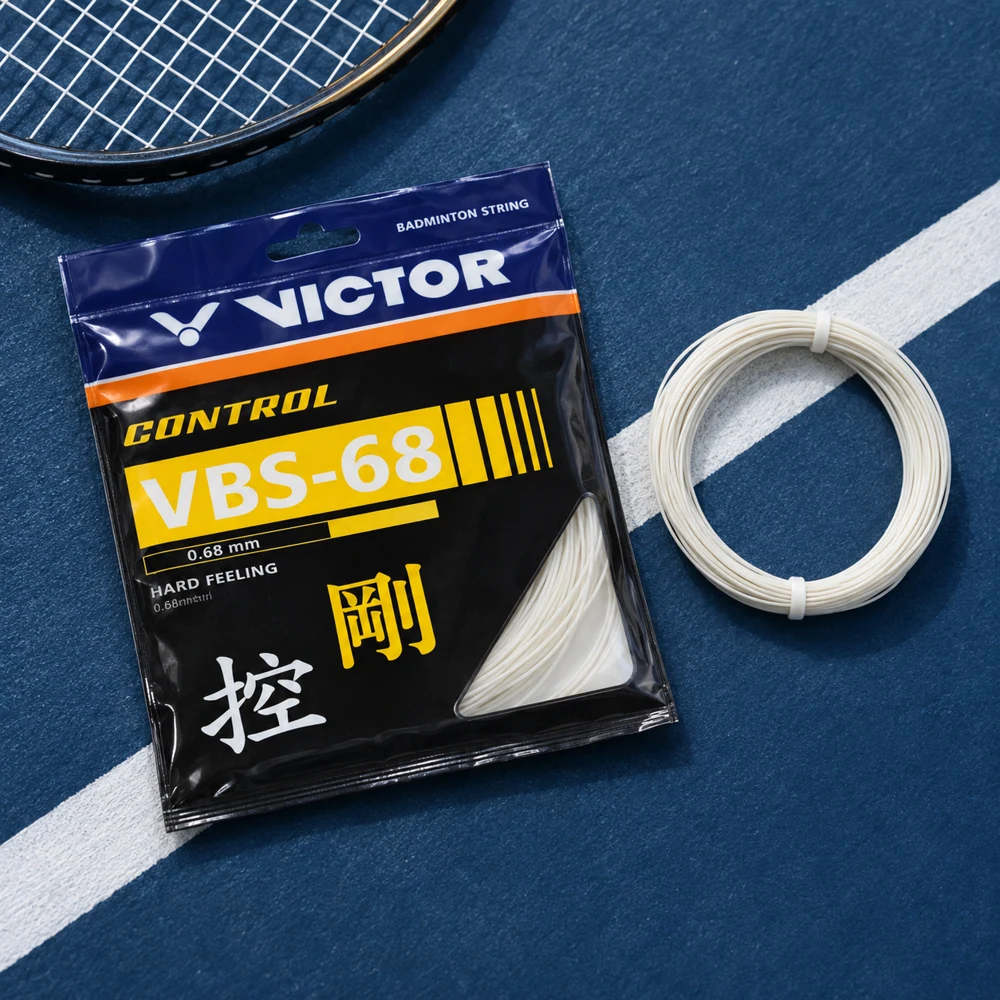
Interpret court feedback with its conditions
BADLAB’s 2019 VBS-68 report favoured controlled impact feedback rather than a pronounced trampoline impression. The five-player trial used Auraspeed 90 S rackets over several weeks, with each tester retaining either 10 or 12 kg across the compared strings.
These are player perceptions from a particular trial. They do not establish rebound efficiency, shuttle speed, a friction coefficient or a setting that suits all rackets. A preference for firm feedback can coexist with another player finding the same setup demanding.
The manufacturer’s qualitative bars and the separate player survey are not a common performance scale. This review uses their context to frame useful trial questions, rather than inventing an absorption score or ranking unlike brands by incompatible numbers.
Check length and touch together
If you prefer a distinct impact sensation, VBS-68 is worth comparing with your familiar setup. Begin with ordinary clears and compact drives, then reduce the pace for blocks and net returns. Notice whether you can repeat the intended depth without an unusually forced swing.
Control is a practical outcome involving contact, technique, frame and installation. A firm-feeling product cannot correct every off-centre hit. Record when the response feels useful and when it becomes abrupt or difficult to regulate.
Sound can contribute to enjoyment, but a sharper pitch is not proof of a stronger smash. Compare the useful placement and effort you experience over ordinary sessions. Changing grip, racket and string at the same time makes it harder to identify the cause of a different sensation.
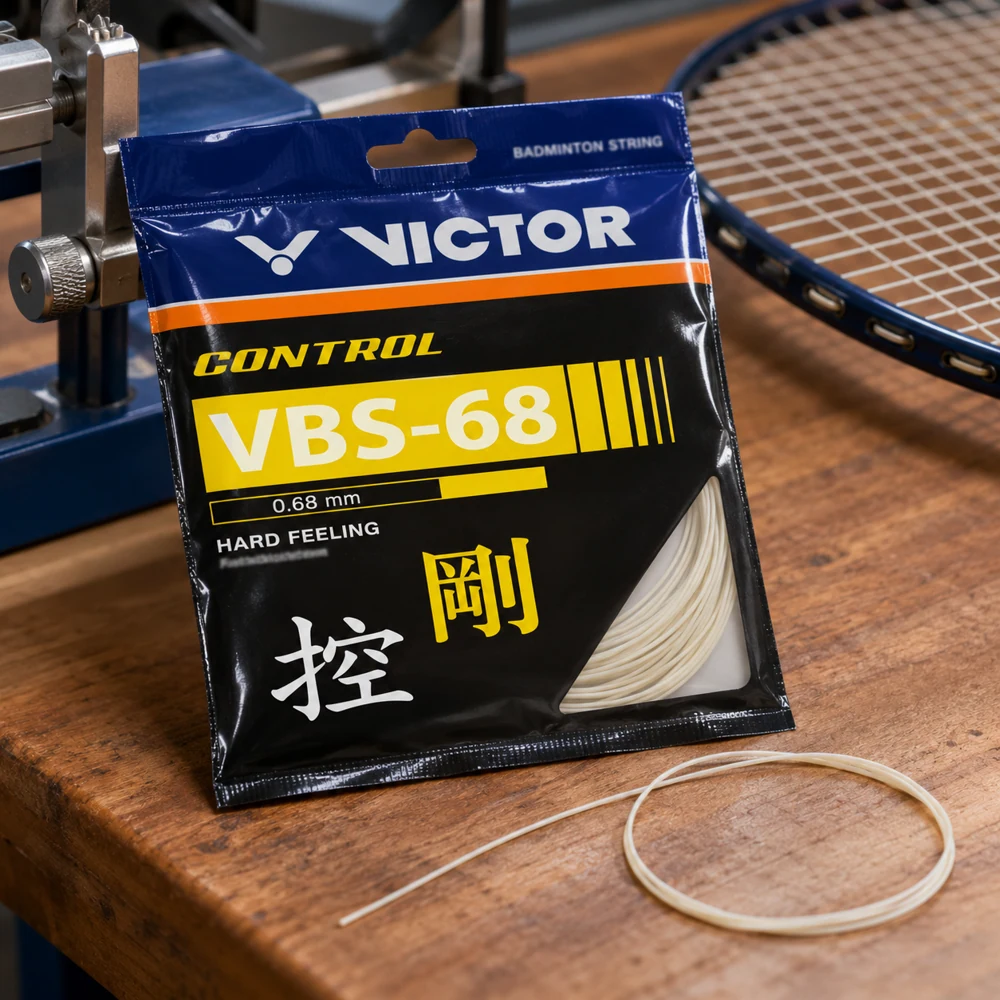
Set tension around the actual racket
The historical ERR record used 28 lbs. That number belongs to the archived installation and is not a blanket recommendation. The exact racket’s official limit, current frame condition, grommets and previous setup must guide the discussion.
Describe the shot problem before selecting a number. Short clears, a harsh impact sensation and difficulty keeping returns short are different observations. Each may involve more than tension alone, so avoid treating a higher setting as an automatic improvement.
Use a suitable manufacturer pattern and appropriate equipment procedure. Main-and-cross differences, pre-stretch and knot choices should not be copied as one fixed recipe for all frames. Keep the agreed setup details so later changes can remain small and understandable.
Read the archived DT ranges honestly
The old VBS-68 review records Day 1 52–56 DT, Day 2 49–53 and Day 3 47–46 at 28 lbs. The chart orders the last pair as46–47 while retaining both original endpoints. No additional measurement has been generated.
Instrument, calibration, precise measurement times, playing exposure and environment are not completely documented. This limits comparison with other archives and prevents a reliable model-wide retention percentage or personal prediction.
DT and machine pounds describe different quantities. A useful future log should preserve method, elapsed time, hours played, storage and wear, alongside the shots that have become harder to repeat. A single number cannot replace the whole assessment.
Compare three different directions
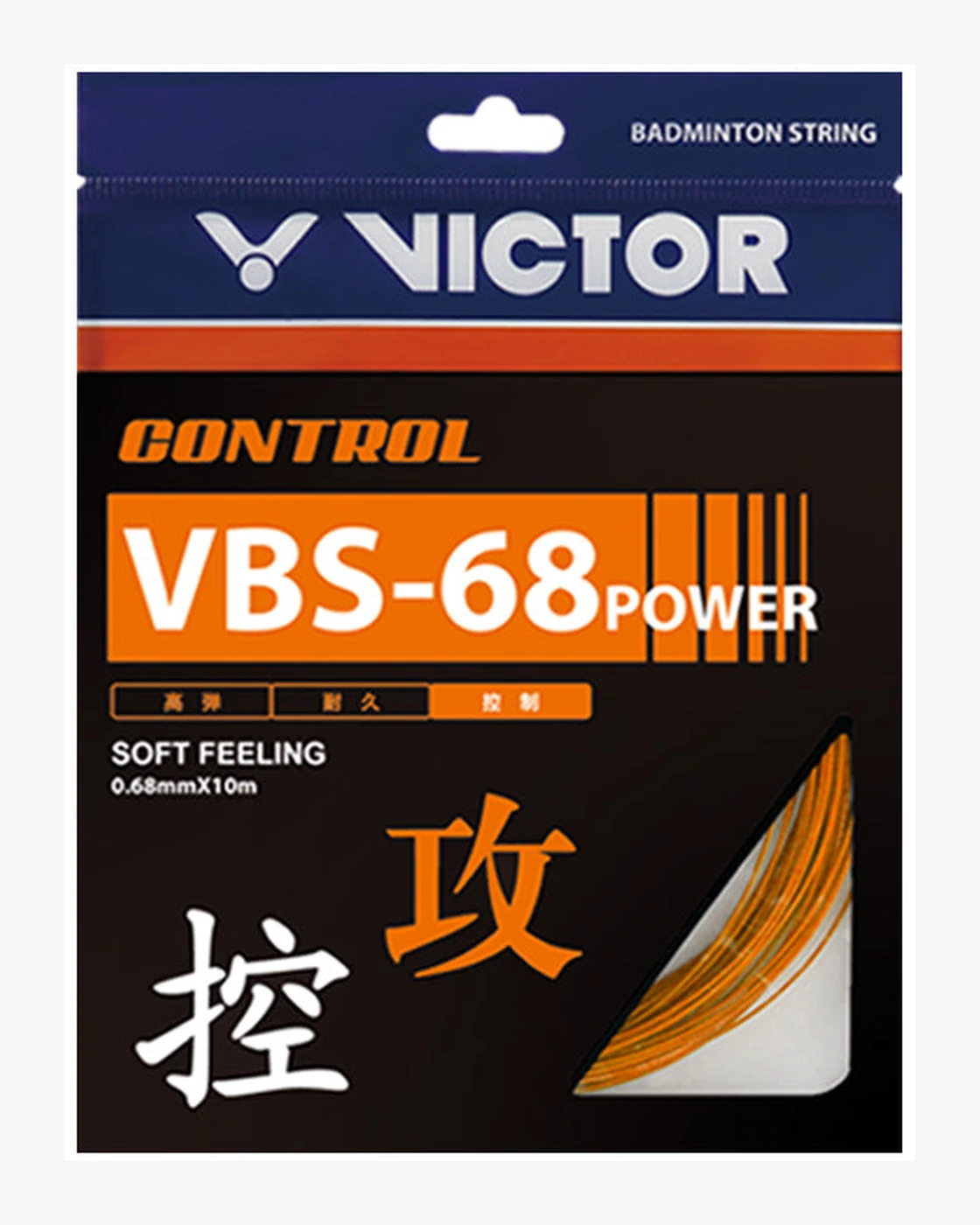
VBS-68P is the closest naming comparison: same nominal gauge, different catalogue construction and a separate official Strong feel label. Similar packaging or diameter is not evidence that the products are interchangeable.
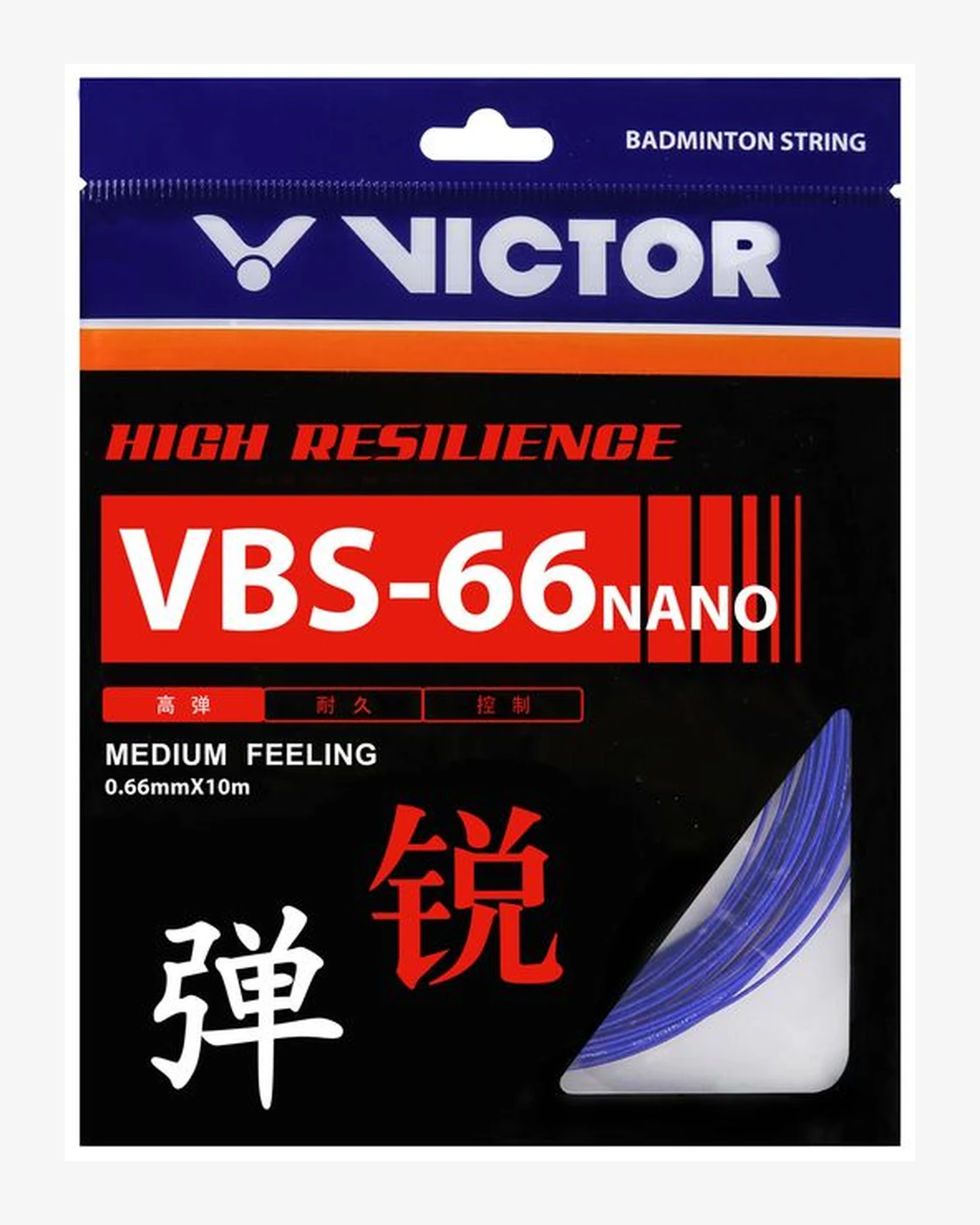
VBS-66N is a finer 0.66 mm, medium-feel, resilience-focused alternative. It can be included when response is a priority, while acknowledging that a finer gauge alone does not determine useful rebound, durability or maintenance frequency.
Yonex BG80 is another 0.68 mm Vectran-containing option with its own textured construction. The shared fibre name is not a full specification match. Compare familiar shots and wear under consistent conditions rather than treating one material or brand as a universal winner.
VBS-68 Knowledge Check
How well do you know this string?
0 / 8 answeredYour result
Review each answer, then try again when you are ready.
| Nominal gauge | 0.68 mm |
|---|---|
| Product code | VBS-68 |
| Retail set length | 10 m |
| ERR restring | RM43.00, string and labour |
Understand firm feedback in your own setup
Verified product descriptions
- Gauge
- 0.68 mm
- Construction
- Vectran fibre spun with special flat yarn
- Feel label
- Hard
- Positioning
- Control
Questions for a useful trial
Compare centred impact, ordinary clear length and gentle placement. Record effort and repeatability alongside the feedback you prefer.
Note wear location and playing exposure. A material name does not establish lifespan or retention.
The catalogue bars have no verified numerical denominator; no invented cross-brand score is assigned.
The numbers behind the feel
Victor provides qualitative positioning; no unsupported numerical five-axis score is assigned here.
Verified product descriptions
- Gauge
- 0.68 mm
- Construction
- Vectran fibre spun with special flat yarn
- Feel label
- Hard
- Positioning
- Control
VBS-68 DT over three days
-
Day 152–56 DT
-
Day 249–53 DT
-
Day 346–47 DT
Recorded range Range midpoint
These readings describe an earlier installation. Use them to understand the recorded change across days.
VBS-68 and three alternatives
Compare construction and priorities rather than treating a model name as an upgrade ladder. These are different options, not a controlled ranking.
| String | Gauge | Construction or feel | What to check on court |
|---|---|---|---|
| VBS-68 | 0.68 mm | Vectran with special flat yarn | Check usable length as well as defined feedback |
| Victor VBS-68 Power | 0.68 mm | Nylon multifilament core interwoven with Vectran | Confirm VBS-68P identity |
| BG80 | 0.68 mm | Separate nylon and Vectran construction | Shared gauge does not establish equal feel |
| Victor VBS-66 Nano | 0.66 mm | Nylon multifilament wrap; nano-core description | Medium-feel and high-resilience labels |
Compare VBS-68P for a different same-gauge construction, VBS-66N for a finer response-focused option, and BG80 for a separate textured Vectran-containing design. None is automatically better for every player.
Try a full session of the same grip and shuttle type before judging the harder contact. If you compare it with VBS-68 Power afterward, put a short push and a quick flat return into the drill. Pay attention to how easily you can change speed without losing the direction you intended.
What would you like to feel differently?
For VBS-68, describe the impact feedback, placement and upkeep you want to change. Hard feel is a product label, not a fixed stiffness for every racket.
Track the change, not just the sound
Some settling after stringing is normal. Record when the racket starts to feel different, the hours played and storage conditions. Compare readings using the same method; a phone frequency reading is not the machine setting in pounds. Ask about installation consistency before assuming a different packet will solve it.
Bring this question to ERR →Separate contact from setup
A stiff-feeling bed, late contact, shuttle speed and technique can all make length difficult. Start with relaxed clears and describe where the shuttle lands. Review your current tension within the racket limit rather than increasing it automatically.
Bring this question to ERR →The break location matters
A break near the same grommet deserves a frame and grommet check. Breakage after off-centre contact differs from gradual notching in the centre. Bring the racket and a photo of the break; do not assume every early break means the string is defective.
Bring this question to ERR →Describe what your hand notices
Tell the stringer which shots feel unforgiving and when the sensation began. Compare contact consistency, string choice and tension. Stringing advice is not a treatment for persistent pain; stop playing through pain and seek appropriate assessment.
Bring this question to ERR →Inspect before installation
Photograph existing chips and discuss cracks, worn grommets and frame shape before work begins. Correct support, the appropriate pattern and staying within the racket limit matter. A chipped finish alone does not establish who caused damage.
Bring this question to ERR →Explain the change clearly
Grip size, balance, racket weight, stringbed response and timing are different things. A restring does not turn a head-heavy racket into a head-light one. Tell the stringer what changed and compare with your previous setup instead of asking only for more power.
Bring this question to ERR →What matters on court?
Choose what you want from your next restring.
Test feedback at two speeds
Try a regular drive and a shorter return off the same feed. Record how the softer shot responds to your usual grip.
Ask your stringerCan I keep this clear contact and still shorten my block?
Look for centre and edge wear separately
Write down hours and the position of the first likely wear. Ask for a frame check if the same rim hole keeps failing.
Ask your stringerWhat wear observation is most useful before comparing VBS-68 Power?
Keep a familiar clear in the trial
Use a normal clear and a slightly late one to assess effort. Review the applicable frame setting before adjusting.
Ask your stringerWhich starting tension lets me compare the VBS-68 feel I want?
Compare two separate 0.68 mm models
Use a quiet block and a compact drive with VBS-68 and VBS-68 Power. Set them up with similar conditions where practical.
Ask your stringerWhich one is easier to use for my controlled returns?
Different equipment. Different questions.
Different rackets
The same requested pounds can feel different across frame shapes and stringbed dimensions. Record the racket, not just the number.
Try VBS-68 on the same racket first. Record the full racket model and the agreed tension before trying another frame.
Different strings
Gauge, construction and surface feel change the comparison. Do not treat every thin string as the same product.
Compare VBS-68 with Victor VBS-68 Power using the same racket and familiar shots. Use the table above to check gauge and construction before changing the setup.
Different installation
Machine calibration, support, clamps, pattern and technique can affect consistency. Ask about the process as well as qualifications.
If VBS-68 repeatedly breaks near the same hole, show your stringer a close-up of that spot and ask them to inspect the grommet.
Different sessions
Shuttle speed, hall conditions, fatigue and timing influence feedback. Compare familiar drills before drawing a conclusion.
Use the same shuttle speed and repeat a few clears, drives and net shots. Record playing hours alongside any change in how VBS-68 feels.
Prepare, play and review with purpose.
Bring your racket history
Note your racket model, previous string, requested tension and the change you want. A photo of recurring breakage helps.
Make the plan specific
Review the frame and grommets. Confirm string, colour availability, tension within the racket limit and price before work starts.
Keep a useful record
Keep the string model, requested tension and date together. Ask about the pattern and checks relevant to your racket.
Repeat familiar shots
Try clears, drives, blocks and net shots under comparable conditions. Record comfort, length and placement, not only sound.
Change one thing at a time
Bring your observations back. Keep the setup if it works; otherwise agree on one practical change for the next restring.
VBS-68 questions, clearly answered.
Is VBS-68 the same as VBS-68 Power?
No. VBS-68 and VBS-68P are separate models despite sharing a 0.68 mm gauge.
What are VBS-68’s official feel and feature labels?
The checked official regional product page lists Hard feel and Control.
What construction is verified?
The 2021 manufacturer catalogue describes Vectran fibre spun with a special flat yarn.
Does Hard mean the same stiffness in every racket?
No. It is qualitative brand wording; the frame, installation and contact affect the actual sensation.
What did the independent report establish?
A small 2019 player trial favoured controlled impact under stated conditions. It did not measure universal rebound, friction or retention.
Does a shared gauge make BG80 identical?
No. BG80 and VBS-68 have separate constructions and may differ in response even at a similar requested setting.
Should everyone use the archived 28 lbs?
No. The exact frame limits, condition and current setup come first.
Why is the last DT range written46–47?
The old review wrote47–46; the display orders the same endpoints ascending without altering them.
Can the DT record prove longer usable life?
No. The measurement conditions and exposure are incomplete, so it cannot predict your retention or lifespan.
What should I test if hard feel seems demanding?
Include normal clear length and compact drives as well as gentle blocks and net returns; record effort and contact quality.
What is the listed ERR VBS-68 price?
The checked catalogue lists RM43 including string and labour. Confirm current price, colour and availability.
What details should accompany a VBS-68 enquiry?
Racket model, current string, previous pounds, playing frequency, preferred feel and any recurring wear or shot concern.
How did Victor VBS-68 play for you?
Your experience can help another player choose their next string.
What players say
Your first-hand experience matters.
Be the first to review Victor VBS-68. Share what you liked and what could be better.
More badminton string reviews.
Take a closer look at other strings before choosing your next setup.

Ready to discuss your string setup?
Bring your VBS-68 questions, racket model and previous setup. Discuss the contact feel you want before choosing the next restring.
Book stringing Explore the string listBook stringing.
Bring your racket and questions.
Discuss your VBS-68 setup with ERR before visiting. Tell us your racket model, previous tension and the shot or feel you want to review.
Book through ERR MemberAsk ERR on WhatsApp ↗Prepare a question for your visit
Open WhatsApp with my question ↗You can review your message in WhatsApp before sending.The checked ERR catalogue lists VBS-68 at RM43 including string and labour. Confirm the current price, stock and colour before travelling; this guide does not reserve a packet or confirm an appointment.
Use the existing member booking or WhatsApp enquiry with VBS-68 identified. Provide the racket model, current string, previous pounds, playing frequency and preferred feedback, together with recurring wear locations or the shot you want to improve.
ERR is based in Taman Melati Utama, Setapak, Kuala Lumpur. Bring the racket and its setup history to the agreed appointment. Specific notes from ordinary court sessions give a clearer basis for adjustment than simply asking for maximum power or the highest tension.
By appointment · Check available slots before travelling.
Find us in Taman Melati Utama
G-3, PV6 Platinum Hill Condo, No. 3 Jalan Melati 3, Taman Melati Utama, 53100 Kuala Lumpur, Malaysia.
Get directions in Google Maps ↗
