


Li-Ning No.1 Boost Review: Coating, Response & Archived DT
Review the 0.66 mm AXJN018 No.1 Boost through its verified construction, practical comparison questions and the original ERR DT ranges. Separate brand positioning from evidence about your own setup.
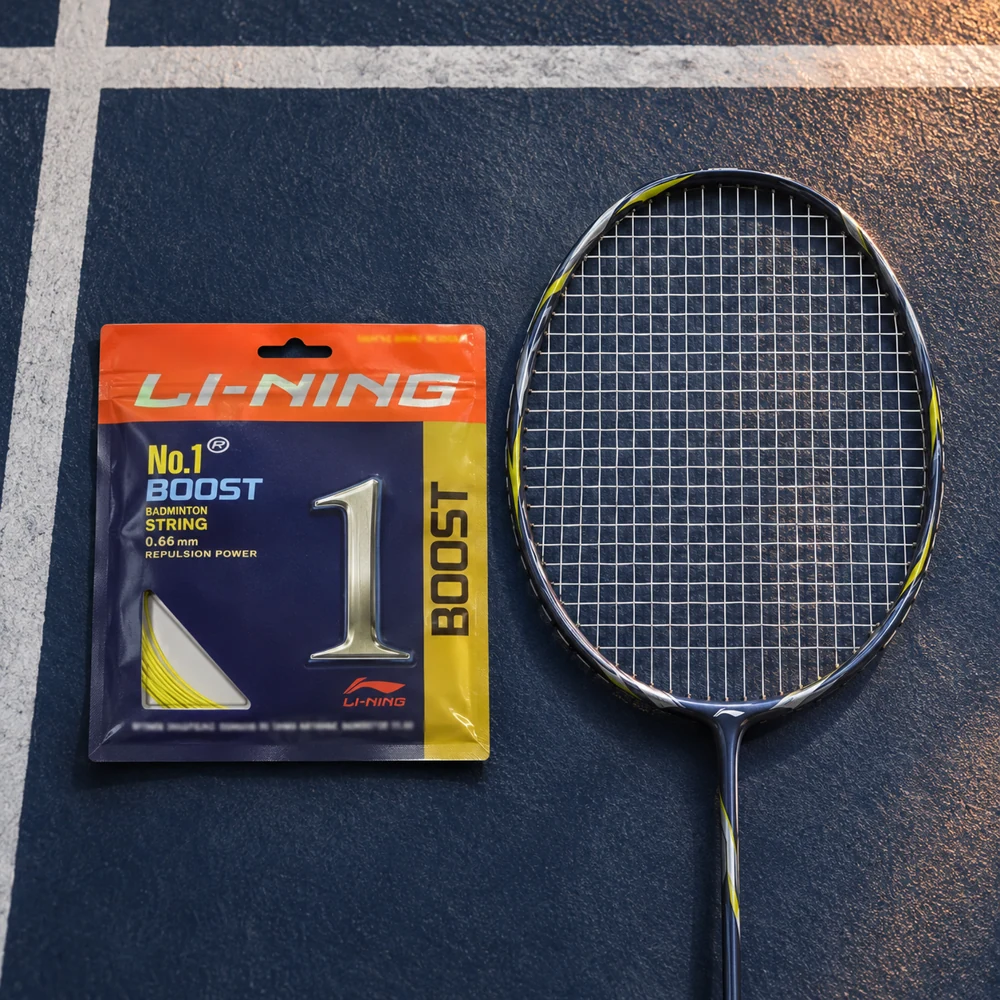
Start with the Boost identity
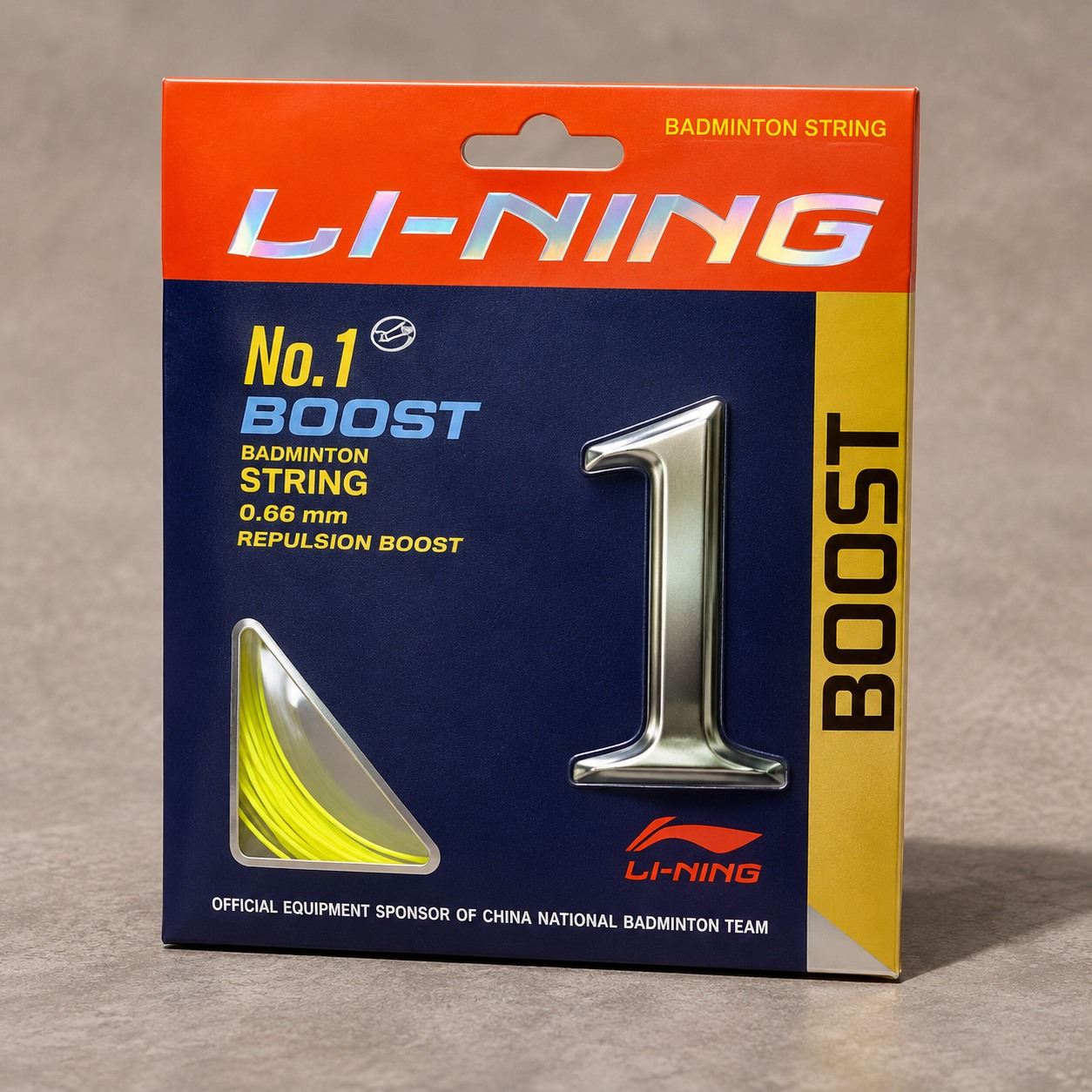
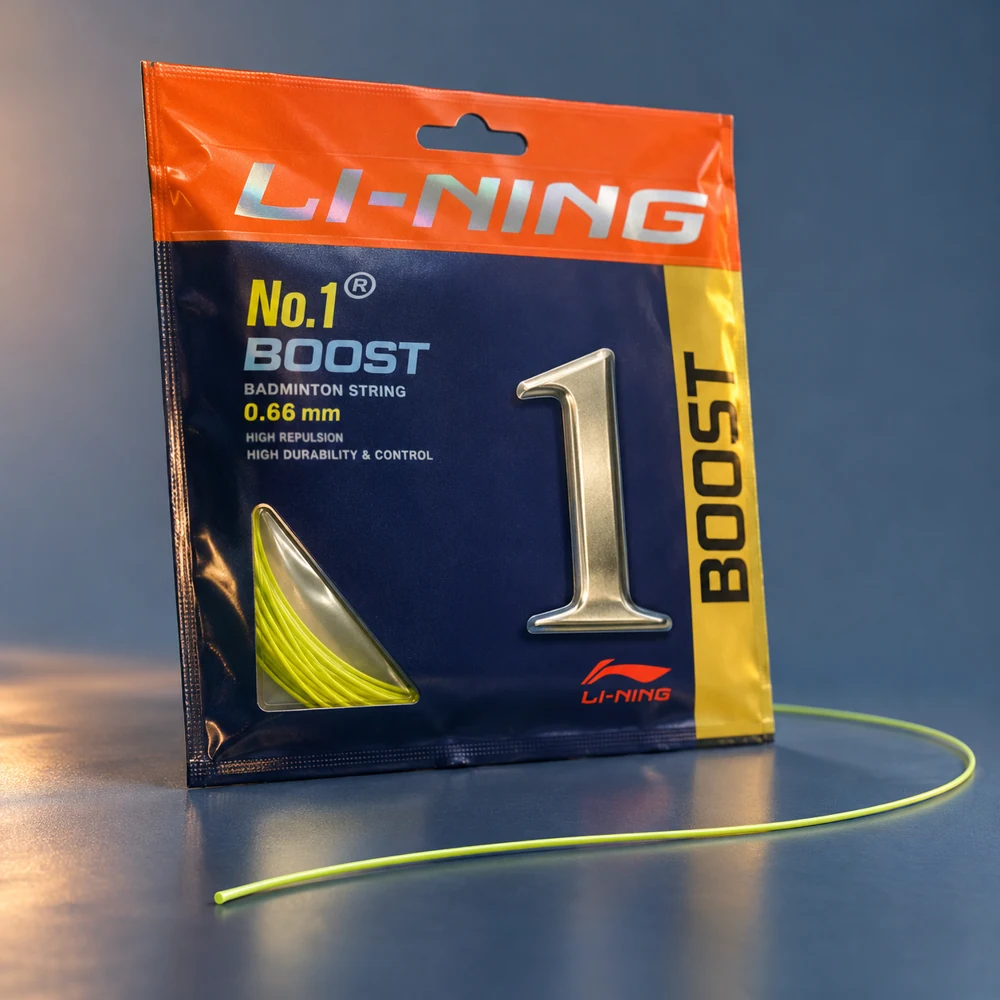
This review concerns No.1 Boost, identified as AXJN018-1 in the official India listing. The genuine linked packet states 0.66 mm and Made in Japan. That identity matters because original No.1 has a different code and 0.65 mm gauge.
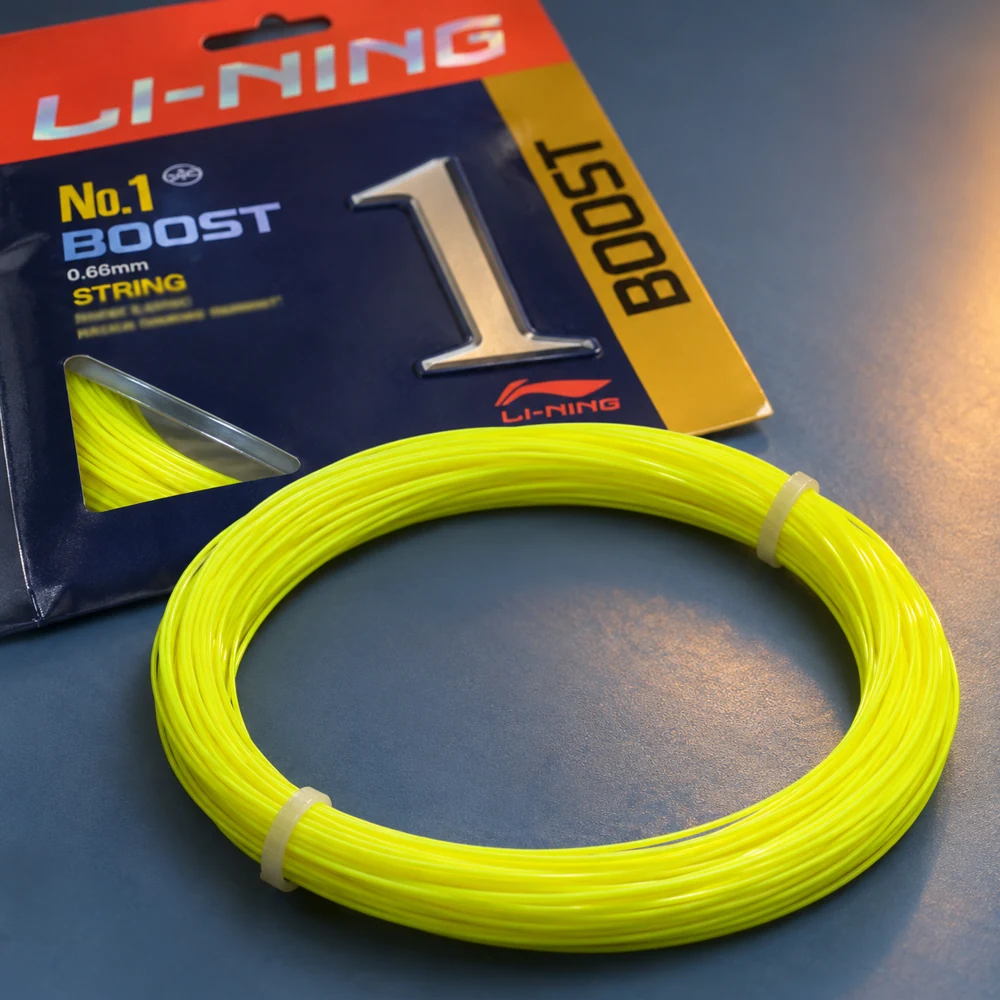
The official description names a heat-resistant, high-intensity nano-braided multifilament core, high-intensity nylon outer and compound elastic resin coating. The packet also carries 3D KNIT wording. These are published construction details, not proof of a particular result in every racket.
Keep the full model name and packet details with your installation record. If an older review simply says No.1, do not assume it describes Boost. A useful comparison begins with knowing which product was actually installed.

Ask what the coating changes in practice
The elastic resin coating distinguishes the published specification. Li-Ning associates the design with rebound and durability, but the checked material does not supply a controlled improvement percentage or a precise surface-friction measurement.
For a player, the useful question is whether short placements remain manageable alongside faster exchanges. A construction label cannot predict that sensation precisely. Compare familiar strokes rather than assuming that a coating necessarily adds grip or softness.
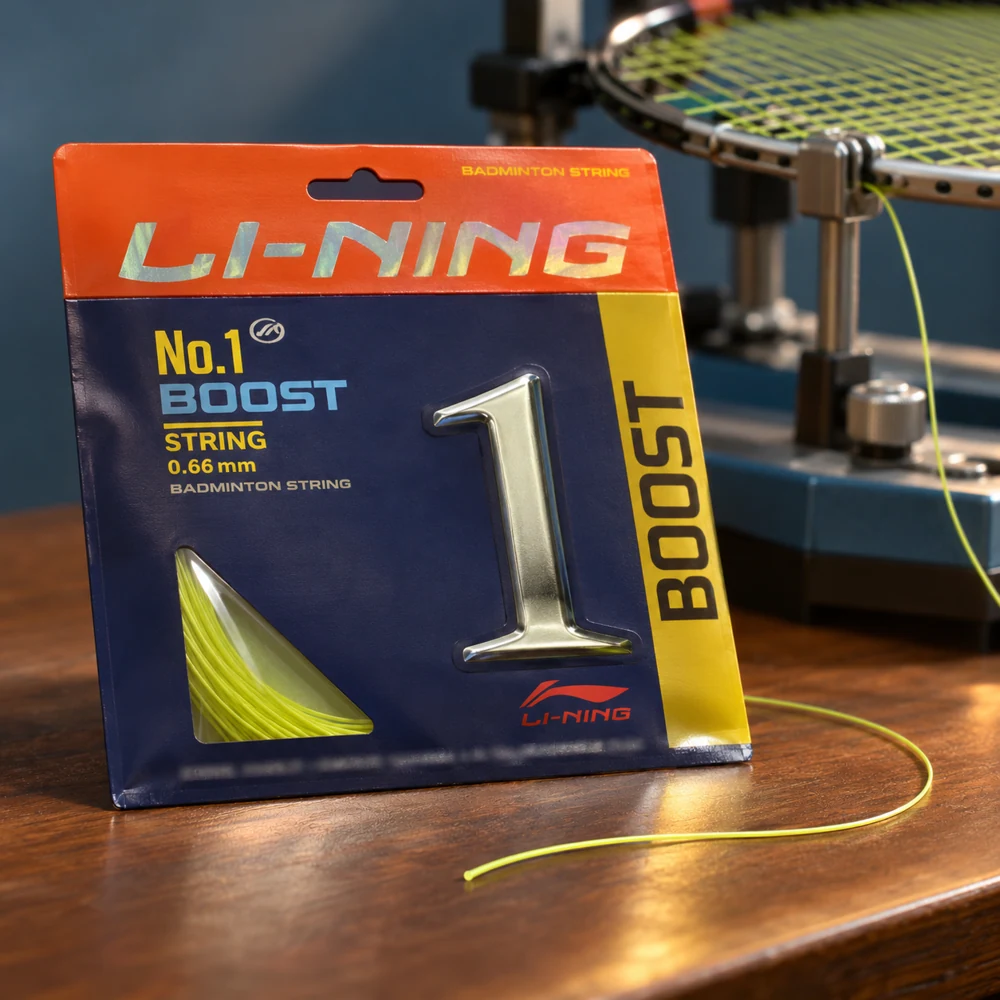
No adequate controlled independent test was verified for a model-to-model retention ranking. The educational images illustrate discussion and practice; they do not show microscopic construction, official product photography or a newly conducted ERR experiment.
Evaluate more than the loudest shot
The response-oriented positioning may interest someone exploring a coated 0.66 mm option. Begin with repeatable clears and drives, then reduce pace for a short return. Note whether changing effort produces the length and placement you expected.
If a full shot feels lively but softer contact is difficult to regulate, retain both observations. Likewise, a bright sound does not measure shuttle speed or establish that placement has improved. Useful feedback describes the shot and conditions rather than only whether it felt powerful.
Someone whose main concern is frequent replacement should also compare a durability-focused choice. Boost is a product name, not a promise that response, comfort and service life all improve together for every player.
Keep the frame and installation in view
The original ERR record identifies 26 lbs for one installation. It is not a recommended setting for all No.1 Boost users. Check the exact racket, official tension limits, frame condition and grommets before deciding a new setup.
Explain your present string, requested pounds and difficult shots. If clears already require excessive effort or impact feels harsh, a higher setting chosen only for sound may not address the problem. Changing several variables at once also makes later feedback harder to interpret.
Pattern, knots, pre-stretch and main-and-cross settings depend on the appropriate procedure and equipment. Li-Ning’s general racket guidance supports inspection and following the suggested range; it does not make this historical 26 lbs record a universal instruction.
Read the three archived DT ranges
The old page records Day 1 55–58, Day 2 53–55 and Day 3 51–53 DT at 26 lbs. The chart retains these endpoints. Its connected midpoints help display the ranges but are not additional measured readings between the days.
Instrument, calibration, exact timing, court exposure and environment were not adequately documented. Those omissions prevent a controlled comparison with original No.1 or No.3 Boost. They also prevent using this series to forecast your own tension change or replacement date.
A future record should connect each reading with the method and actual court hours. Add response changes, visible wear and storage context. Machine pounds, DT and a phone frequency reading are different quantities and should not be treated as interchangeable.
Choose a meaningful alternative
Original No.1 is a separate 0.65 mm nylon model. The available specification does not establish identical internals with only a coating added for Boost. Compare the full identity and usable response rather than simplifying the relationship to a single layer.
No.3 Boost provides a finer 0.63 mm coated option with its own AXJP044 construction. BG66 Ultimax is a 0.65 mm cross-brand response alternative. These comparisons help frame different priorities; they do not establish a universal feel or retention hierarchy.
Keep relevant trial conditions comparable where possible. Brand profile values describe positioning within their stated context, not a shared laboratory scale. Assess repeatable length, pace control and upkeep alongside the material and gauge differences.
No.1 Boost Knowledge Check
How well do you know this string?
0 / 8 answeredYour result
Review each answer, then try again when you are ready.
| Nominal gauge | 0.66 mm |
|---|---|
| Product code | AXJN018 |
| Retail set length | 10 m |
| ERR restring | RM52.00, string and labour |
See the response profile
Five-characteristic spider chart
Contact, deflection and rebound
Press play to follow contact → deflection → rebound.
Slow-motion teaching diagram, not a measured speed or tension test.
The numbers behind the feel
Li-Ning’s official India listing supplies this No.1 Boost ten-point profile. These are brand-relative positioning values, not ERR measurements, percentages or a cross-brand testing standard.
No.1 Boost DT over three days
-
Day 155–58 DT
-
Day 253–55 DT
-
Day 351–53 DT
Recorded range Range midpoint
These readings describe an earlier installation. Use them to understand the recorded change across days.
No.1 Boost and three alternatives
Compare construction and priorities rather than treating a model name as an upgrade ladder. These are different options, not a controlled ranking.
| String | Gauge | Construction or feel | What to check on court |
|---|---|---|---|
| No.1 Boost | 0.66 mm | AXJN018 nano-braided core, nylon outer and elastic resin coating | Assess soft returns as well as full-shot response |
| No.1 | 0.65 mm | AXJJ018 nylon multifilament and nylon outer | Do not assume identical internals plus a coating |
| No.3 Boost | 0.63 mm | AXJP044 nano-braided core and compound resin coating | Weigh touch and upkeep without a lifespan promise |
| BG66 Ultimax | 0.65 mm | BG66UM high-intensity nylon core and nylon braid | Brand scores are not a shared testing scale |
These alternatives ask different questions about gauge, construction and response. Neither the Boost name nor unmatched brand scores establish a universal winner or a fixed retention advantage.
Compare No. 1 Boost with a fresh No. 1 if you can keep the frame and shuttle setup close. Use a soft block after a fast exchange and write down which model takes less adjustment between the two strokes.
What would you like to feel differently?
For No.1 Boost, consider the separate 0.66 mm identity, coated construction and usable response at different shot speeds. Keep original No.1 and No.3 Boost distinct when choosing a trial.
Track the change, not just the sound
Some settling after stringing is normal. Record when the racket starts to feel different, the hours played and storage conditions. Compare readings using the same method; a phone frequency reading is not the machine setting in pounds. Ask about installation consistency before assuming a different packet will solve it.
Bring this question to ERR →Separate contact from setup
A stiff-feeling bed, late contact, shuttle speed and technique can all make length difficult. Start with relaxed clears and describe where the shuttle lands. Review your current tension within the racket limit rather than increasing it automatically.
Bring this question to ERR →The break location matters
A break near the same grommet deserves a frame and grommet check. Breakage after off-centre contact differs from gradual notching in the centre. Bring the racket and a photo of the break; do not assume every early break means the string is defective.
Bring this question to ERR →Describe what your hand notices
Tell the stringer which shots feel unforgiving and when the sensation began. Compare contact consistency, string choice and tension. Stringing advice is not a treatment for persistent pain; stop playing through pain and seek appropriate assessment.
Bring this question to ERR →Inspect before installation
Photograph existing chips and discuss cracks, worn grommets and frame shape before work begins. Correct support, the appropriate pattern and staying within the racket limit matter. A chipped finish alone does not establish who caused damage.
Bring this question to ERR →Explain the change clearly
Grip size, balance, racket weight, stringbed response and timing are different things. A restring does not turn a head-heavy racket into a head-light one. Tell the stringer what changed and compare with your previous setup instead of asking only for more power.
Bring this question to ERR →What matters on court?
Choose what you want from your next restring.
Use a normal drive and quieter reply
Try each at the effort you use in a rally. See how easily the shuttle changes depth with your regular grip.
Ask your stringerDoes Boost keep the response I like in short exchanges?
Track wear with the correct model name
Record the Boost job separately from standard No. 1. Bring a break photo if the same hole fails.
Ask your stringerHow should I compare maintenance across the two No. 1 models?
Keep a familiar clear in the test
Try a comfortable clear before changing the setup, and share your old requested tension and racket limits.
Ask your stringerWhich starting setting would make the Boost trial fair?
Compare short placement across No. 1 and Boost
Use the same feed for a shallow and a deeper push. Note which one you can land with less grip adjustment.
Ask your stringerWhich version gives me the return length I want?
Different equipment. Different questions.
Different rackets
The same requested pounds can feel different across frame shapes and stringbed dimensions. Record the racket, not just the number.
Try No.1 Boost on the same racket first. Record the full racket model and the agreed tension before trying another frame.
Different strings
Gauge, construction and surface feel change the comparison. Do not treat every thin string as the same product.
Compare No.1 Boost with No.1 using the same racket and familiar shots. Use the table above to check gauge and construction before changing the setup.
Different installation
Machine calibration, support, clamps, pattern and technique can affect consistency. Ask about the process as well as qualifications.
If No.1 Boost repeatedly breaks near the same hole, show your stringer a close-up of that spot and ask them to inspect the grommet.
Different sessions
Shuttle speed, hall conditions, fatigue and timing influence feedback. Compare familiar drills before drawing a conclusion.
Use the same shuttle speed and repeat a few clears, drives and net shots. Record playing hours alongside any change in how No.1 Boost feels.
Prepare, play and review with purpose.
Bring your racket history
Note your racket model, previous string, requested tension and the change you want. A photo of recurring breakage helps.
Make the plan specific
Review the frame and grommets. Confirm string, colour availability, tension within the racket limit and price before work starts.
Keep a useful record
Keep the string model, requested tension and date together. Ask about the pattern and checks relevant to your racket.
Repeat familiar shots
Try clears, drives, blocks and net shots under comparable conditions. Record comfort, length and placement, not only sound.
Change one thing at a time
Bring your observations back. Keep the setup if it works; otherwise agree on one practical change for the next restring.
No.1 Boost questions, clearly answered.
What gauge and code identify No.1 Boost?
The checked genuine packet shows 0.66 mm. The regional listing identifies AXJN018-1, with AXJN018 as the model code.
Is No.1 Boost the same as original No.1?
No. Original No.1 is separately identified at 0.65 mm under AXJJ018. Keep the full name when booking.
What is the published coating?
The official listing and packet identify a compound elastic resin coating over the nylon outer. No exact chemical formula is inferred.
Where is the checked packet made?
The genuine packet linked from the official regional listing states Made in Japan. Confirm actual packet details if the supplied version differs.
Does Boost guarantee a faster smash?
No. It is response positioning, not a measured speed improvement for every player.
Do the profile values rank other brands?
No. They are Li-Ning regional ten-point positioning values, not standardised cross-brand measurements.
What does the No.1 Boost DT archive show?
The old ERR record at 26 lbs lists 55–58, 53–55 and 51–53 DT across three labelled days. Important measurement and exposure conditions are missing.
Does that prove better retention than No.1?
No. Unmatched conditions and incomplete records do not support a controlled ranking.
Should every Boost setup use 26 lbs?
No. That is the archived setting, not universal advice. Follow the actual frame limits and condition and discuss your current setup.
Can the resin label predict surface grip?
Not precisely. No model-specific friction measurement was verified, so judge usable placement and feedback directly.
What is the checked ERR No.1 Boost price?
The catalogue lists RM52 including string and labour. Confirm current price, colour and availability before visiting.
What details help a No.1 Boost booking?
Give the full model, racket, present string, previous tension, court frequency, desired feel and any recurring wear concerns.
How did Li-Ning No.1 Boost play for you?
Your experience can help another player choose their next string.
What players say
Your first-hand experience matters.
Be the first to review Li-Ning No.1 Boost. Share what you liked and what could be better.
More badminton string reviews.
Take a closer look at other strings before choosing your next setup.


Ready to discuss your string setup?
Bring your No.1 Boost questions, racket model and previous setup. Discuss the contact feel you want before choosing the next restring.
Book stringing Explore the string listBook stringing.
Bring your racket and questions.
Discuss your No.1 Boost setup with ERR before visiting. Tell us your racket model, previous tension and the shot or feel you want to review.
Book through ERR MemberAsk ERR on WhatsApp ↗Prepare a question for your visit
Open WhatsApp with my question ↗You can review your message in WhatsApp before sending.The checked local catalogue lists No.1 Boost at RM52 including string and labour. Confirm current price, colour and availability before travelling. A listed price does not reserve stock or prove every regional colour is available locally.
Use the existing appointment or enquiry flow with the full Boost name, racket model, present string, previous tension, playing frequency and desired change. Mention recurring breakage location or a particular shot that feels difficult so the discussion has useful context.
ERR is in Taman Melati Utama, Setapak, Kuala Lumpur. Book before visiting and bring your racket and setup history. After familiar sessions, concise notes about response and wear support the next decision without inventing a best string for everyone.
By appointment · Check available slots before travelling.
Find us in Taman Melati Utama
G-3, PV6 Platinum Hill Condo, No. 3 Jalan Melati 3, Taman Melati Utama, 53100 Kuala Lumpur, Malaysia.
Get directions in Google Maps ↗
